Religious Panels
Tbilisi, Georgia
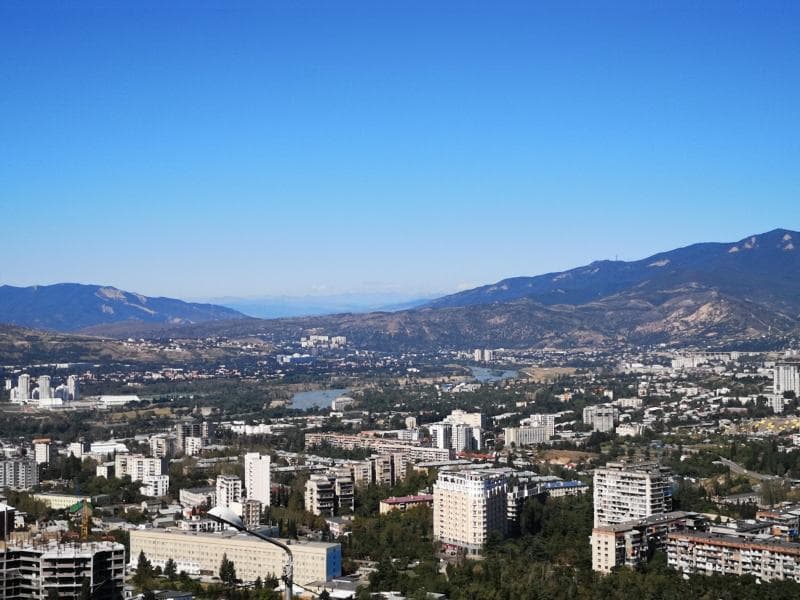
Explore the majestic Religious Panels at Chronicle of Georgia in Tbilisi, Georgia, depicting biblical scenes and national history on towering pillars.
Overview
Perched majestically atop Keeni Hill in Tbilisi, Georgia, the 'Religious Panels' form an integral and awe-inspiring part of the larger Chronicle of Georgia monument. Often referred to as the 'Georgian Stonehenge' or the 'History Memorial of Georgia', this monumental sculptural complex was envisioned and brought to life by the renowned Georgian artist Zurab Tsereteli. It consists of 16 colossal pillars, each soaring to an impressive height of 30 to 35 meters. The pillars are adorned with intricate high-relief sculptures in bronze and copper, creating a powerful visual narrative that intertwines Georgia's rich history with its deep Christian faith. While never fully completed, the Chronicle of Georgia stands as a striking and historically dense landmark, offering panoramic views of the Tbilisi Sea and the surrounding landscape.
History & Cultural Background
Construction of the Chronicle of Georgia began in 1985, during the final years of the Soviet Union. The monument was conceived to commemorate two profoundly significant anniversaries for the nation: 3,000 years of Georgian statehood and 2,000 years of Christianity in the country. The panels themselves are conceptually divided, telling two intertwined stories. The lower sections of the columns are dedicated to depicting significant events from the life of Jesus Christ, such as the Last Supper and Palm Sunday. This reflects Georgia's esteemed status as one of the oldest Christian nations, having adopted Christianity as its state religion in 337 AD. The placement of these biblical scenes at the base is often interpreted as an artistic statement by Tsereteli, emphasizing Christianity's foundational role in Georgian culture and history. The upper sections, in contrast, showcase the illustrious figures and pivotal moments that shaped Georgia's imperial history, including kings, queens, and national heroes.
What Makes It Special
The sheer monumental scale of the Religious Panels and the entire Chronicle of Georgia complex is truly what makes it special. Each of the 16 pillars, towering up to 35 meters, is meticulously covered in detailed high-relief sculptures. This grand scale ensures that every panel, even those high above, contributes to an overwhelming sense of history and artistry. The intricate bronze and copper reliefs serve as a visual encyclopedia, masterfully blending the sacred narratives of Christianity with the secular accounts of Georgian royalty and national struggle. This unique combination of religious symbolism and historical storytelling in such a grand format is rarely seen elsewhere. Beyond the sculptures themselves, the monument's strategic location on Keeni Hill provides breathtaking panoramic views over the Tbilisi Sea and the sprawling city, offering a serene and reflective experience. Despite its grandeur, it often remains less crowded than other major attractions, allowing visitors a more intimate encounter with this profound tribute to Georgian heritage.
Stories, Fun Facts & Local Details
Many travelers and locals affectionately refer to the Chronicle of Georgia as the 'Georgian Stonehenge', a testament to its imposing stone columns and enigmatic presence. While the primary focus is on the towering panels, the complex also includes other significant elements. A bronze statue of Saint Nino, the Cappadocian woman who introduced Christianity to Georgia in the 4th century, stands nearby, marked by her signature grapevine cross. A small, functional chapel dedicated to the Annunciation is also part of the complex, with its interior contrasting the monument's exterior through vivid cloisonné enamel murals depicting biblical scenes. On the ground within the complex, visitors can find an engraved list of Georgian monarchs, particularly those who died outside the country, adding another layer of historical detail. Interestingly, work on the Chronicle began in 1985 but was never fully completed, with progress intermittently continuing even decades later, giving it the aura of an ongoing, living historical project.
Visitor Perspective
For the curious traveler, the Religious Panels at the Chronicle of Georgia offer a profoundly impactful and contemplative experience. As an open-air public monument, it is accessible 24 hours a day, seven days a week, and notably, there is no entrance fee. Many suggest visiting in the late afternoon to experience the best lighting for photography and to witness breathtaking sunsets over the Tbilisi Sea. Getting there is relatively straightforward; while a taxi or ride-sharing service is the most direct route (around 20-30 minutes from central Tbilisi), public transport is also an option via the metro to Ghrmaghele Station, followed by bus 360. Upon arrival, a grand monumental staircase leads you up to the main complex. Standing amidst the towering pillars, one can feel a humbling sense of scale and history. The intricate carvings provide endless details to observe, inviting reflection on Georgia's enduring spiritual and historical journey. It's a place for quiet contemplation, photography, and appreciating a lesser-known but deeply significant facet of Georgian culture.
Coordinates: 44.810438, 41.770503
View on Google Maps💬 How Travelers Describe This Place
Based on community votes
Beautiful
703Photogenic
646Interesting
380Unique
291Must See
28
Traveler Stories
Discover memorable experiences shared by travelers who have visited this place.
No traveler stories yet.
Be the first traveler to share what made this place memorable.

Tour
By
Spot
Discover amazing places around the world. Your journey starts here.
Explore
© 2026 TourBySpot. All rights reserved.