Reflection Areas
Minsk, Belarus
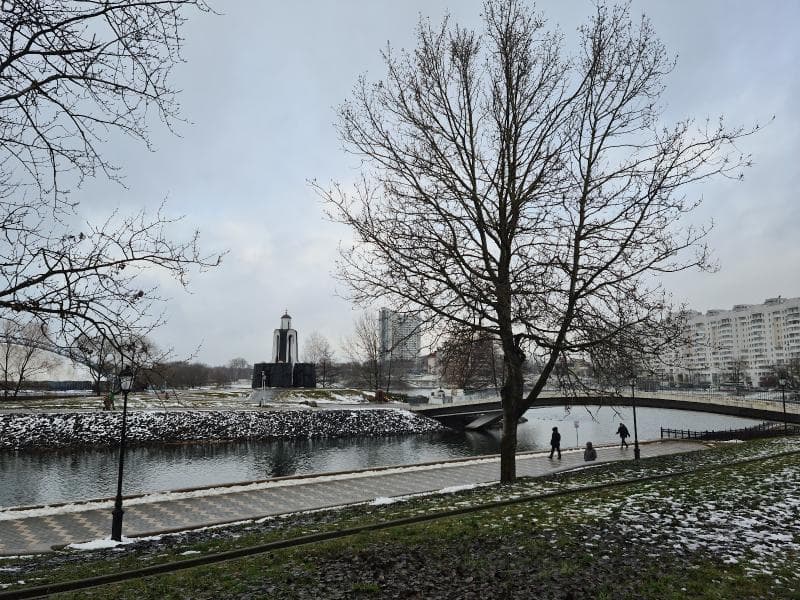
Explore the Island of Tears, a poignant memorial complex in Minsk, Belarus. Reflect on the history and sacrifice of Belarusian soldiers.
Overview
The Island of Tears, also officially known as the Island of Courage and Sorrow, is a profoundly symbolic memorial complex nestled in the heart of Minsk, Belarus. Situated on an artificial island within the Svislach River, this poignant site stands as a perpetual tribute to the Belarusian soldiers who perished during the Soviet-Afghan War (1979-1989), and more broadly, to all Belarusian warriors who have fallen in conflicts throughout history. It is a place specifically designed for quiet contemplation and remembrance, inviting visitors to reflect on the profound human cost of war. The island is easily accessible via a graceful arch-type footbridge from the historic Trinity Hill neighborhood, creating a sense of separation from the city's bustle and enhancing its introspective atmosphere.
History & Cultural Background
The concept for the Island of Tears memorial emerged during the Soviet-Afghan War itself, with construction commencing in 1988, near the conflict's conclusion. It was officially opened on August 3, 1990, or August 1996, depending on the source, following the withdrawal of Soviet troops. The primary impetus for its creation was to honor the more than 30,000 Belarusian soldiers who participated in the war, of whom approximately 771 to 800 tragically lost their lives. Over time, the memorial's significance broadened, evolving into a national symbol of mourning for all sons and daughters of Belarus who perished in battles both within and beyond the country's borders. The complex was built through a collaborative effort involving public donations, state funds, veterans' organizations, and volunteers, underscoring its deep communal importance. Its design, including the central chapel, draws inspiration from traditional Belarusian Orthodox architecture, specifically the 12th-century Church of Euphrosyne of Polotsk, blending historical forms with contemporary memorial aesthetics.
What Makes It Special
What truly distinguishes the Island of Tears are its deeply evocative artistic and architectural elements, carefully crafted to convey grief and solemn remembrance. At the core of the island stands the Chapel of Saint Nicholas, a modest yet powerful structure. Its exterior is adorned with haunting bronze figures of grieving women – mothers, wives, and sisters – depicted in postures of profound sorrow, representing the collective anguish of a nation. Inside the chapel, the names of the 771 fallen Belarusian soldiers from the Afghan War are inscribed on the walls, providing a tangible link to those who were lost. Another striking feature is the sculpture of a weeping angel, often positioned near the entrance to the island. This figure, with water sometimes trickling from its eyes, immediately sets a somber tone and amplifies the memorial's emotional impact. The artificial island setting itself, surrounded by the quiet waters of the Svislach River, contributes to a feeling of introspection and isolation from the everyday world, making it an ideal place for reflection.
Stories, Fun Facts & Local Details
The Island of Tears is rich with meaningful cultural details and local lore. One of the most compelling is the legend surrounding the weeping angel statue, which is said to shed tears whenever a Belarusian soldier dies in conflict. This powerful myth underscores the enduring pain of loss and the angel's role as a perpetual mourner. Upon entering the island, visitors encounter a boulder bearing a bronze icon of the Mother of God, accompanied by an inscription in Belarusian and Russian. This text conveys a powerful message from Belarusian mothers, stating that the memorial is built in memory of their sons lost in Afghanistan, and expressing a universal wish for evil never to dominate any land. Inside the Chapel of Saint Nicholas, a cross with an inlaid ruby rises above the altar. The red stone symbolizes not only the blood of Christ but also the blood shed by the fallen warriors, connecting their sacrifice to a deeper spiritual significance. Further reinforcing the connection to the Afghan conflict, the grounds of the memorial feature several boulders inscribed with the names of the Afghan provinces where Soviet troops engaged in battles. Additionally, a time capsule filled with Afghan soil, brought by the mothers of soldiers who died in the war, is interred within the chapel, symbolizing an enduring, personal link to the distant battlegrounds.
Visitor Perspective
Visiting the Island of Tears offers a deeply moving and contemplative experience. The tranquil setting, characterized by well-maintained paths and scattered benches, encourages a slow, respectful pace. Visitors often spend time wandering the pathways, reading the names inscribed within the chapel, or simply sitting in quiet reflection along the riverside. The somber atmosphere naturally fosters a sense of reverence, and it is common to see individuals leaving flowers or lighting candles as gestures of personal remembrance and respect for the fallen. The memorial is designed to be accessible year-round, with many finding the spring and autumn months particularly pleasant for a visit due to milder weather and the surrounding natural beauty. It is a place that transcends a mere historical monument, offering a space where collective grief and individual memories intertwine, allowing visitors to connect with Belarus's past and contemplate the profound impacts of war on human lives.
Coordinates: 27.554449, 53.909784
View on Google Maps💬 How Travelers Describe This Place
Based on community votes
Photogenic
542Interesting
516Unique
326Must See
247Beautiful
171
Traveler Stories
Discover memorable experiences shared by travelers who have visited this place.
No traveler stories yet.
Be the first traveler to share what made this place memorable.

Tour
By
Spot
Discover amazing places around the world. Your journey starts here.
Explore
© 2026 TourBySpot. All rights reserved.