Reclining Buddha
Bangkok, Thailand
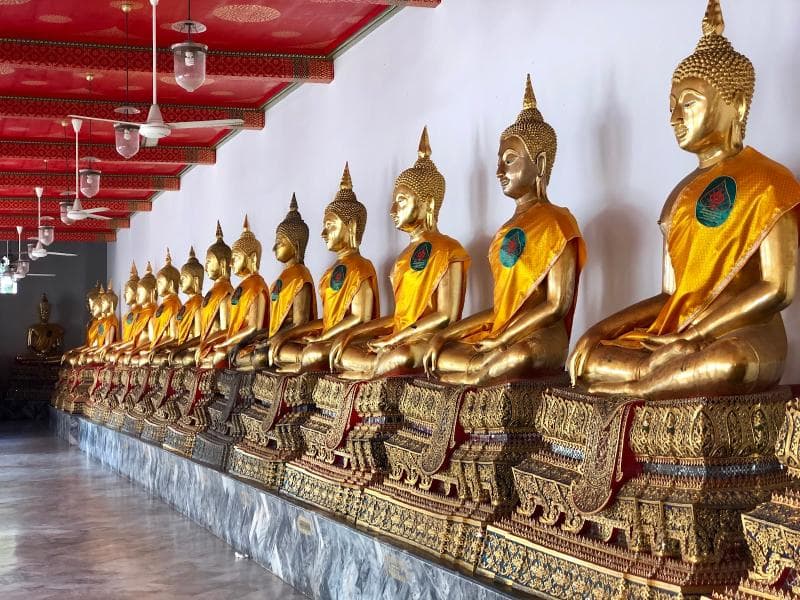

Discover the Reclining Buddha at Wat Pho, Bangkok, Thailand – a 46m long golden statue symbolizing Nirvana. Explore its history and cultural significance.
Overview
Nestled within the sprawling complex of Wat Pho in Bangkok, Thailand, lies the awe-inspiring Reclining Buddha, officially known as Phra Buddhasaiyas. This monumental golden statue is one of the most revered and iconic sights in the city, drawing visitors from across the globe to marvel at its serene grandeur. Wat Pho itself, also called Wat Phra Chetuphon Wimon Mangkhalaram Ratchaworamahawihan, stands as one of Thailand's oldest and most significant royal temples, located directly south of the Grand Palace. The Reclining Buddha's sheer scale is breathtaking; it measures an astounding 46 meters in length and stands 15 meters tall, making it one of the largest Buddha images in Thailand. Its immense form, covered in shimmering gold leaf, captures a moment of profound spiritual significance, inviting quiet contemplation amidst the temple's bustling grounds.
History & Cultural Background
The history of Wat Pho predates Bangkok's establishment as the capital, with its origins tracing back to the 16th century. King Rama I initiated significant renovations and expansions, transforming it into a royal temple. However, the magnificent Reclining Buddha that captivates visitors today was specifically commissioned and built by King Rama III in 1832. Beyond its spiritual role, Wat Pho holds immense cultural importance as Thailand's first public university. King Rama III ensured that academic texts in various fields, including medicine, history, and literature, were inscribed on stone slabs around the temple, making knowledge accessible to the common people. This dedication to education also cemented Wat Pho's legacy as the birthplace and primary center for the preservation and teaching of traditional Thai medicine and massage, a tradition that continues to this day.
What Makes It Special
The Reclining Buddha at Wat Pho is not merely a large statue; it is a meticulously crafted work of art brimming with symbolism. Its grand dimensions, 46 meters long and 15 meters high, are accentuated by the dazzling gold leaf that covers its brick and plaster core. The statue's right arm supports its head, which rests on two pillows encrusted with glass mosaics, conveying an expression of ultimate peace and contentment. Perhaps the most intricate details are found on the soles of the Buddha's feet, which are an impressive 3 meters high and 4.5 meters long. These soles are exquisitely inlaid with mother-of-pearl, featuring 108 auspicious symbols that represent the characteristics of the Buddha. These symbols, which include flowers, dancers, white elephants, and altar accessories, are arranged in 108 panels and are a harmonious blend of Thai and Chinese art, rooted in Buddhist cosmology. A prominent circle at the center of each foot symbolizes a chakra or an 'energy point'.
Stories, Fun Facts & Local Details
The Reclining Buddha's pose, known as 'sihasaiyas', represents the Buddha entering complete spiritual enlightenment, or Nirvana, signifying the end of all earthly reincarnations and desires. This serene posture is often likened to a sleeping lion, embodying tranquility and the ultimate release from suffering. A fascinating aspect of the visit are the 108 bronze bowls lining the corridor alongside the statue. These bowls correspond to the 108 auspicious characters of the Buddha, and visitors can purchase coins to drop into each bowl. This practice is believed to bring good fortune and prosperity, while also contributing to the upkeep of the temple and supporting the resident monks. Wat Pho's extensive grounds also house over 1,000 other Buddha images, making it home to one of Thailand's largest collections. The temple's role as a historical center of public education further highlights its unique status, with ancient wisdom inscribed for all to learn.
Visitor Perspective
Visiting the Reclining Buddha is a truly immersive cultural experience. To show respect, visitors are expected to dress modestly, ensuring shoulders and knees are covered. Before entering the hall where the Buddha rests, shoes must be removed, a common practice in Thai temples. While the sheer size of the statue can make it challenging to capture its entirety in a single photograph, its magnificence is best appreciated in person. The hall can become quite crowded, especially during peak hours, so an early morning visit is often recommended for a more tranquil experience. Walking along the length of the Buddha, observing the intricate details of its feet, and participating in the coin-dropping ritual in the bronze bowls offers a profound connection to Thai Buddhist traditions and a moment of reflection in a truly sacred space. The spiritual ambiance, combined with the artistic and historical richness, leaves a lasting impression on every traveler.
Coordinates: 100.491295, 13.747971
View on Google Maps💬 How Travelers Describe This Place
Based on community votes
Interesting
996Photogenic
726Beautiful
494Unique
193Must See
125
Traveler Stories
Discover memorable experiences shared by travelers who have visited this place.
No traveler stories yet.
Be the first traveler to share what made this place memorable.

Tour
By
Spot
Discover amazing places around the world. Your journey starts here.
Explore
© 2026 TourBySpot. All rights reserved.