Reclining Buddha Hall
Yangon, Myanmar
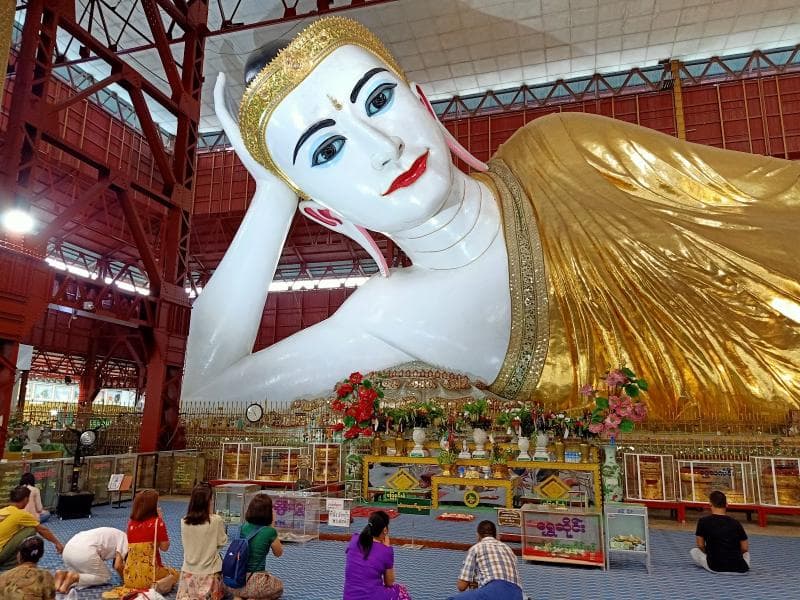
Explore the magnificent Reclining Buddha Hall inside Chaukhtatgyi Temple, Yangon, Myanmar. Discover the colossal 66-meter statue, its serene history, and cultural significance.
Overview
Deep within the bustling city of Yangon, Myanmar, lies a spiritual treasure that captivates with its serene grandeur: the Reclining Buddha Hall, nestled within the Chaukhtatgyi Buddha Temple. This revered site is home to one of Myanmar's largest and most significant reclining Buddha images, drawing both devout pilgrims and curious travelers alike. The immense statue, stretching an impressive 66 meters (217 feet) in length and standing approximately 16 meters (52 feet) high, offers a profound glimpse into Buddhist philosophy and artistic devotion. Housed under a protective, multi-layered metal roof, the Buddha's presence commands reverence and offers a tranquil escape from the urban energy outside.
Visitors to Chaukhtatgyi are invited to walk the length of this colossal figure, absorbing its tranquil expression and marveling at the intricate details that adorn it, from its expressive glass eyes to the symbolic patterns on its feet. The hall is not merely a display of art but an active center of worship and reflection, where the air is often filled with the quiet murmurs of prayers and the gentle scent of incense. It stands as a testament to Myanmar's enduring Buddhist heritage and the resilience of its people.
History & Cultural Background
The journey of the Reclining Buddha at Chaukhtatgyi is a story of faith, destruction, and rebirth. The temple's origins trace back to 1899 when Sir Po Tha, a prominent wealthy Burmese Buddhist, sponsored the construction of the original Buddha image. This initial statue was completed in 1907, but it faced criticism for its disproportionate features and an 'aggressive expression'. Over the decades, it also suffered damage, including from the tumultuous events of the Second World War.
Recognizing the need for renewal, the temple trustees decided to demolish the old image in the 1950s. A new, more majestic and serene statue was then commissioned. Its reconstruction and meticulous crafting were supervised by U Thaung, a master craftsman from Tavoy (modern-day Dawei). The present Reclining Buddha image, which visitors see today, was consecrated in 1973, rising from the ashes of its predecessor as a symbol of unwavering devotion and artistic refinement. The very name 'Chaukhtatgyi' itself translates to 'six-layered', referring to the six-layered roof covering the temple, reflecting a utilitarian yet grand architectural choice that allowed for such a monumental statue.
What Makes It Special
The Chaukhtatgyi Reclining Buddha stands out not just for its impressive scale but for its exquisite artistry and the profound symbolism it embodies. At 66 meters long, it represents the Gautama Buddha at the moment of his parinirvana, the passing into full enlightenment after death, an event depicted with immense serenity. Unlike many other Buddha images, its large, expressive eyes are made entirely of glass, custom-crafted to impart a striking and deeply peaceful gaze.
Perhaps the most captivating feature is found on the soles of the Buddha's feet. Here, 108 intricately drawn and gilded segments depict the 'lakshanas', the 108 auspicious characteristics of the Buddha. These symbols are a rich tapestry of Buddhist cosmology, illustrating his journey through various existences, virtues, and the three worlds – the animate, inanimate, and conditioned. Each symbol tells a story, making the feet a fascinating focal point for study and contemplation. The statue's vibrant color palette, including its white face, red lips, blue eyeshadow, golden robes, and red fingernails, further enhances its lifelike and revered presence.
Stories, Fun Facts & Local Details
Beyond its visual splendor, the Reclining Buddha Hall is alive with stories and local practices. The act of rebuilding such a monumental statue after the wartime destruction and earlier architectural missteps underscores the deep spiritual commitment of the Burmese people. The fact that the renovation was partially funded by donations from both local Buddhists and foreign tourists, with contributors' names sometimes carved into the structure, highlights a collective effort to preserve this sacred site.
A fascinating local detail revolves around the small shrines surrounding the main Buddha image. There is a shrine dedicated to each of the eight days of the week in Asian astrology, with Wednesday being split into two. Local devotees visit the shrine corresponding to their birth day, offering prayers and flowers, connecting their personal destinies with the larger spiritual narrative of the temple. This offers a unique insight into the everyday practices of Theravada Buddhism in Myanmar.
Visitor Perspective
Visiting the Reclining Buddha Hall at Chaukhtatgyi Buddha Temple is an experience that offers both spiritual insight and cultural immersion. The temple is easily accessible, located in Bahan Township, and often combined with a visit to the nearby Shwedagon Pagoda. The hall is open daily, typically from early morning to evening, providing ample opportunity for a visit. There is generally no formal admission fee, but donations for the temple's upkeep are welcome.
As with all sacred sites in Myanmar, visitors are kindly requested to observe respectful etiquette. This includes dressing modestly, covering shoulders and knees, and removing shoes and socks before entering the sacred areas. It's also considered respectful to avoid pointing one's feet towards the Buddha image. Taking your time to walk around the entire statue, observing the details on the soles of the feet, and soaking in the peaceful atmosphere provides a truly enriching experience. The presence of monks and locals engaged in prayer and offerings further adds to the authentic spiritual ambiance, allowing curious travelers to witness living Buddhist traditions firsthand.
Coordinates: 96.16368, 16.81167
View on Google Maps💬 How Travelers Describe This Place
Based on community votes
Photogenic
958Interesting
794Must See
785Unique
571Beautiful
546
Traveler Stories
Discover memorable experiences shared by travelers who have visited this place.
No traveler stories yet.
Be the first traveler to share what made this place memorable.

Tour
By
Spot
Discover amazing places around the world. Your journey starts here.
Explore
© 2026 TourBySpot. All rights reserved.