Reception Chambers
Dushanbe, Tajikistan
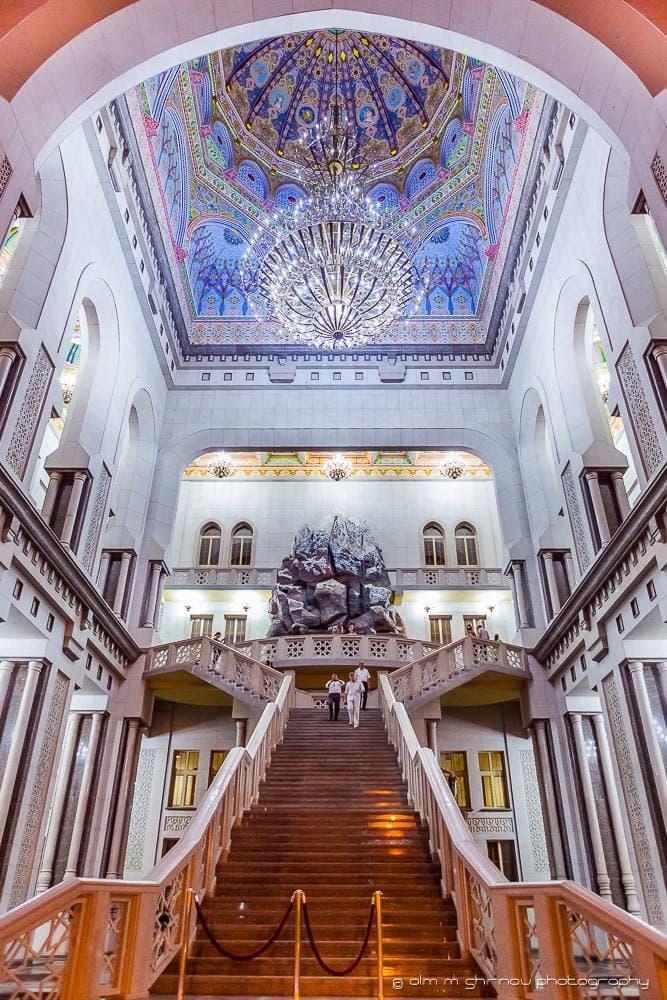
Explore the opulent Reception Chambers of Kokhi Navruz in Dushanbe, Tajikistan, a stunning showcase of traditional Tajik craftsmanship and cultural heritage.
Overview
Nestled within the grand Kokhi Navruz complex in Dushanbe, Tajikistan, the Reception Chambers are not merely rooms but a series of exquisitely designed halls that serve as a vibrant showcase of Tajik artistry and hospitality. Originally conceived as a large teahouse, the vision for Kokhi Navruz evolved into a magnificent palace, completed in 2014, becoming a central hub for cultural events, state receptions, and public gatherings. These chambers, renowned for their intricate details and monumental scale, exemplify a profound dedication to traditional craftsmanship, presenting an immersive experience of the nation's rich cultural heritage.
The complex itself spans approximately four hectares, featuring not only the elaborate interior halls but also serene gardens and elegant fountains. It is a symbol of modern Tajikistan, yet deeply rooted in its artistic past, offering visitors a unique glimpse into the country's aesthetic values and national pride.
History & Cultural Background
The genesis of Kokhi Navruz traces back to the early 21st century, with construction commencing in 2010 and reaching its completion in September 2014. The initial ambition was to construct the largest teahouse in Central Asia, a place for relaxation and enjoyment for both locals and visitors. However, under the initiative of Tajikistan's President Emomali Rahmon, the project transformed into a more ambitious endeavor: a palace intended to revive and celebrate the rich history, civilization, and folk art of the Tajik people.
This ambitious undertaking brought together approximately 4,000 skilled craftsmen from across Tajikistan. Their collective efforts were instrumental in realizing the palace's intricate architecture and decoration. This collaborative process ensured that traditional arts, including plasterwork, Florentine mosaic, painted ceilings, woodwork, and stone carving, were not only preserved but also given new life within this modern masterpiece. The palace’s name, 'Navruz', meaning 'New Day' in Tajik, symbolizes renewal and celebration, reflecting the spirit of the ancient Navruz holiday, an important cultural festival.
What Makes It Special
What truly distinguishes the Reception Chambers of Kokhi Navruz is their extraordinary commitment to traditional Tajik handicrafts and the sheer scale of their artistic embellishment. Each of the prominent halls – Didor, Arzhang, Guliston, and Zarandud – is a self-contained masterpiece, reflecting a distinct aspect of national artistry.
- Zarandud Hall, also known as the Golden Hall, is particularly dazzling with its extensive use of 24-carat gold leaf and delicate gold ornaments. Its 16 columns and ceilings are further enhanced by gypsum and crystalline decorations, making it a fitting venue for state-level receptions and meetings of heads of state. It is also the tallest hall in the complex, featuring an impressive crystal chandelier weighing between 5.5 and 6.7 tons and standing 22 meters tall, adorned with 1600 lights.
- The Arzhang Hall, or Stone Hall, showcases magnificent Florentine mosaics crafted from 29 types of semi-precious gems, including jasper, lapis lazuli, onyx, and ophite, all sourced from Tajikistan. A staggering 52 tons of these stones contribute to its breathtaking design, with its wooden dome intricately carved, signifying a deep connection to nature and artisanal skill.
- The Didor Hall, a grand banquet hall, is adorned with 'kundal' motifs, colorful gypsum, and crystalline masterpieces that reflect national patterns. Its beautifully painted ceiling and carved wooden stairs add to its opulent charm.
- Guliston Hall, or the Carving Hall, stands as a proud display of Tajik wood carving, featuring over 6,000 square meters of intricate designs and a three-ton crystal chandelier.
Stories, Fun Facts & Local Details
One of the most engaging aspects of Kokhi Navruz is its fascinating transformation from a planned grand teahouse into the magnificent palace it is today. This evolution underscores a cultural intent to create a monumental showcase of national artisanry that would serve as a treasure of Tajik culture for centuries.
The complex is recognized internationally, having been included in the list of '8 Wonders of the SCO' (Shanghai Cooperation Organization), highlighting its significance as a modern tourist marvel and a symbol of Tajikistan's rich cultural heritage. The involvement of thousands of local artisans, approximately 4,000, in its construction and decoration is a testament to the nation's commitment to its artistic traditions and provides a living legacy of skilled craftsmanship. Every detail, from the grandest chandeliers to the parquet floors, resonates with authentic Tajik artistic traditions, telling a story of heritage and continuous artistic expression.
Visitor Perspective
For a curious traveler, a visit to the Reception Chambers within Kokhi Navruz offers an unparalleled artistic and cultural journey. Walking through these halls, one is immediately struck by the sheer scale and meticulous detail of the craftsmanship. Each hall presents a distinct ambiance, created by the harmonious blend of diverse traditional techniques and materials.
Visitors can expect to be captivated by the vibrant painted ceilings, the glittering mosaics made from local semi-precious stones, the delicate and extensive wood carvings, and the grandeur of the crystal chandeliers. It is an experience that transcends mere sightseeing, offering an opportunity to appreciate the profound artistic legacy and cultural identity of Tajikistan. The palace is a living museum, demonstrating how ancient crafts are kept alive and celebrated in contemporary architecture, making it an essential destination for anyone seeking to understand the soul of Dushanbe and Tajikistan.
Coordinates: 68.78, 38.536667
View on Google Maps💬 How Travelers Describe This Place
Based on community votes
Photogenic
915Beautiful
211Interesting
123Unique
74Must See
20
Traveler Stories
Discover memorable experiences shared by travelers who have visited this place.
No traveler stories yet.
Be the first traveler to share what made this place memorable.

Tour
By
Spot
Discover amazing places around the world. Your journey starts here.
Explore
© 2026 TourBySpot. All rights reserved.