Rathaus
Zurich, Switzerland
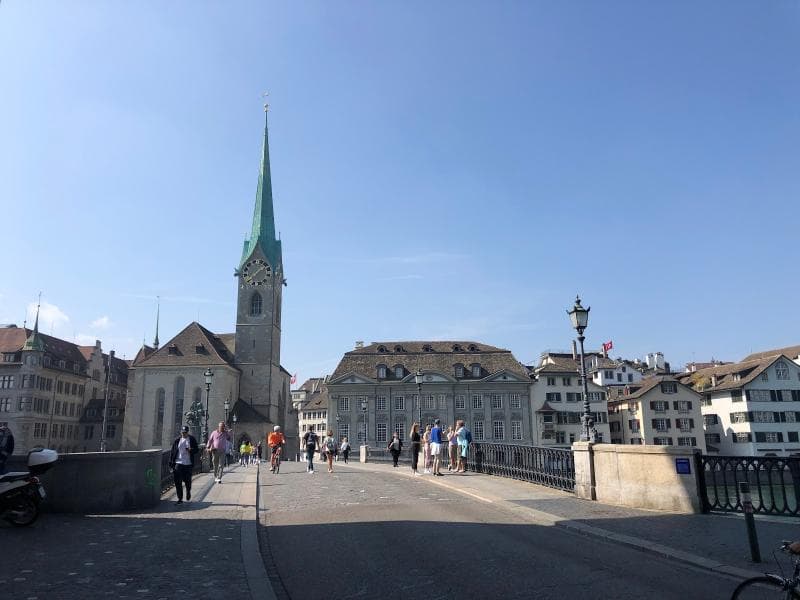
Explore Zurich's historic Rathaus (City Hall) in the Old Town, a stunning Renaissance-Baroque landmark built over the Limmat River in Switzerland.
Overview
Nestled gracefully in the heart of Zurich's enchanting Old Town (Altstadt), the Rathaus, or City Hall, stands as a testament to centuries of civic life and architectural evolution. More than just an administrative building, this iconic structure is an integral part of the cityscape, uniquely poised with its foundations anchored directly in the Limmat River. Its distinctive position and elegant facade make it a focal point for both locals and curious travelers exploring Zurich's rich past.
As you stroll along the Limmatquai, the Rathaus immediately captures attention, embodying a blend of Renaissance grandeur with subtle Baroque flourishes. It currently serves as the seat for both the cantonal and city parliaments, carrying forward a legacy of governance that dates back to its predecessors. To walk past it is to walk through history, with every stone telling a story of Zurich's journey from a medieval settlement to a thriving modern metropolis.
History & Cultural Background
The history of Zurich's Rathaus is deeply intertwined with the city's political identity. The current edifice, a magnificent three-story building, was constructed between 1694 and 1698, replacing two earlier wooden city halls that stood on the same spot since the 13th and 14th centuries. This shift from timber to stone reflects Zurich's growing prosperity and political ambition during the late 17th century. Until 1798, the Rathaus served as the principal seat of government for the independent Republic of Zurich.
Following the French Revolution and the subsequent restructuring of Swiss cantons, the Rathaus officially became the property of the Canton of Zurich in 1803. Since then, it has continued its vital role in Swiss democracy, hosting the legislative chambers where crucial decisions are made for both the city and the canton. Its enduring function highlights Zurich's commitment to its democratic traditions, a heritage proudly displayed within its historic walls.
What Makes It Special
The most striking feature of the Rathaus is undoubtedly its unusual placement, partially built directly over the Limmat River. Its foundations are anchored in the riverbed, with arches gracefully spanning the water, creating a visually stunning effect, particularly when viewed from the opposite bank or from a boat.
Architecturally, the building is a captivating fusion of late Renaissance and Baroque styles, evident in its ashlar facade, ornate decorations, and harmonious proportions. Inside, visitors discover richly decorated halls, including a Council Chamber with elaborate ceiling paintings and historical furnishings that transport them back in time. Despite its age, the Rathaus remains largely in its original condition, a testament to meticulous preservation efforts, with its last major renovation occurring in 1974 and accessibility improvements made in 2009.
Stories, Fun Facts & Local Details
A fascinating detail about the Rathaus concerns its construction. Zurich's decision to build such a magnificent new city hall between 1694 and 1698, despite a period of economic crisis, was a bold statement. It proudly manifested Zurich's status as a sovereign city-republic, which had gained independence from the German Empire in 1648 and was then comparable to powerful mercantile cities like Venice and Genoa.
The main entrance portal, crafted from dark Richterswiler Malmkalk, is adorned with two majestic lions resting on Corinthian columns. These lions symbolically hold palm fronds and a sword, representing peace and state power – a powerful message embedded in the very fabric of the building. Another local detail involves the nearby Rathausbrücke (Town Hall Bridge), which was historically known as the 'vegetable bridge' because medieval farmers once sold their produce there. Today, it remains a pedestrian-only area, bustling with life, albeit with more modern offerings like bratwurst and espresso.
Visitor Perspective
For a curious traveler, encountering the Rathaus offers a unique window into Zurich's soul. While regular guided tours are not typically offered, the building is often included in self-guided walking tours and most organized tours of the Old Town. Stepping inside, when permitted, allows for an appreciation of its intricate interior, with its ornate stucco ceilings and historical artwork telling the story of Zurich's political journey.
Even from the outside, the Rathaus is a delight. Take a moment to view it from across the Limmat, especially from the Münsterbrücke, to fully grasp how it appears to rise directly from the water. At night, the illuminated facade reflecting on the calm river surface creates a truly magical and memorable sight, making the arches at its base seem like perfect circles. This architectural marvel, standing firm through centuries of change, invites visitors to ponder the ebb and flow of history along the Limmat.
Coordinates: 8.5422, 47.3719
View on Google Maps💬 How Travelers Describe This Place
Based on community votes
Photogenic
685Interesting
446Beautiful
152Unique
33Must See
16
Traveler Stories
Discover memorable experiences shared by travelers who have visited this place.
No traveler stories yet.
Be the first traveler to share what made this place memorable.

Tour
By
Spot
Discover amazing places around the world. Your journey starts here.
Explore
© 2026 TourBySpot. All rights reserved.