Ramparts
Marseille, France
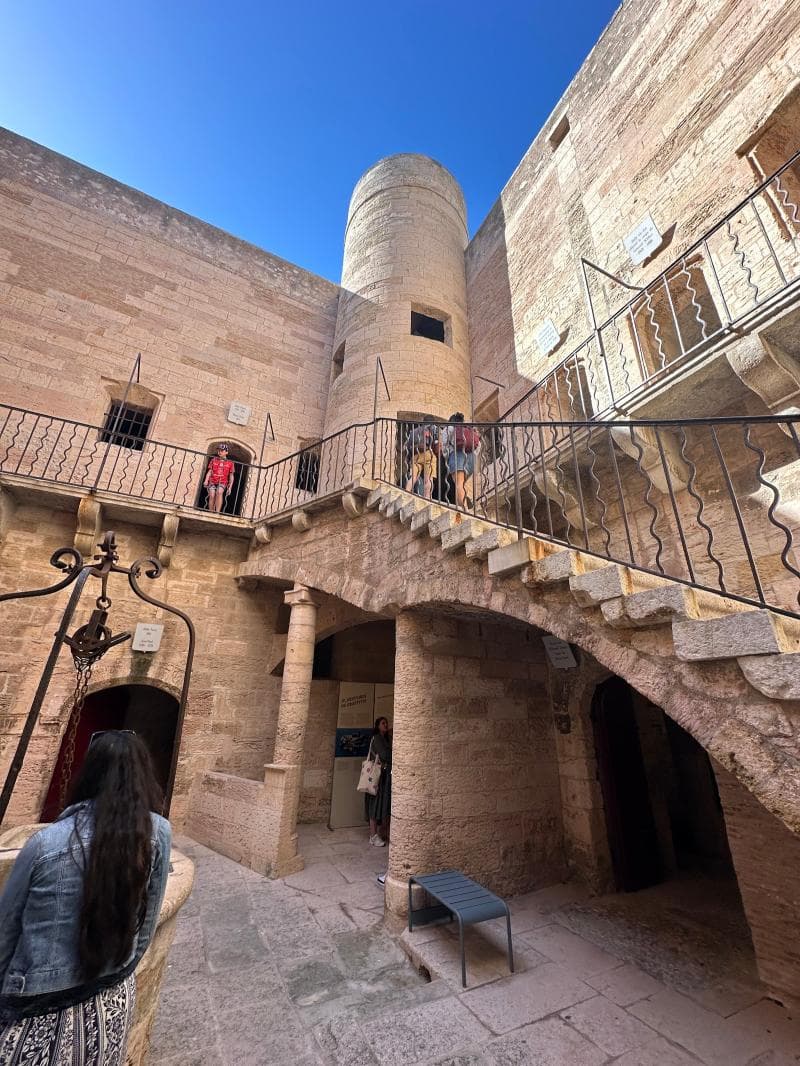
Explore the historic Ramparts of Château D'If in Marseille, France. Discover breathtaking views, ancient defenses, and stories from this iconic island fortress.
Overview
Perched majestically on a small island off the coast of Marseille, France, the Château D'If is a legendary fortress whose imposing silhouette guards the azure waters of the Mediterranean. Within its formidable walls lie the Ramparts, a vital component of this 16th-century stronghold. Originally constructed as a deterrent against invasions and a watchful eye over the bustling port, these high walls and gun platforms represent centuries of military strategy and human history. Today, the Ramparts offer visitors a unique blend of breathtaking panoramic views and a tangible connection to the past, allowing one to literally walk in the footsteps of history while gazing upon the vibrant city of Marseille and the shimmering sea.
History & Cultural Background
The story of the Château D'If, and by extension its Ramparts, begins in the early 16th century. Commissioned by King Francis I between 1524 and 1531, this fortress was strategically built on the Île d'If to protect Marseille from maritime threats and to assert royal authority over a city accustomed to its autonomy. The Ramparts were an integral part of this defensive vision, designed with high walls, flanking towers, and gun embrasures to accommodate heavy artillery and repel any potential attack. Despite its formidable appearance and strategic position, the Château D'If was never actually tested in combat, successfully serving its primary purpose as a deterrent. However, its isolated location, surrounded by dangerous offshore currents, quickly led to its transformation into one of France's most feared prisons from the late 16th century until the end of the 19th century. These very ramparts, initially built for defense, took on a different significance, serving as a constant reminder of the outside world for those confined within its cells.
What Makes It Special
What truly distinguishes the Ramparts of Château D'If is their dual nature: a testament to military engineering and an unparalleled vantage point. From these elevated walkways, visitors are treated to spectacular 360-degree views that sweep across the glittering Bay of Marseille, the historic Vieux-Port, and the other islands of the Frioul archipelago. The sturdy construction, dating back to the 16th and 17th centuries, reflects the ingenuity required to build such a structure on a rugged island. More recently, these historic Ramparts have been the subject of dedicated restoration efforts, specifically from March 2019 to October 2021. This preservation work not only maintains the structural integrity of this historical monument but also includes protective measures for the unique ecosystem it supports, such as the European leaf-toed gecko, which has found a home within the ancient stones. This blend of historical preservation and ecological consideration adds a fascinating layer to the experience of exploring the Ramparts.
Stories, Fun Facts & Local Details
The contrast between the expansive freedom offered by the views from the Ramparts and the grim confinement of the prison cells below is one of the Château D'If's most poignant narratives. Imagine the guards patrolling these high walls, gazing at the distant mainland, while prisoners languished in dark, damp dungeons, many of whom could only feel the sea's vibrations through the stone. The fortress is famously immortalized in Alexandre Dumas's novel, 'The Count of Monte Cristo', where the hero Edmond Dantès endures years of wrongful imprisonment. While Dantès' cell is the focus of the fictional escape, the Ramparts represent the impenetrable barrier between him and the world he yearned to reclaim. A lesser-known detail, a 'fun fact' for those who appreciate nature, is that the ongoing restoration of the Ramparts also focused on protecting indigenous species, such as the European leaf-toed gecko, which has found refuge and flourished in the nooks and crannies of these ancient fortifications. This highlights how even a site primarily known for its human history also plays a quiet but important role in local biodiversity.
Visitor Perspective
A visit to the Ramparts of Château D'If is an immersive journey through time and breathtaking scenery. Upon disembarking from the ferry, the ascent to the Ramparts gradually reveals increasingly spectacular vistas. Walking along these ancient defensive perimeters, one can almost feel the weight of history underfoot, imagining the sentinels who once stood guard and the prisoners who longed for a glimpse of the outside world. The experience is one of both awe and reflection; awe at the sheer scale of the fortress and the natural beauty of the surroundings, and reflection on the human stories etched into its very fabric. The well-preserved walkways make it accessible for exploration, allowing ample opportunity to pause, take photographs, and simply soak in the atmosphere. Remember to allocate sufficient time during your visit to fully appreciate the views and the stories these formidable Ramparts have to tell, providing a memorable conclusion to your exploration of this iconic landmark.
Coordinates: 5.325139, 43.279861
View on Google Maps💬 How Travelers Describe This Place
Based on community votes
Interesting
836Photogenic
797Unique
255Must See
231Beautiful
86
Traveler Stories
Discover memorable experiences shared by travelers who have visited this place.
No traveler stories yet.
Be the first traveler to share what made this place memorable.

Tour
By
Spot
Discover amazing places around the world. Your journey starts here.
Explore
© 2026 TourBySpot. All rights reserved.