Pushkin Memorial Rooms
Chisinau, Moldova
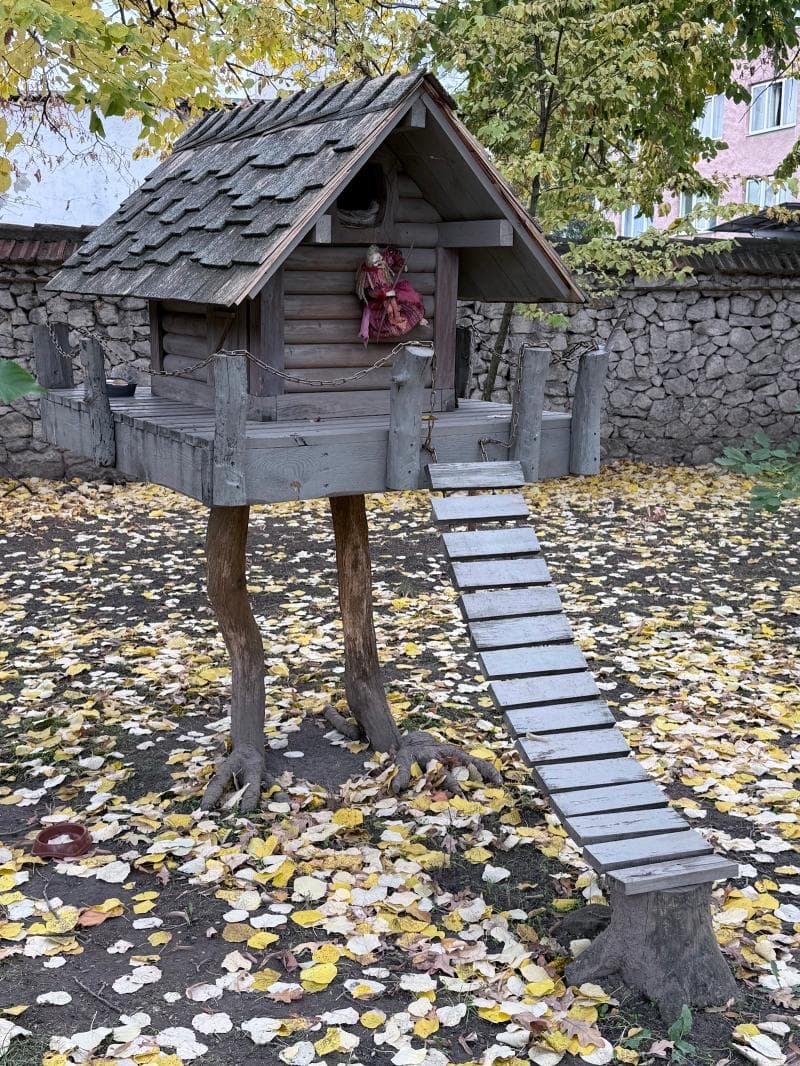
Explore the Pushkin Memorial Rooms in Chisinau, Moldova, where Russia's national poet Alexander Pushkin lived in exile and wrote masterpieces.
Overview
Nestled in the heart of Chisinau, Moldova, the Pushkin Memorial Rooms offer a profound glimpse into a pivotal period in the life of Alexander Pushkin, Russia's revered national poet. More than just a house museum, this complex serves as a tangible link to the early 19th century, preserving the very space where Pushkin lived during his exile from 1820 to 1823. The site comprises two main parts: the quaint memorial house, a faithfully reconstructed dwelling that served as Pushkin's personal residence, and a larger literary museum building housing extensive exhibits. It stands as one of only two preserved homes of Pushkin worldwide, making it a uniquely significant cultural monument in Moldova.
Visitors to the Pushkin Memorial Rooms can explore the intimate settings where the young poet crafted some of his most influential early works. The preserved cottage allows one to step into his world, seeing the modest room where he slept, wrote, and contemplated, while the adjacent museum enriches the experience with historical context and artifacts. It's a journey not just through Pushkin's time in Chisinau, but into the broader historical and cultural tapestry of Bessarabia during that era.
History & Cultural Background
Alexander Sergeyevich Pushkin arrived in Chisinau, then part of Bessarabia under Russian Imperial rule, on September 21, 1820. His presence in this distant outpost was not by choice; at the age of 21, he had been exiled by Tsar Alexander I due to his radical political poems expressing views on civil freedoms. While initially residing at the house of General Ivan Inzov, Pushkin soon moved to the merchant Ivan Naumov's guest house, which now forms the core of the memorial. He spent a total of three years in the region.
Despite reportedly disliking the provincial nature of Chisinau compared to St. Petersburg, Pushkin immersed himself in the local aristocratic and cultural circles, forging connections that would subtly influence his writing. This period of exile, though challenging, proved incredibly prolific for the poet. It was here that he penned significant Romantic poems such as 'The Prisoner of the Caucasus' and 'The Fountain of Bakhchisaray', and even began work on his monumental verse-novel, 'Eugene Onegin'. The museum officially opened its doors to the public on February 10, 1948, becoming a national monument that celebrates this remarkable chapter of Pushkin's life.
What Makes It Special
The true uniqueness of the Pushkin Memorial Rooms lies in their authenticity and intimate scale. Unlike grander literary museums, this site transports visitors directly into the poet's personal space. The 'tiny cottage', as it's often described, offers a rare, unvarnished look at the living conditions of a literary giant during a period of forced introspection and immense creativity. It is a tangible piece of history, preserving the actual room where Pushkin lived, worked, and found inspiration.
Furthermore, the museum's role in preserving Pushkin's legacy in Moldova is significant. It holds a valuable collection of materials related to his life in Bessarabia, including period paintings, prints, decorative art, sculptures, and crucially, original manuscripts and early editions of the works he conceived there. The complex is not just a static display; it is a dynamic cultural center that continues to tell the story of Pushkin's exile and his enduring impact on world literature.
Stories, Fun Facts & Local Details
- The Zemfira Connection: During his time in Chisinau, Pushkin is said to have fallen in love with a young Romani woman named Zemfira, who inspired his narrative poem 'The Gypsies'. Some literary historians even speculate that this character and poem indirectly influenced Prosper Mérimée's 'Carmen', which later became the famous opera by Bizet.
- Byron's Influence: Pushkin was a great admirer of Lord Byron. In his modest room, a portrait of Byron reportedly hung above his writing desk, serving as a constant source of inspiration and a reminder of a kindred spirit.
- A Prolific Exile: Despite his reported dislike for Chisinau's provincial life, Pushkin was remarkably productive here. Over 160 works of art, including significant poems like 'The Black Shawl' and 'To Ovid', are attributed to his three years in Bessarabia.
- A Rare Preservation: The Chisinau museum is one of only two existing houses globally where Pushkin resided that have been preserved and transformed into a museum, offering an almost unparalleled opportunity to connect with the poet's physical environment.
Visitor Perspective
Visiting the Pushkin Memorial Rooms is an introspective and enlightening experience for any traveler interested in literature, history, or cultural heritage. As you walk through the small, intimate rooms, particularly the preserved cottage, there's a palpable sense of stepping back in time. You can imagine the poet at his desk, grappling with themes of freedom and exile, his quill scratching across paper, illuminated by the soft light filtering through the window.
The museum's thoughtful arrangement of artifacts, from personal belongings to rare editions, provides a vivid narrative of Pushkin's tumultuous yet artistically rich period in Moldova. It's a place that invites quiet contemplation, allowing visitors to connect with the emotional depth of his exile and the creative genius that flourished despite adversity. The contrast between the grandeur of his literary output and the simplicity of his Chisinau dwelling offers a compelling insight into the poet's character. Whether you are a dedicated Pushkin scholar or a curious wanderer, the memorial rooms offer a unique and moving encounter with a literary legend, etched into the cultural landscape of Chisinau.
Coordinates: 28.836667, 47.031667
View on Google Maps💬 How Travelers Describe This Place
Based on community votes
Must See
799Photogenic
539Unique
424Interesting
234Beautiful
30
Traveler Stories
Discover memorable experiences shared by travelers who have visited this place.
No traveler stories yet.
Be the first traveler to share what made this place memorable.

Tour
By
Spot
Discover amazing places around the world. Your journey starts here.
Explore
© 2026 TourBySpot. All rights reserved.