Pusher Street
Copenhagen, Denmark
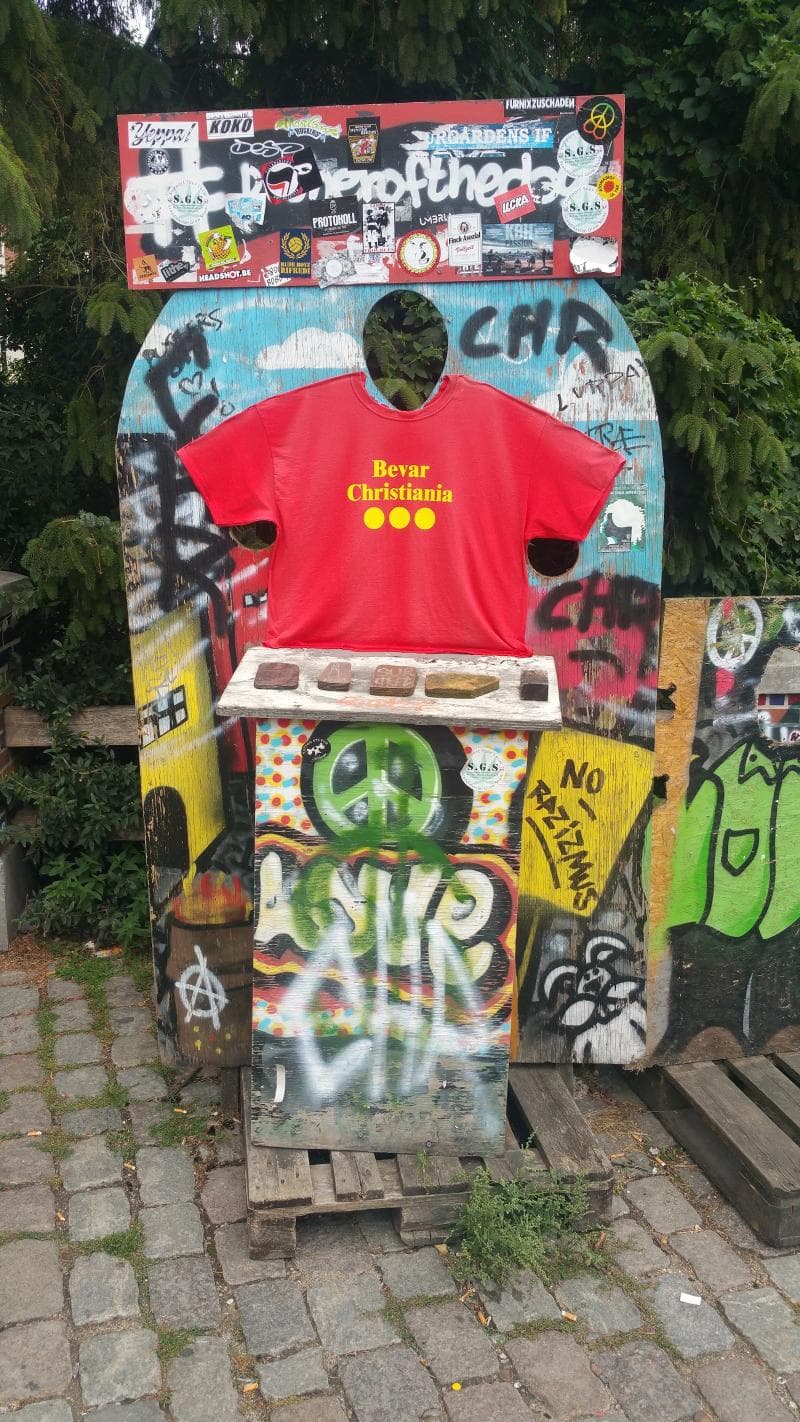
Explore Pusher Street in Copenhagen's Freetown Christiania, a unique cultural hub undergoing transformation from its past as a cannabis market.
Overview
Pusher Street, nestled within the distinctive Freetown Christiania in Copenhagen, Denmark, has long been a place of intrigue and transformation. Once widely known for its open, albeit illegal, cannabis trade, this unique thoroughfare has recently undergone a significant metamorphosis. Today, it stands as a testament to Christiania's enduring spirit of autonomy and community, evolving from its past reputation into a space that increasingly embraces creativity, culture, and communal life.
Freetown Christiania itself is a self-proclaimed autonomous neighborhood, covering about 34 hectares in the Christianshavn borough of Copenhagen. It is often regarded as a unique social experiment, a 'city within a city', operating under its own set of rules and values since its inception. Visitors entering Christiania are met with an atmosphere distinct from the rest of Copenhagen, characterized by homemade architecture, green spaces, and a vibrant artistic scene.
History & Cultural Background
The story of Pusher Street is deeply intertwined with the founding of Freetown Christiania in 1971. Originally, Christiania was established by squatters and countercultural activists on an abandoned military base, seeking an alternative way of life focused on freedom, community, and alternative living.
Early on, the open sale of cannabis became a prominent feature, concentrated in what became known as Pusher Street. While never legal under Danish law, authorities for many years adopted a policy of tolerance, partly due to the belief that concentrating the hash trade in one place might prevent its wider dispersion and deter the use of harder drugs.
However, this unregulated environment attracted criminal elements, leading to gang violence and safety concerns, particularly in the 1980s and 1990s. Over the decades, Christiania residents and Danish authorities have engaged in ongoing dialogues and crackdowns regarding the cannabis trade. Following several violent incidents, the community made a decisive move in 2023, culminating in the symbolic act of digging up the cobblestones on Pusher Street on April 6, 2024, to dismantle the open market. This action marked a significant shift towards reclaiming the street for community and cultural purposes.
What Makes It Special
Pusher Street's enduring specialness lies in its role as a microcosm of Christiania's larger narrative of self-governance and resistance. For years, it represented a tangible challenge to conventional laws, embodying Christiania's 'free town' status. Its transition signifies the community's ongoing efforts to adapt and redefine itself while preserving its core values.
Beyond its historical association with cannabis, Pusher Street and the surrounding Christiania are special for their vibrant alternative culture. The area is characterized by its unique, often self-built houses, street art, and a thriving scene of workshops, galleries, and music venues. It's a place where artists, craftspeople, and residents have built much of the neighborhood by hand, fostering a tight-knit community.
Stories, Fun Facts & Local Details
Historically, Pusher Street was sometimes dubbed the 'Green Light District' due to its open cannabis trade. Visitors were traditionally advised to adhere to a few unwritten rules while in the area, such as 'Have fun; No photos; No running'. The 'no running' rule was particularly significant as it could signal a police raid and create panic. While the open market has been dismantled, respect for the community's guidelines remains paramount.
A notable fun fact about the recent transformation is the communal effort on April 6, 2024, when residents, politicians, and friends of Christiania gathered to physically dig up the cobblestones of Pusher Street. These cobblestones, laden with decades of history, were then carried away in wheelbarrows, symbolizing a fresh start for the street and its community.
Today, as you explore Pusher Street, you might encounter cozy cafés, small art shops, and the aroma of freshly baked bread. The area also features Nemoland, a large open-air seating area that hosts concerts during the summer months. Visitors might even spot one of Thomas Dambo's distinctive trolls, adding a whimsical, almost fairy-tale element to the landscape.
Visitor Perspective
Visiting Pusher Street and Christiania offers a truly unique experience within Copenhagen. It is important to approach the area with an open mind and respect for its distinct culture and resident community.
While the open cannabis market is no longer in operation, it is crucial for visitors to understand that recreational cannabis remains illegal in Denmark, including within Christiania. The area's current focus is on fostering a vibrant, creative, and responsible community. Travelers are encouraged to explore the handmade stalls, art, and cafes, and enjoy the diverse cultural offerings.
Remember to be mindful of signs and instructions, particularly regarding photography, which is still generally discouraged in certain residential parts of Christiania to respect privacy. By engaging with an attitude of curiosity and respect, visitors can appreciate the ongoing evolution of Pusher Street and the unique spirit of Freetown Christiania.
Coordinates: 12.5932, 55.6708
View on Google Maps💬 How Travelers Describe This Place
Based on community votes
Photogenic
995Beautiful
989Must See
613Interesting
603Unique
581
Traveler Stories
Discover memorable experiences shared by travelers who have visited this place.
No traveler stories yet.
Be the first traveler to share what made this place memorable.

Tour
By
Spot
Discover amazing places around the world. Your journey starts here.
Explore
© 2026 TourBySpot. All rights reserved.