Purification Pools
Bali, Indonesia
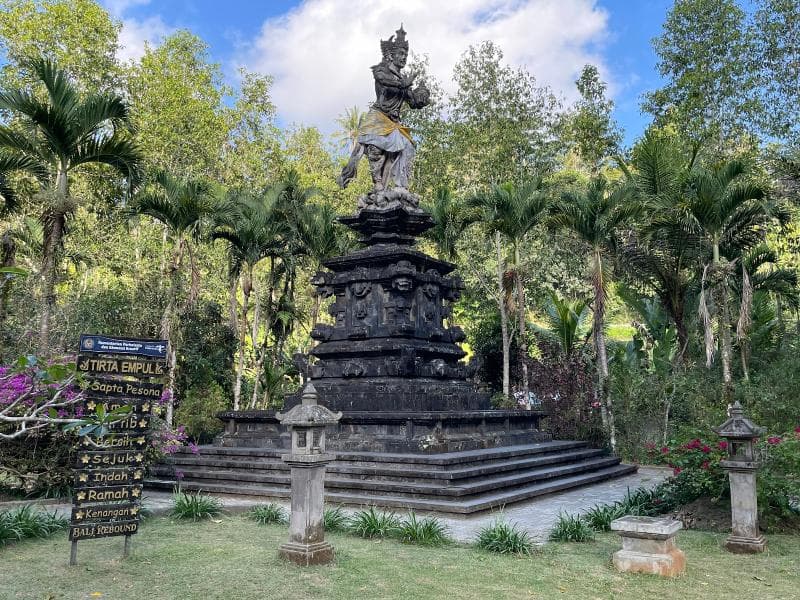
Discover the sacred Purification Pools at Tirta Empul Temple in Bali, Indonesia. Learn about the ancient Melukat cleansing ritual and its spiritual significance.
Overview
Nestled in the lush highlands of central Bali, the Purification Pools at Tirta Empul Temple offer a profound spiritual experience, deeply rooted in Balinese Hindu traditions. Known locally as 'Melukat', the ritual bathing in these sacred pools is a central practice for cleansing the mind, body, and spirit. The temple itself, whose name 'Tirta Empul' translates to 'holy water spring', is a significant destination for both local Balinese Hindus and curious travelers seeking spiritual renewal. The crystal-clear water continuously flows from a natural spring, feeding the intricately designed purification pools and fountains within the temple complex.
Visitors to Tirta Empul Temple can witness or partake in the ancient ritual, making it a unique cultural immersion. The pools are located in the 'Jaba Tengah', or central courtyard, of the temple, where a series of water spouts guide participants through the purification process. This sacred site in Tampaksiring, Bali, is not merely a tourist attraction but a living temple where spiritual practices have been performed for over a millennium.
History & Cultural Background
Tirta Empul Temple boasts a rich history, dating back to 962 AD during the Warmadewa dynasty. It is dedicated to Vishnu, the Hindu god of water, highlighting the profound importance of water in Balinese spiritual life. The temple's origins are woven into local mythology, particularly the legend of the god Indra and the evil king Mayadenawa. According to this tale, Mayadenawa poisoned the local water sources, causing Indra's army to fall ill. To save his warriors, Indra pierced the earth with his staff, creating the sacred healing spring that became Tirta Empul. This event symbolized the victory of good over evil and the restorative power of the holy water.
For the Balinese, water, known as 'tirta', is a sacred element imbued with life force, balance, and spiritual clarity. The continuous flow of water from the natural spring at Tirta Empul is believed to be a constant source of this spiritual energy, making it a vital site for realignment and purification in Balinese Hinduism. The temple is an integral part of Bali's wider network of water temples, which are closely linked to the 'subak' irrigation system that regulates rice fields, connecting spiritual practices with the organization of the land.
What Makes It Special
The Purification Pools at Tirta Empul are distinguished by their direct connection to a natural, continuously flowing spring within the temple complex, making the water exceptionally pure and believed to possess strong spiritual energy. Unlike other temples that might use river water for purification, Tirta Empul's spring water is considered inherently more potent. This sacred water is believed to hold potent healing properties, making it central to the Melukat ceremony, where participants immerse themselves in a spiritual journey. The layout of the pools with numerous spouts, each with its own symbolic meaning, contributes to the unique and deeply structured purification ritual.
The physical act of purification at Tirta Empul is a powerful experience, representing a tangible connection to Bali's spiritual essence. The atmosphere within the temple, surrounded by lush greenery and traditional Balinese architecture, amplifies the spiritual energy, fostering a sense of peace and tranquility for those participating.
Stories, Fun Facts & Local Details
The Melukat ceremony is a deeply personal and sacred act for Balinese Hindus, performed for various reasons, such as before significant life events, after illness, or on holy days. The word 'Melukat' comes from the Old Javanese word 'lukat', meaning 'to release' or 'to let go', symbolizing the release of negative energy and emotional burdens. Participants move sequentially through the fountains, allowing the holy water to flow over their heads and bodies. It's important to note that two specific spouts are reserved exclusively for cleansing deceased bodies and are not to be used by the living during the Melukat ritual. Visitors are guided by local experts who explain the profound meaning behind each step of the ritual, believed to heal emotional wounds, alleviate stress, and pave the way for a harmonious life. Traditionally, women who are menstruating are advised not to enter the temple grounds, showing respect for the sanctity of the space.
Visitor Perspective
For visitors, participating in the purification ritual at Tirta Empul offers a chance to immerse themselves in Bali's rich spiritual culture. Many describe the experience as deeply meaningful, bringing a sense of peace and rejuvenation, regardless of their own spiritual beliefs. To fully engage, visitors are required to wear a sarong and sash, which can be rented or are sometimes provided with guided packages. It's advisable to bring a change of clothes if you plan to partake in the bathing. To avoid the largest crowds and experience a more peaceful atmosphere, an early morning visit is often recommended. While you can explore the temple grounds without participating in the bathing, engaging with the Melukat ceremony, ideally with a knowledgeable local guide, offers a transformative experience and a deeper appreciation for this ancient tradition.
Coordinates: 115.315, -8.4137
View on Google Maps💬 How Travelers Describe This Place
Based on community votes
Beautiful
963Unique
723Photogenic
482Must See
463Interesting
274
Traveler Stories
Discover memorable experiences shared by travelers who have visited this place.
No traveler stories yet.
Be the first traveler to share what made this place memorable.

Tour
By
Spot
Discover amazing places around the world. Your journey starts here.
Explore
© 2026 TourBySpot. All rights reserved.