Public Squares
Almaty, Kazakhstan
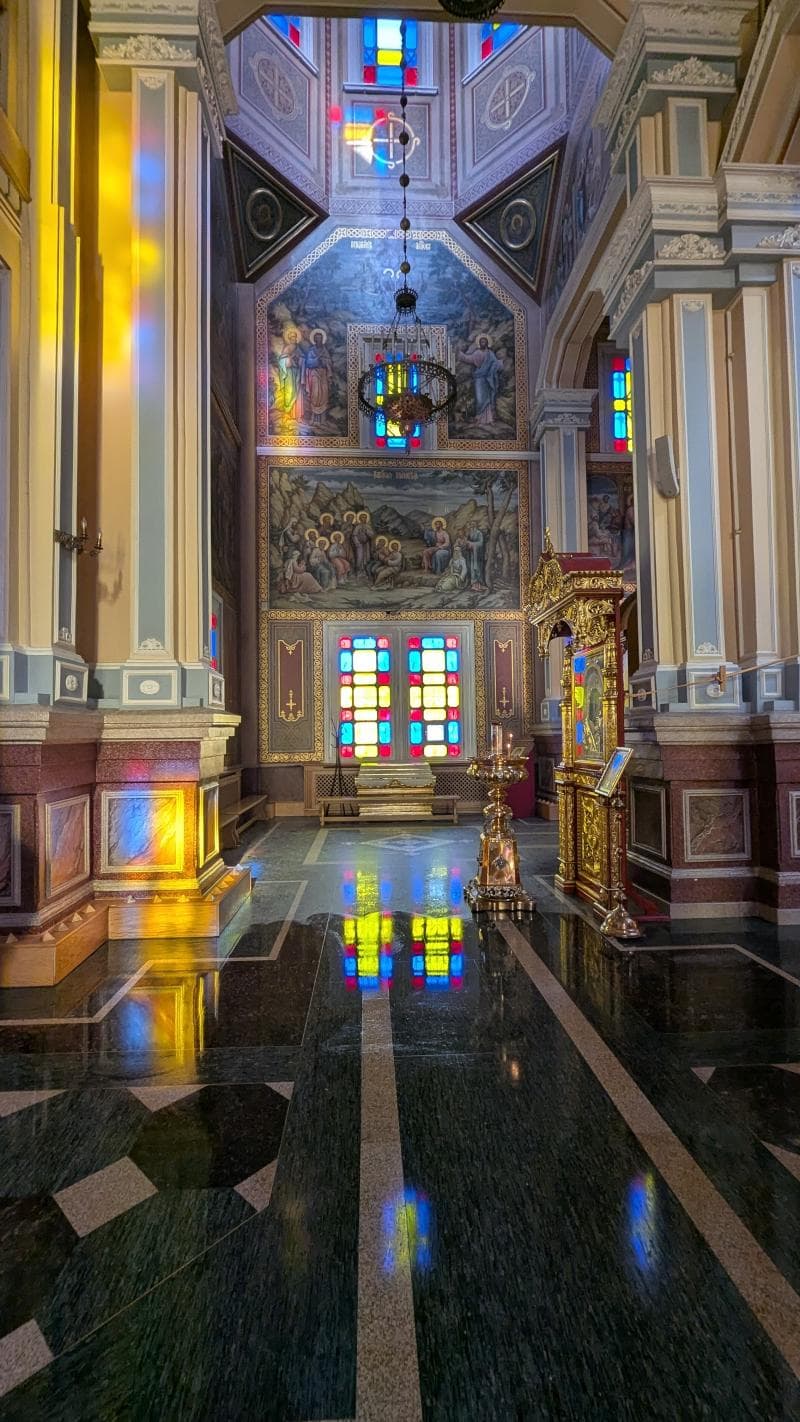
Explore the historic public squares of Panfilov Park in Almaty, Kazakhstan, featuring the iconic Zenkov Cathedral and the Memorial of Glory.
Overview
Nestled in the vibrant heart of Almaty, Kazakhstan, Panfilov Park, officially known as the Park of 28 Panfilov Guardsmen, serves as a significant green oasis and a central public space. While not featuring designated 'Public Squares' as standalone entities, the park itself is an expansive urban area housing various open spaces and historical landmarks that function as important public gathering points. Its tree-lined avenues and serene atmosphere offer a peaceful retreat from the city's bustle, drawing both locals and international visitors. The park is home to the iconic Zenkov Cathedral, a marvel of wooden architecture, and the solemn Memorial of Glory with its Eternal Flame, commemorating wartime heroes. These sites, surrounded by carefully maintained pathways and green lawns, collectively form the public squares within this historic park, inviting reflection, leisure, and cultural engagement.
History & Cultural Background
The origins of Panfilov Park trace back to the 1870s when it was established as the Urban Garden. Over the decades, it underwent several transformations and renamings, reflecting significant shifts in the region's history, from Pushkin Garden to Lenin Park. Its current name, adopted in 1942, honors the 28 Panfilov Guardsmen, a group of soldiers from an Alma-Ata infantry unit who bravely defended Moscow during World War II's Battle of Moscow against German advances. This historical dedication imbues the park with deep cultural resonance, serving as a powerful symbol of courage and sacrifice. A pivotal architectural gem within the park is the Ascension Cathedral, also known as Zenkov Cathedral, constructed between 1904 and 1907. This Russian Orthodox cathedral is famed for being one of the world's tallest wooden buildings and its remarkable survival of the devastating 1911 earthquake that razed much of the city of Verniy (Almaty's former name). The Memorial of Glory, with its Eternal Flame, was added in 1975 to mark the 30th anniversary of victory in the Great Patriotic War, further cementing the park's role as a site of national remembrance and reverence.
What Makes It Special
What truly sets Panfilov Park apart is the striking combination of natural beauty and profound historical significance. The Zenkov Cathedral stands as a testament to early 20th-century engineering and artistic ingenuity, purportedly built almost entirely without nails, a fact that contributes to its legendary status. Its vibrant, colorful facade and intricate wooden details are a breathtaking sight against the green backdrop of the park. The cathedral's resilience during the 1911 earthquake is often cited as proof of its unique earthquake-proof design, using flexible wooden fasteners that allowed the structure to move with the tremors. Adjacent to this architectural wonder is the Memorial of Glory, a powerful triptych of monuments dedicated to different periods of Kazakh history, culminating in the Eternal Flame. This flame perpetually burns, honoring those who fell in various conflicts, and is a focal point for remembrance, especially on Victory Day. The park also houses the Kazakh Museum of Folk Musical Instruments, preserving the rich musical heritage of the region.
Stories, Fun Facts & Local Details
Local lore frequently recounts the remarkable construction of the Zenkov Cathedral, emphasizing its 'no-nails' assembly, a detail that, while perhaps an exaggeration (minimal nails were likely used), highlights the exceptional craftsmanship involved. During the Soviet era, the cathedral was deconsecrated and repurposed, serving variously as a museum and a concert hall, with the first Almaty radio transmitters housed in its belfry. It was only returned to the Russian Orthodox Church in 1995. The story of the 28 Panfilov Guardsmen themselves is a tale of extraordinary bravery, where these soldiers made a valiant stand, enabling a crucial delay in the German advance on Moscow. Today, the Eternal Flame at the Memorial of Glory is not just a monument but a living tradition, with schoolchildren often participating in honor guard duties, a custom revived from Soviet times. Visitors often observe locals laying flowers, especially veterans, creating a deeply moving atmosphere of respect and patriotism.
Visitor Perspective
For the curious traveler, Panfilov Park offers a multi-faceted experience. It's a place for quiet contemplation at the Memorial of Glory, where the solemnity of the Eternal Flame invites reflection on shared history and sacrifice. It's also a place for architectural awe when standing before the colorful and intricate Zenkov Cathedral, a true masterpiece of wooden construction. The park's wide, shaded avenues, lined with ancient oaks, elms, and firs, are perfect for leisurely strolls, people-watching, or simply enjoying a moment of tranquility amidst the urban landscape. Families often gather here, children play, and friends share conversations on park benches. The Museum of Folk Musical Instruments provides an insightful cultural detour, showcasing Kazakhstan's vibrant musical heritage. Whether one seeks historical depth, architectural beauty, or simply a peaceful green space, Panfilov Park's public squares and their surrounding attractions provide a rich and meaningful encounter with Almaty's soul. It's a destination where history whispers from every tree and monument, connecting visitors to the enduring spirit of Kazakhstan.
Coordinates: 76.95306, 43.25889
View on Google Maps💬 How Travelers Describe This Place
Based on community votes
Beautiful
551Must See
547Photogenic
421Unique
298Interesting
212
Traveler Stories
Discover memorable experiences shared by travelers who have visited this place.
No traveler stories yet.
Be the first traveler to share what made this place memorable.

Tour
By
Spot
Discover amazing places around the world. Your journey starts here.
Explore
© 2026 TourBySpot. All rights reserved.