Preserved Manuscripts
Chisinau, Moldova
Explore the Preserved Manuscripts at the Pushkin Museum in Chisinau, Moldova, and delve into the literary world of Alexander Pushkin's exile.
Overview
Nestled in the heart of Chisinau, Moldova, the Pushkin House-Museum offers a unique glimpse into the life and work of Russia's national poet, Alexander Pushkin. While often referred to simply as the Pushkin Museum, this significant cultural institution is more specifically the preserved residence where Pushkin lived during his exile between 1820 and 1823. It stands as one of only two houses where the poet resided that have been preserved globally, making it a truly rare and important site for literary enthusiasts.
Beyond the personal effects and period furniture that recreate the atmosphere of his time, a core highlight of the museum's collection is its display of preserved manuscripts and rare editions. These precious documents provide an intimate connection to Pushkin's creative process and the literary output that emerged from his time in Bessarabia. Visitors can explore the cottage where he lived and a separate literary exhibition building, both filled with artifacts that chronicle his dramatic life and profound impact on literature.
History & Cultural Background
Alexander Pushkin, at just 21 years old, was exiled from Russia in September 1820 by the Tsarist administration due to his politically charged views, finding himself in Chisinau, then the capital of Bessarabia. His three-year stay in Moldova, lasting until 1823, proved to be an incredibly fertile period for his writing. The house, originally belonging to either General Inzov or the merchant Naumov, became a museum on February 10, 1948, preserving the environment that shaped some of his most notable works.
During his time in Chisinau, Pushkin penned a remarkable number of poems and began his monumental novel in verse. Among the works conceived or completed here are 'The Prisoner of the Caucasus', 'The Black Shawl', 'To Ovid', and 'The Fountain of Bakhchisarai'. Significantly, it was also in Chisinau that he commenced writing 'Eugene Onegin', which he famously dubbed an 'Encyclopedia of Russian life'. He immersed himself in the local cultural scene, forging connections with the Moldovan literary elite of the era.
What Makes It Special
What truly sets the Pushkin House-Museum apart, particularly regarding its literary treasures, is the existence of the preserved manuscripts and early editions of his works. These aren't just generic historical documents; they are tangible links to the very genesis of modern Russian literature. Viewing Pushkin's writings in his original handwriting provides an unparalleled insight into his creative evolution, his revisions, and the immediacy of his genius during a pivotal period of his exile.
The collection showcases the profound influence Chisinau had on Pushkin, as visitors can see the direct results of his Moldovan sojourn. These manuscripts are not merely objects but narrative threads, revealing the thought processes of a literary giant and highlighting how his experiences in this distant outpost of the Russian empire fueled his imagination and output. The rarity of such artifacts, especially those directly connected to his exile and prolific writing during that time, imbues them with immense historical and cultural value.
Stories, Fun Facts & Local Details
Pushkin's time in Chisinau was far from quiet solitude. Despite his exile, he was known for a lively social life, often engaging in 'amorous intrigues, hard drinking and occasional violence' alongside his intense writing schedule. It's a fascinating paradox that such profound literary works emerged from a period characterized by both creative fervor and passionate revelry. His ability to produce over 160 works of art during his Bessarabian years, including the initial chapters of 'Eugene Onegin', speaks volumes about his genius and the stimulating, if sometimes turbulent, environment.
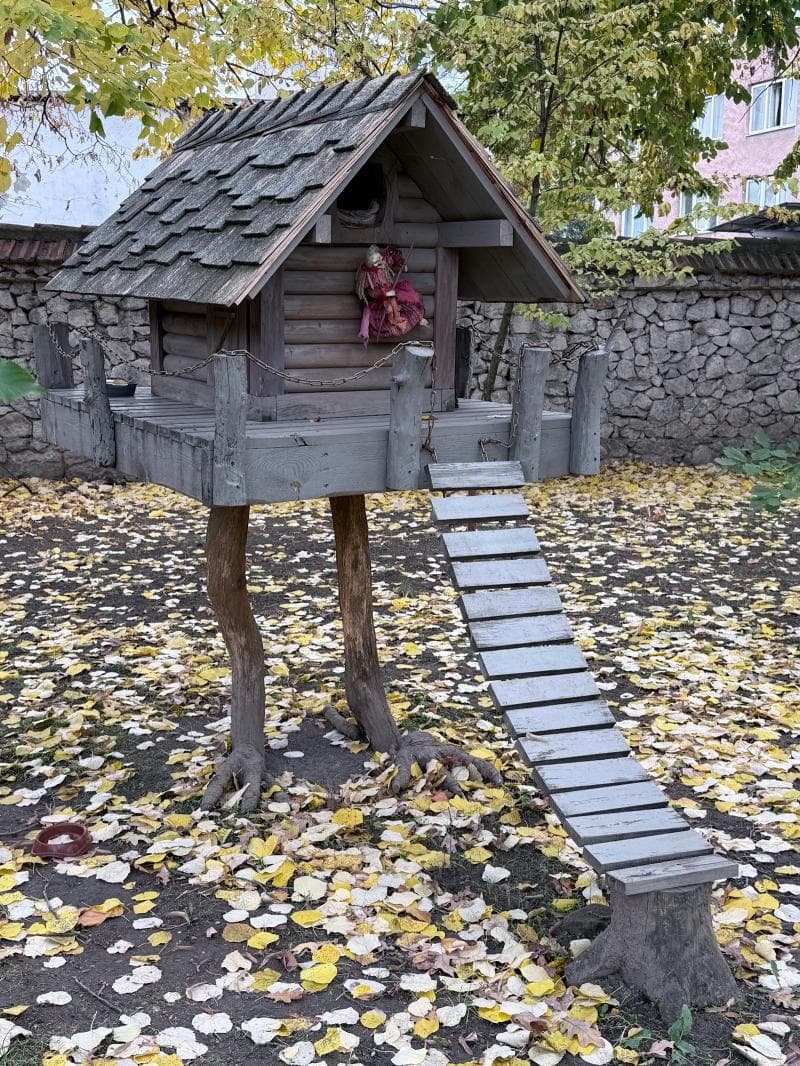
The museum complex itself contributes to the rich narrative. Visitors can explore Pushkin's tiny cottage, preserved with original furnishings, including a portrait of his hero, Lord Byron, on his writing desk. This personal detail offers an intimate connection to the poet's inspirations. While not directly related to manuscripts, a quirky detail mentioned by some visitors is the 'whimsical Baba Yaga house tucked away at the back of the garden', adding an unexpected touch of local folklore to the historical setting.
Visitor Perspective
Visiting the Pushkin House-Museum offers an intimate and enriching experience for any traveler interested in literature, history, and cultural heritage. The layout allows for an exploration of both Pushkin's personal living quarters and the dedicated literary exhibition. While English-language information might sometimes be limited, the museum often provides written guides to help international visitors appreciate the exhibits and Pushkin's profound story.
The museum's setting at Strada Anton Pann 19 in Chisinau makes it easily accessible. Many visitors find that the museum can be thoroughly explored in a relatively short amount of time, making it an excellent addition to a walk through Chisinau's historic city center. It's a contemplative space, allowing you to step back in time and feel the presence of one of the world's most influential poets, providing a deeper understanding of the Moldovan cultural landscape through a literary lens.
Coordinates: 28.8367, 47.0318
View on Google Maps💬 How Travelers Describe This Place
Based on community votes
Beautiful
539Interesting
517Photogenic
422Unique
251Must See
234
Traveler Stories
Discover memorable experiences shared by travelers who have visited this place.
No traveler stories yet.
Be the first traveler to share what made this place memorable.

Tour
By
Spot
Discover amazing places around the world. Your journey starts here.
Explore
© 2026 TourBySpot. All rights reserved.