Prayer Chapel
Skopje, North Macedonia
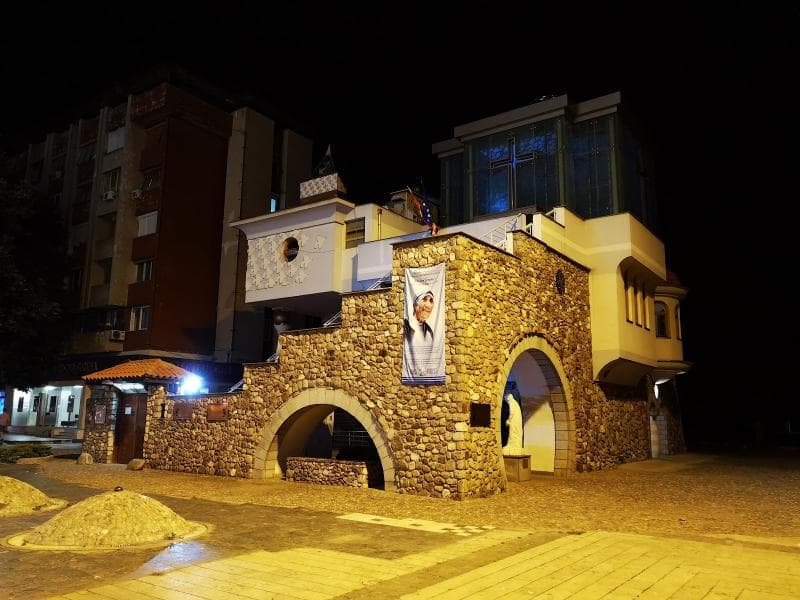
Discover the Prayer Chapel inside the Memorial House of Mother Teresa in Skopje, North Macedonia – a serene sanctuary on her baptismal site.
Overview
Within the modern architectural embrace of the Memorial House of Mother Teresa in Skopje, North Macedonia, lies a serene and spiritually significant space: the Prayer Chapel. This chapel serves as a focal point for contemplation and a tangible connection to the life and enduring legacy of Saint Teresa of Calcutta. It is situated on the upper level of the memorial house, offering a tranquil sanctuary above the bustling exhibits that trace her journey from her birthplace. Here, Catholic priests periodically hold services, and importantly, a precious relic of Mother Teresa is occasionally presented during honorary masses, imbuing the space with profound spiritual meaning.
The Memorial House itself stands on a historically resonant site — the former location of the Sacred Heart of Jesus Roman Catholic Church, where Mother Teresa, then known as Anjezë Gonxhe Bojaxhiu, was baptized a day after her birth in 1910. The Prayer Chapel, with its distinctive design featuring glass walls adorned with intricate filigree work, offers visitors a quiet corner for personal reflection, making it a powerful testament to her unwavering faith and humanitarian spirit.
History & Cultural Background
The Memorial House of Mother Teresa was conceived as a tribute to Skopje's most celebrated daughter and Nobel Peace Prize laureate. Its construction began in May 2008 and it was officially opened to the public in January 2009, forming part of the larger Skopje 2014 urban revitalization project. The decision to place it on the exact location of the Sacred Heart of Jesus Roman Catholic Church was deliberate, honoring her roots and baptismal site. This church, unfortunately, had been destroyed during the devastating 1963 Skopje earthquake.
The architect, Vangel Božinovski, designed the memorial with an intent to capture the spirit of Skopje at the turn of the 20th century—a vibrant crossroads where Oriental East met Christian West. The entire building is envisioned as a cenotaph, a monument meant to invite the soul of the deceased back to its origins. This concept was further solidified when the Pope approved the transfer of a bone relic from Mother Teresa's finger to the memorial house, transforming it into an official sanctuary and deepening its spiritual significance for pilgrims and visitors alike.
What Makes It Special
The Prayer Chapel distinguishes itself through several unique attributes. Foremost is its direct connection to Mother Teresa's spiritual beginnings, standing symbolically on the ground where she received the sacrament of baptism. This makes it a profound site for those seeking to connect with her early life and faith journey.
The presence of a first-class relic of Mother Teresa—a piece of bone from her finger—elevates the chapel from a commemorative space to an actual sanctuary, approved by the Vatican. This makes it a significant pilgrimage site for Catholics and a place of deep reverence for all who admire her work.
Architecturally, the chapel is visually striking. Its glass walls are intricately adorned with filigree, a traditional Macedonian craftsmanship. Woven into this delicate metalwork are silhouettes of doves, serving as a powerful symbol of peace, echoing Mother Teresa's tireless advocacy for humanitarianism and global harmony. This blend of traditional artistry with modern design creates an atmosphere both sacred and aesthetically captivating.
Stories, Fun Facts & Local Details
- It is a lesser-known detail that Mother Teresa was baptized just one day after her birth in the church that once stood on this very spot. This immediate embrace into the Catholic faith profoundly shaped her life's trajectory.
- The design of the Prayer Chapel, with its modern glass and traditional filigree, subtly tells a story of cultural fusion. The architect aimed to reflect the diverse influences present in Skopje during Mother Teresa's childhood, illustrating how a blend of cultures can inspire universal messages of peace, symbolized by the doves in the filigree.
- The concept of the Memorial House as a 'cenotaph'—a symbolic tomb designed to call the spirit home—is a fascinating architectural and spiritual detail. The addition of Mother Teresa's relic transforms this symbolic intention into a tangible reality, making the building a true spiritual home for her memory.
- While the Memorial House is celebrated, its contemporary design and significant cost have sometimes sparked discussion, particularly given Mother Teresa's lifelong commitment to poverty and simplicity. However, the chapel's understated elegance offers a counterpoint, focusing purely on spiritual function.
- For groups visiting the Memorial House, it's possible to arrange for a special mass to be held in the Prayer Chapel, offering a unique and deeply personal spiritual experience.
Visitor Perspective
For many visitors, the Prayer Chapel within the Memorial House of Mother Teresa is the quiet heart of their experience. After exploring the museum's exhibits detailing her early life and humanitarian work, entering the chapel offers a moment of profound calm and introspection. It is a space designed to foster peace and allow for personal reflection, providing a spiritual anchor amidst the historical narrative.
The chapel's serene ambiance, often quiet and bathed in soft light filtered through the ornate glass, invites visitors to pause, meditate, or offer a silent prayer. It's a place where one can truly feel the presence of Mother Teresa's enduring message of compassion and service. The opportunity to be in the same space where her relic is honored connects visitors directly to the sanctity of her life, making the abstract concepts of faith and charity feel deeply personal. Visitors often leave feeling inspired, carrying with them a sense of hope and a renewed appreciation for acts of kindness, however small.
Coordinates: 21.4307, 41.9938
View on Google Maps💬 How Travelers Describe This Place
Based on community votes
Beautiful
898Unique
667Must See
308Photogenic
190Interesting
32
Traveler Stories
Discover memorable experiences shared by travelers who have visited this place.
No traveler stories yet.
Be the first traveler to share what made this place memorable.

Tour
By
Spot
Discover amazing places around the world. Your journey starts here.
Explore
© 2026 TourBySpot. All rights reserved.