Prayer Chapel
Pristina, Kosovo
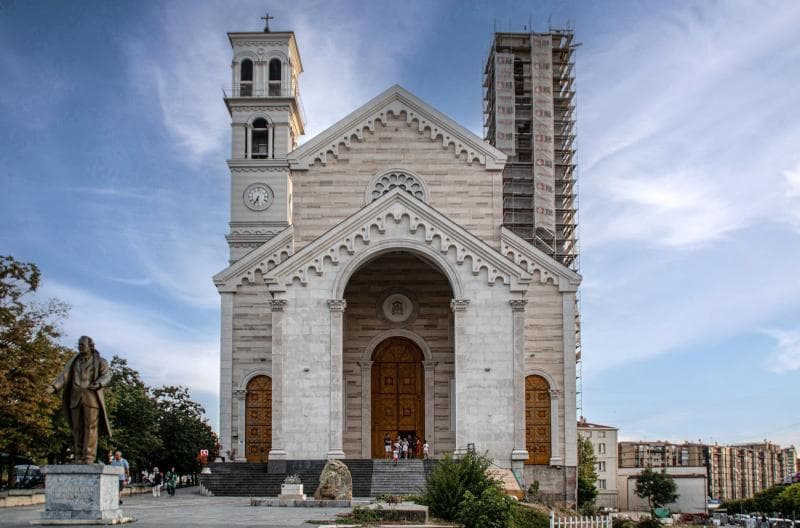
Discover the Cathedral of Saint Mother Teresa in Pristina, Kosovo – a modern symbol of faith, tolerance, and Albanian heritage. Explore its grand architecture and serene interior.
Overview
In the vibrant heart of Pristina, Kosovo, stands the Cathedral of Saint Mother Teresa, a modern architectural marvel dedicated to the revered Albanian-Indian nun and Nobel Peace Prize laureate. While travelers might search for a distinct 'Prayer Chapel' within its walls, the entire cathedral serves as a profound space for spiritual reflection, prayer, and quiet contemplation. This grand edifice, consecrated to Saint Teresa of Calcutta, is not just a place of worship for the Catholic community; it is a powerful symbol of interfaith harmony, national pride, and Kosovo's journey towards a diverse and inclusive future.
As you approach, the Cathedral's imposing presence, marked by its Romanesque Revival style and towering bell tower, immediately captures attention, making it one of Pristina's most recognizable landmarks. Stepping inside, visitors are greeted by a serene atmosphere, designed to foster a sense of peace and spirituality, inviting everyone to pause from the city's bustle.
History & Cultural Background
The vision for the Cathedral of Saint Mother Teresa began to materialize in the early 2000s, following Kosovo's post-war reconstruction. The foundation stone was ceremonially laid in 2005 by the then-President of Kosovo, Ibrahim Rugova, a Muslim, a gesture that profoundly symbolized the nation's commitment to religious tolerance and pluralism. Construction officially commenced in 2007, with significant financial contributions from the Albanian diaspora, reflecting a collective dedication to honoring Mother Teresa's legacy.
Though unfinished at the time, the cathedral was inaugurated on September 5, 2010, commemorating the 100th anniversary of Mother Teresa's birth and the anniversary of her passing. Its formal consecration took place seven years later, on September 5, 2017. The decision to dedicate this monumental church to Mother Teresa is deeply rooted in Albanian national identity; despite her extensive work in India, she was of Albanian descent and remains a profound source of pride for the Albanian people.
What Makes It Special
The Cathedral of Saint Mother Teresa stands out not only for its dedication but also for its distinctive Neo-Romanesque, Italianate architectural style. Constructed primarily of brick, its design features a spacious central nave and elegant apse, creating an open and welcoming interior. One of its most striking features is its bell tower, which rises approximately 70 meters (250 feet) high, making it one of the tallest structures in Pristina and offering panoramic views of the city.
Inside, the Cathedral's interior is adorned with elements that encourage spiritual contemplation. Beautiful stained glass windows filter light, creating a peaceful ambiance, while marble altars and a statue of Mother Teresa serve as focal points for prayer and reflection. The grand scale of the main hall itself provides an encompassing 'prayer chapel' experience, designed to accommodate a large number of worshippers and visitors seeking solace.
Stories, Fun Facts & Local Details
Beyond its architectural grandeur, the Cathedral embodies remarkable stories of unity. Despite Kosovo being a predominantly Muslim country, the construction of this Catholic cathedral received broad public and political support, highlighting a unique spirit of interreligious cooperation. It is a testament to this spirit that local Muslims often join their Catholic neighbors during significant celebrations, such as Christmas masses held at the Cathedral, fostering a strong sense of community and shared cultural heritage.
The Cathedral serves as the seat of the Roman Catholic Diocese of Prizren-Pristina, solidifying its importance in the region's religious landscape. It's also noteworthy that during its construction, considerable funding came from the Albanian diaspora, a global community deeply invested in their homeland's development and cultural representation.
Visitor Perspective
For those visiting Pristina, the Cathedral of Saint Mother Teresa offers a unique opportunity for both spiritual enrichment and cultural exploration. The doors are open daily, welcoming believers and curious travelers alike. Visitors are encouraged to dress modestly and maintain a respectful quiet, as it remains an active place of worship.
While there isn't a specific sub-spot named 'Prayer Chapel' within the cathedral, the entire expansive interior functions as a serene environment for personal prayer and quiet reflection. For a small fee, you can ascend the bell tower via an elevator, which rewards visitors with breathtaking 360-degree views of Pristina and its surrounding landscape. This offers a chance to see the city from a unique vantage point, reflecting on its history and vibrant present.
Coordinates: 21.15933, 42.65639
View on Google Maps💬 How Travelers Describe This Place
Based on community votes
Photogenic
722Interesting
698Must See
465Beautiful
276Unique
126
Traveler Stories
Discover memorable experiences shared by travelers who have visited this place.
No traveler stories yet.
Be the first traveler to share what made this place memorable.

Tour
By
Spot
Discover amazing places around the world. Your journey starts here.
Explore
© 2026 TourBySpot. All rights reserved.