Prästgatan
Stockholm, Sweden
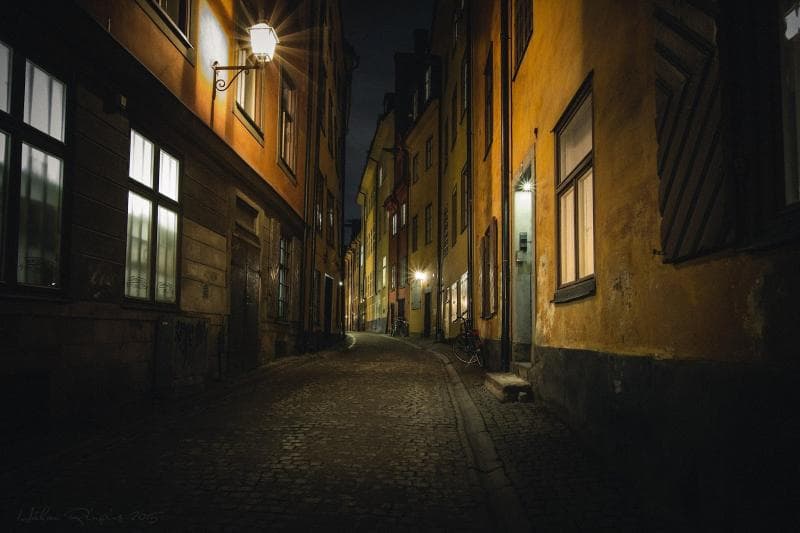
Explore Prästgatan in Stockholm's Gamla Stan, a historic street rich in clerical past, a Viking runestone, and hidden stories. Discover Sweden's medieval heart.
Overview
Tucked away in the ancient heart of Stockholm, within the captivating labyrinth of Gamla Stan, lies Prästgatan – 'Priest's Street'. This historic artery offers a serene counterpoint to the more bustling thoroughfares, inviting curious travelers to step back in time. Running parallel to what was once the city's innermost defensive wall, Prästgatan reveals centuries of Stockholm's past, from its medieval origins to its ecclesiastical significance. It's a place where history isn't just found in museums, but is etched into cobblestones and embedded within ancient walls. Visitors will discover a street less commercialized, retaining much of its old-world charm with its richly colored building facades and quiet corners.
History & Cultural Background
Prästgatan's narrative stretches back to at least 1586, when it was first documented, taking its name from the numerous priests who resided here. These were the clergy of both the prominent Stockholm Cathedral (Storkyrkan) and the German Church, highlighting the street's central role in the city's religious life. For centuries, the street was even informally divided into 'Svenska Prästgatan' (Swedish Priest Street) and 'Tyska Prästgatan' (German Priest Street), reflecting the distinct communities it served. The original parsonage, built in 1708, still stands today, a tangible link to these early inhabitants.
Before its clerical associations, parts of Prästgatan bore a darker reputation. A short northern section was once known as 'Helvetiegränden' or 'Hell's Lane'. While the exact reasons are debated, one theory suggests this grim name arose because the town's executioner lived in the vicinity. Adding to its layers of history, archaeological excavations in 1991 uncovered remnants of a Blackfriars monastery, a Dominican order institution that once played a significant role in medieval Stockholm before its destruction during the Protestant Reformation.
What Makes It Special
Prästgatan's special allure lies in its authentic preservation of history. Unlike other more heavily trafficked areas of Gamla Stan, it offers a glimpse into what the Old Town might have looked like centuries ago. The street's quiet cobblestones and historic buildings exude an atmosphere of timelessness. It's also uniquely positioned, with some houses incorporating parts of Stockholm's original medieval city wall into their foundations, making it one of the oldest streets in the city. The vibrant, often ochre-hued building exteriors provide a striking contrast against the Nordic sky, creating a picturesque scene that captures the essence of old Stockholm.
Stories, Fun Facts & Local Details
- The Ancient Runestone: Perhaps Prästgatan's most captivating secret is the Viking-era runestone embedded in the wall at the corner of Prästgatan and Kåkbrinken. Dating back to around 1000-1100 AD, it predates the city of Stockholm itself. The inscription reads: 'Torsten and Frögunn had the stone erected after their son,' offering a poignant connection to long-lost lives. It's believed the stone was brought here as building material, its original location now unknown.
- The Cannon Barrel: Right beside the runestone, a cannon barrel is cemented into the corner of the building. This peculiar feature was installed in the 17th century, not for defense, but as a practical measure to protect the building corners from damage caused by the large, unwieldy wagons navigating the narrow streets.
- Carl Larsson's Birthplace: The renowned Swedish artist Carl Larsson, celebrated for his idyllic depictions of Swedish family life, was born at Prästgatan 78 in 1853. His early life here was one of poverty, a stark contrast to the comfortable domestic scenes he later immortalized.
- Hidden Remnants: Keep an eye out for 17th-century waste pipes visible on some buildings, a subtle reminder of the street's continuous habitation and evolution.
Visitor Perspective
For the curious traveler, Prästgatan is an essential detour. It offers a chance to escape the main tourist thoroughfares and immerse oneself in the authentic character of Gamla Stan. Walking its length feels like uncovering a hidden gem, a quieter narrative amidst the grandeur of the Old Town. It's a street meant for slow exploration, where every turn might reveal a new historical detail or a picturesque view. The presence of the ancient runestone and the cannon barrel makes it particularly rewarding for those with an interest in history and unique urban artifacts. It evokes a 'stepping into a storybook' feeling, providing a meaningful cultural experience away from the crowds. Prästgatan serves as a vivid illustration of Stockholm's layered past, inviting contemplation and discovery at every step.
Coordinates: 18.0702777, 59.3270277
View on Google Maps💬 How Travelers Describe This Place
Based on community votes
Photogenic
934Unique
879Interesting
741Must See
482Beautiful
396
Traveler Stories
Discover memorable experiences shared by travelers who have visited this place.
No traveler stories yet.
Be the first traveler to share what made this place memorable.

Tour
By
Spot
Discover amazing places around the world. Your journey starts here.
Explore
© 2026 TourBySpot. All rights reserved.