Portraits
Salzburg, Austria
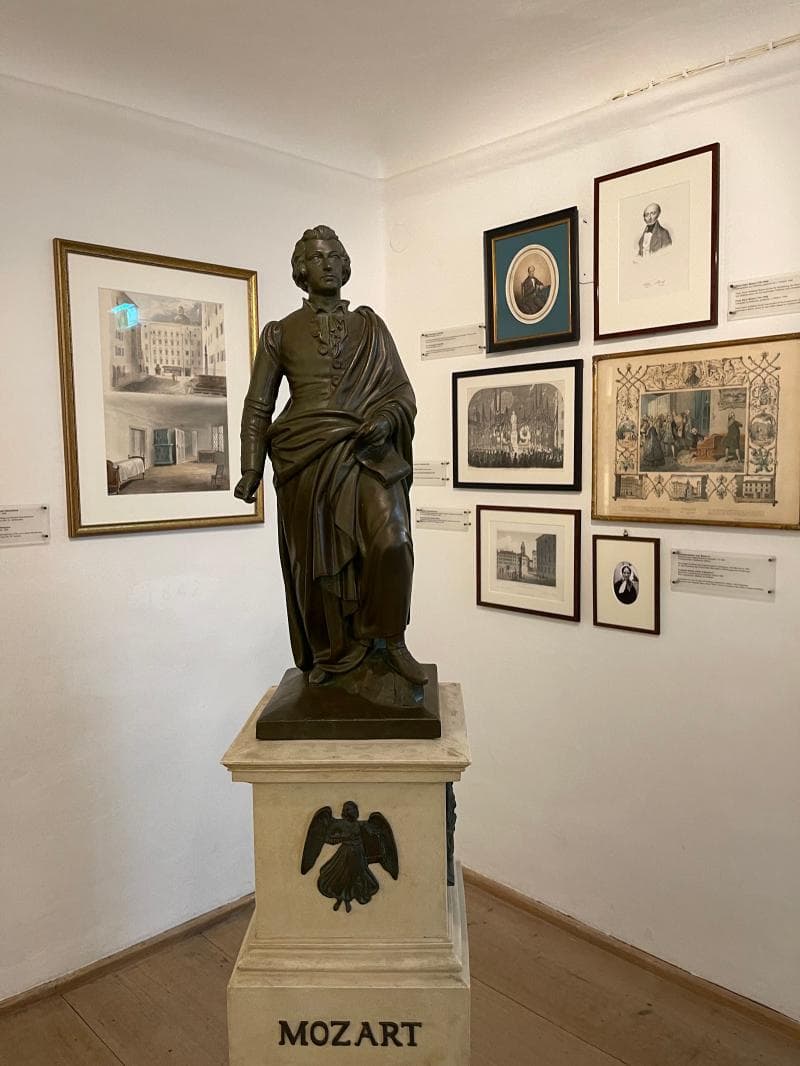
Discover authentic portraits of Wolfgang Amadeus Mozart and his family at Mozart's Birthplace in Salzburg, Austria. Explore historical depictions.
Overview
Stepping into 'Portraits' within Mozart's Birthplace in Salzburg, Austria, offers a rare opportunity to come face-to-face with the legendary composer and his family. This dedicated sub-spot, primarily located on the third floor of the historic Hagenauer House, presents a compelling collection of images that transcend mere artistic representations. It is here that visitors can truly visualize the individuals behind the music, observing them through the eyes of artists who knew them during their lifetimes. The exhibits feature original certificates, letters, and memorabilia alongside a rich array of portraits, bringing Wolfgang Amadeus Mozart's world to vivid life.
The display provides an intimate glimpse into the domestic circumstances and personal lives of the Mozart family, allowing for a deeper connection with their story. Far from idealized depictions, these portraits offer a more authentic portrayal of Wolfgang, his parents Leopold and Anna Maria, and his sister 'Nannerl', as well as later additions like his wife Constanze and their sons.
History & Cultural Background
Mozart's Birthplace at Getreidegasse 9 was home to the Mozart family for 26 years, from 1747 until 1773. It was in this very house, on the third floor, that Wolfgang Amadeus Mozart was born on January 27, 1756.
The International Mozarteum Foundation transformed this significant building into a museum in 1880, dedicating it to preserving and sharing Mozart's legacy. Over the decades, the museum has continuously evolved, becoming a pivotal cultural site that attracts enthusiasts from across the globe. The 'Portraits' section is integral to this mission, housing what is recognized as the world's largest collection of authentic Mozart family portraits. These images are not just art; they are historical documents, offering genuine insights into the family's appearance and social standing during the 18th century.
What Makes It Special
The 'Portraits' exhibit stands out due to its emphasis on authenticity. Unlike many later, often romanticized, depictions of Mozart, the collection within his Birthplace largely comprises works created during his lifetime or by those intimately familiar with him. This commitment to historical accuracy allows visitors to move beyond the popular, sometimes clichéd, image of the powdered wig and red jacket, to explore what Mozart might have genuinely looked like.
Among the treasures is the unfinished oil painting by Joseph Lange, Mozart's brother-in-law, from 1789, often referred to as 'Mozart at the Piano'. This particular work is notable for its striking portrayal of the composer. Another highlight is the silverpoint pen drawing by Dorothea Stock, considered by many to be the truest resemblance of Mozart, capturing him at 33 years old without any embellishment to idealize his features. With his distinctive thick hair and prominent eyes, it offers an unvarnished view of the man.
The collection also includes portraits of Mozart's parents, Leopold and Anna Maria, his elder sister 'Nannerl', his wife Constanze, and their sons Franz Xaver Wolfgang and Carl Thomas. Seeing these family members together helps paint a fuller picture of the environment that shaped the musical prodigy.
Stories, Fun Facts & Local Details
The 'Portraits' area is rich with personal narratives. For instance, the renowned 'Portrait of the Mozart Family', traditionally attributed to Johann Nepomuk della Croce (though displayed in the Mozart Residence, it represents the family as seen in their time), captures Leopold, 'Nannerl', and Wolfgang playing the fortepiano, with a framed portrait of their deceased mother, Anna Maria, in the background. Marianne, Mozart's sister, believed this to be the most authentic likeness of her brother.
The museum strives to offer a profound connection, as if one is traveling back to Mozart's time. The 'Study' room, devoted to Wolfgang Amadé Mozart's own family, showcases a double portrait of his sons, Franz Xaver Wolfgang and Carl Thomas, and a portrait of Constanze by Hans Hansen from 1802, depicting her with a folder of Mozart's compositions. These items offer poignant insights into his personal life and family legacy. The inclusion of such personal artifacts and portraits alongside historical instruments like Mozart's childhood violin and clavichord further immerses visitors in his formative years.
Visitor Perspective
As you navigate through the 'Portraits' area, you are invited into an intimate dialogue with history. The carefully curated collection is not merely an art display but a portal, allowing you to ponder the real faces of those who inhabited this very house centuries ago. The mobile phone text guide available enhances this experience, providing rich contextual information for each exhibit.
The museum's presentation fosters an emotional connection, making Mozart's early life, his family relationships, and his journey from child prodigy to revered composer tangible. It's a journey that encourages reflection on the human story behind the musical genius, inviting you to imagine the conversations, the music, and the daily life that unfolded within these walls. The 'Portraits' are a cornerstone of this immersive experience, offering a profound sense of proximity to the Mozart family.
Coordinates: 13.046197, 47.800536
View on Google Maps💬 How Travelers Describe This Place
Based on community votes
Photogenic
926Must See
703Interesting
646Unique
380Beautiful
291
Traveler Stories
Discover memorable experiences shared by travelers who have visited this place.
No traveler stories yet.
Be the first traveler to share what made this place memorable.

Tour
By
Spot
Discover amazing places around the world. Your journey starts here.
Explore
© 2026 TourBySpot. All rights reserved.