Pollock Works
Venice, Italy
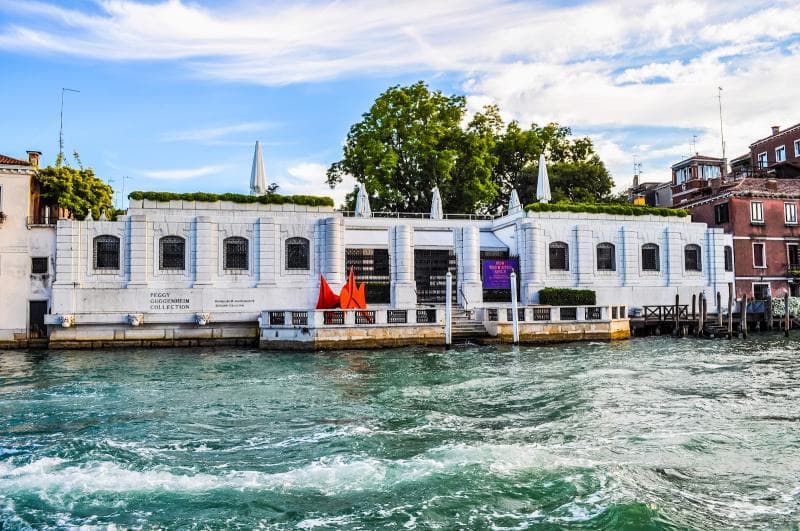
Explore Jackson Pollock's iconic works, including 'Alchemy,' at the Peggy Guggenheim Collection in Venice, Italy. Discover his revolutionary art.
Overview
Stepping into the Peggy Guggenheim Collection in Venice is like entering a vibrant dialogue with 20th-century art, and central to this conversation are the powerful works of Jackson Pollock. Nestled within the elegant Palazzo Venier dei Leoni on the Grand Canal, this esteemed museum is home to the largest collection of Pollock's art in Europe. It offers a unique opportunity to witness the radical evolution of Abstract Expressionism through the lens of one of its most influential figures. The 'Pollock Works' here are not merely paintings on a wall; they are a testament to an extraordinary artistic relationship and a pivotal moment in modern art history.
Peggy Guggenheim, the visionary collector, was instrumental in championing Pollock's nascent career, providing him with financial support and a platform to exhibit his groundbreaking creations. Her collection became a beacon for European and American avant-garde art, featuring masterpieces from Cubism, Surrealism, and American Abstract Expressionism. The setting itself, Peggy's former home, adds an intimate layer to the experience, allowing visitors to connect with these iconic works in a truly personal environment.
History & Cultural Background
The story of Jackson Pollock's works at the Peggy Guggenheim Collection is deeply intertwined with Peggy Guggenheim's transformative patronage. Born in 1912, Pollock’s artistic journey truly took off after meeting Guggenheim. She 'discovered' his talent and provided him with an employment contract, enabling him to dedicate himself entirely to painting. From 1943 onwards, she showcased his works at her influential New York gallery, 'Art of This Century', giving him his first solo exhibition and introducing his radical style to the world.
This crucial support culminated in the period between 1942 and 1947, from which many of the Pollock works in the Venice collection originate. When Peggy Guggenheim moved to Venice in 1948, she continued to promote Pollock, even arranging his first solo show in Europe at the Museo Correr in Venice in 1950. Her decision to permanently house her collection, including these pivotal Pollock pieces, in her Venetian palazzo ensured that his legacy would endure and inspire generations of European audiences.
What Makes It Special
The collection of Jackson Pollock's works at the Peggy Guggenheim Collection is distinguished by its direct connection to the artist's formative years and his relationship with his most significant patron. It presents a remarkable concentration of his early to mid-career output, spanning the years 1942–1947, a period when his signature 'drip' technique was emerging and solidifying.
Among the highlights is 'Alchemy' (1947), considered the undisputed masterpiece of the Pollock works Guggenheim chose to keep for Venice. This large-scale abstraction reveals Pollock's innovative approach to painting, including his use of commercial materials and his technique of working with the canvas laid flat on the floor. The museum also features significant pieces like 'The Moon Woman', 'Croaking Movement', and 'Two' (1943–45), offering a compelling narrative of Pollock's artistic evolution from more figurative surrealist influences to pure abstraction. The intimacy of viewing these works in Peggy's former residence, a space filled with her personal choices and memories, creates a profound and unique art-viewing experience.
Stories, Fun Facts & Local Details
Imagine Peggy Guggenheim's pioneering spirit, arriving in Venice and transforming an unfinished 18th-century palace into a vibrant home for her avant-garde collection. It's said that 'Alchemy' was displayed for over three decades without protective glass in Peggy's home, which eventually led to a complex conservation project to restore its original vibrancy. This fact underscores not only the artwork's resilience but also Peggy's desire for an unmediated encounter with art.
A fascinating detail is Pollock's choice of materials and methods, as seen in 'Alchemy'. Photographs show him working on the piece using his mother's quilting frame to support the canvas, which lay flat on the floor—a testament to his unconventional and groundbreaking approach. Peggy herself considered Pollock her 'most honorable achievement', a recognition of his genius that she nurtured. Her dedication to him was so profound that she provided him with a monthly stipend, the only artist to receive such long-term financial support from her.
Visitor Perspective
Visiting the 'Pollock Works' within the Peggy Guggenheim Collection is an immersive journey into the heart of modern art. The museum, set against the backdrop of Venice's Grand Canal, offers a serene yet stimulating environment. As you wander through the rooms of the Palazzo Venier dei Leoni, you're not just observing art; you're tracing the footsteps of a legendary patron and an artistic revolutionary. The collection is designed to be explored at your own pace, with cultural mediators available to answer questions and deepen your understanding.
The impact of Pollock's large, dynamic canvases in this intimate setting is palpable. They invite contemplation, challenging perceptions of art and expression. Beyond the paintings, take time to explore the Nasher Sculpture Garden, a tranquil outdoor space also featuring significant modern sculptures. The entire experience offers a profound connection to the history of modern art, making it an indispensable stop for any curious traveler in Venice.
Coordinates: 12.331537, 45.430783
View on Google Maps💬 How Travelers Describe This Place
Based on community votes
Photogenic
996Unique
494Interesting
193Beautiful
125Must See
82
Traveler Stories
Discover memorable experiences shared by travelers who have visited this place.
No traveler stories yet.
Be the first traveler to share what made this place memorable.

Tour
By
Spot
Discover amazing places around the world. Your journey starts here.
Explore
© 2026 TourBySpot. All rights reserved.