Plaza Surroundings
Podgorica, Montenegro
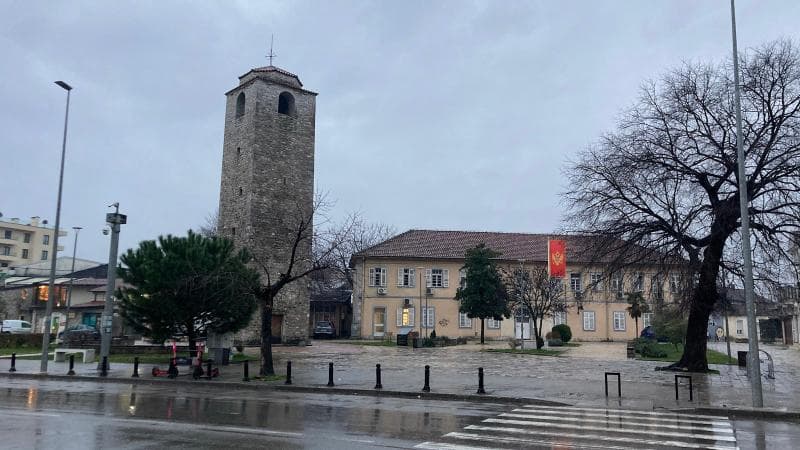
Explore the historic Plaza Surroundings of Podgorica's Clock Tower in Montenegro's Old Town, a resilient Ottoman landmark. Discover its history and unique cultural blend.
Overview
Nestled within the charming, historic quarter of Stara Varoš, the Plaza Surroundings of Podgorica's Clock Tower, known locally as Sahat Kula, offer a captivating glimpse into the city's rich past. This area, centered around Bećir Beg Osmanagić Square, serves as a poignant reminder of Podgorica's Ottoman heritage and its enduring resilience. The iconic Clock Tower, an imposing stone structure, stands as one of the few Ottoman landmarks that miraculously survived the extensive bombings of World War II, making it a crucial symbol of the city's historical continuity.
The square itself, recently renovated, provides a tranquil setting for visitors to pause, absorb the historical ambiance, and capture photographs. While modern Podgorica bustles with contemporary architecture and wide boulevards, the Plaza Surroundings of the Clock Tower transport you to a slower pace of life, inviting exploration of its narrow, winding cobblestone streets and traditional oriental charm.
History & Cultural Background
The Podgorica Clock Tower, or Sahat Kula, was erected in 1667 by Hadži-paša Osmanagić, a prominent Ottoman official and citizen of Podgorica. Standing 16 to 19 meters tall, this freestanding stone tower quickly became an integral part of daily life in the Ottoman-era city. For centuries, it functioned as the sole public clock, regulating the rhythm of trade, prayer times, and the daily activities of the city's inhabitants.
The area surrounding the Clock Tower, Stara Varoš, served as the heart of Podgorica during the Ottoman period, from 1474 to 1879. It was a vibrant core filled with merchants and artisans, characterized by traditional oriental architecture, including houses with high stone walls and interior courtyards. Despite the heavy destruction suffered by Podgorica during World War II, Stara Varoš remarkably retained its fundamental layout and several key monuments, with the Clock Tower standing as its most recognizable and resilient symbol.
What Makes It Special
The Clock Tower's special allure lies not just in its age but in its ability to narrate centuries of change and cultural fusion. It is one of the very few Ottoman landmarks that withstood the devastation of World War II, serving as a tangible link to Podgorica's deep and diverse past. The tower's original clock mechanism, initially brought from Austria, was replaced around 1890 with one from the Pietro Colbachini foundry in Bassano del Grappa, Italy. This detail highlights the historical connections and influences that shaped the region. In 2012, while a new electric mechanism was installed for functionality, the old mechanism was carefully preserved for its historical significance.
Adding another layer to its unique character is the metal cross installed atop the tower around 1890 by Stevan Radović. This cross, placed after Podgorica was incorporated into Montenegro, became a powerful symbol of the city's transition from Ottoman to Christian rule, embodying a fascinating fusion of cultures visible on the building even today.
Stories, Fun Facts & Local Details
According to local legend, the original clock itself was brought all the way from Italy, adding an air of mystery and intrigue to this historical timepiece. For many years, the Sahat Kula was not merely a time-telling device but a central institution, guiding the lives of Podgorica's residents. Its chimes marked working hours, designated prayer times for the nearby mosques, and coordinated market activities.
The Plaza Surroundings, or Bećir Beg Osmanagić Square, is part of Stara Varoš, which translates to 'Old Town'. This district was built during the nearly four centuries of Ottoman rule and maintains a distinct oriental character. Wandering through these lanes, you can still find the Starodoganjska Mosque and the Osmanagić Mosque nearby, further enriching the cultural tapestry of the neighborhood. The architecture of the old houses, with their high stone walls protecting interior courtyards, reflects a traditional way of life that dates back centuries.
Visitor Perspective
A visit to the Plaza Surroundings of the Clock Tower offers a journey back in time, away from the modern pulse of Podgorica. It is a place for quiet contemplation and appreciation of history. Visitors can wander through the narrow, winding cobblestone streets of Stara Varoš, feeling the shift in atmosphere as the modern city noise recedes. The recently renovated square provides a pleasant spot to sit on a bench, observe the local life, and take in the historical ambiance.
For those interested in history and culture, the area is highly walkable and offers excellent sight lines for viewing the tower and its surrounding Ottoman-era buildings. It is recommended to spend about 20-30 minutes appreciating the Clock Tower's significance before exploring the wider Old Town area. Nearby, you can discover local cafes for an authentic experience or explore the two mosques that contribute to the neighborhood's rich cultural heritage. The Plaza Surroundings act as a serene gateway to understanding Podgorica's complex and enduring past.
Coordinates: 19.260014, 42.435557
View on Google Maps💬 How Travelers Describe This Place
Based on community votes
Beautiful
873Interesting
477Unique
422Photogenic
157Must See
53
Traveler Stories
Discover memorable experiences shared by travelers who have visited this place.
No traveler stories yet.
Be the first traveler to share what made this place memorable.

Tour
By
Spot
Discover amazing places around the world. Your journey starts here.
Explore
© 2026 TourBySpot. All rights reserved.