Planet Jellies
Toronto, Canada
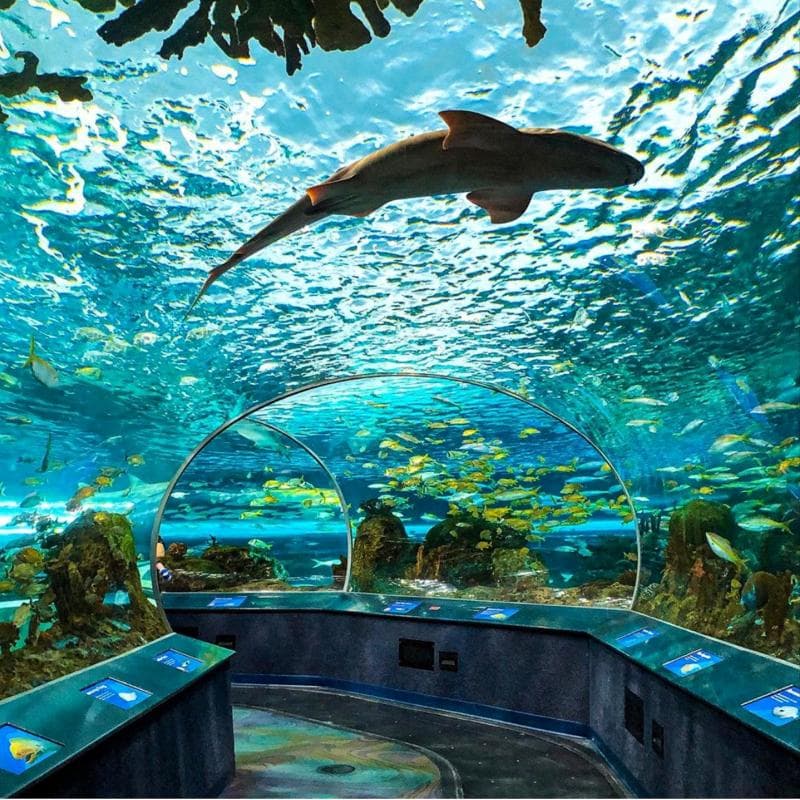
Explore Planet Jellies at Ripley's Aquarium of Canada, Toronto. Discover mesmerizing jellyfish in a vibrant, otherworldly exhibit.
Overview
Stepping into Planet Jellies, nestled within Ripley's Aquarium of Canada in Toronto, is like entering a realm where science and surrealism beautifully converge. This exhibit offers a mesmerizing escape into the graceful world of jellyfish, creatures that have drifted through Earth's oceans for millions of years. The gallery is designed as a hypnotic space, pulsating with color and rhythm, where dozens of illuminated cylinders showcase a variety of jelly species from across the globe. Visitors are immersed in an atmosphere that is both otherworldly and calming, a rare place where the gentle music and soft lighting create a meditative experience.
As one of North America's largest and most technically advanced jellyfish exhibits, Planet Jellies provides a unique opportunity to observe these enigmatic animals up close. It features specialized tanks that mimic the ocean's delicate currents, ensuring the well-being of its fragile inhabitants. This carefully curated environment allows for a deep appreciation of the jellies' ethereal beauty and complex life cycles, inviting curious travelers to pause and connect with the ancient mysteries of the marine world.
History & Cultural Background
Jellyfish are among Earth's most ancient inhabitants, having thrived in oceans for over 500 million years, long before dinosaurs roamed the planet or sharks patrolled the seas. Their incredible evolutionary resilience speaks to a fundamental adaptability that has allowed them to persist through countless geological epochs. They belong to the phylum Cnidaria, a group of invertebrates that also includes corals and sea anemones, characterized by their stinging cells.
Ripley's Aquarium of Canada, which opened its doors in October 2013, brought this ancient lineage to the heart of Toronto. The creation of Planet Jellies was a deliberate effort to highlight the often-misunderstood beauty and ecological importance of these creatures. The exhibit represents a modern cultural fascination with marine life and a commitment to education, allowing visitors to glimpse a lineage that pre-dates much of complex animal life on Earth.
What Makes It Special
Planet Jellies stands out due to its innovative design and the sheer diversity of its inhabitants. It proudly houses some of the world's most extensive jellyfish exhibits, featuring species such as the translucent moon jelly, the vibrant Pacific sea nettle, the intriguing spotted jelly, and the unique upside-down jelly. A cornerstone of the exhibit's success is the use of 'kreisel tanks.' These are specially designed horizontal, cylindrical tanks that eliminate corners and bubbles, elements that could harm a jellyfish's delicate body.
Beyond their structure, these tanks boast fully programmable lighting systems that cycle through a spectrum of colors. This thoughtful illumination transforms the naturally translucent bodies of the jellies into glowing, neon-hued spectacles, creating a living art display. Furthermore, many of the jellies on display are nurtured right within the aquarium's own culture lab, where biologists carefully oversee their growth from microscopic polyps to the stunning adult medusae seen by visitors.
Stories, Fun Facts & Local Details
- Brainless Wonders: Despite their complex appearance, jellyfish are incredibly simple creatures. They possess no heart, brain, gills, bones, teeth, or blood. Their bodies are predominantly water, often making up 95-98% of their mass, meaning a stranded jelly can virtually evaporate on a warm day.
- Stinging Tentacles: Jellies use specialized stinging cells, called nematocysts, on their tentacles to capture prey. While most species are harmless to humans, some can deliver a painful sting, and a few, like the box jellyfish, are highly venomous.
- Unique Behaviors: The upside-down jelly, for instance, has a fascinating symbiotic relationship with algae. It positions itself upside down in shallow, sunlit waters to allow the algae living in its tissues to photosynthesize, providing up to 90% of its nutritional needs. Meanwhile, blubber jellies act as crucial recyclers in their ecosystems, releasing mucous that returns vital nutrients like phosphorus and nitrogen back into the water, benefiting plankton.
- A Collective Noun: A group of jellyfish is not called a 'school' or a 'colony,' but rather a 'smack.'
- An Ancient Mouth: A jelly's mouth serves a dual purpose, functioning both for ingesting food and expelling waste.
Visitor Perspective
For many who journey through Ripley's Aquarium of Canada, Planet Jellies is a profound highlight, offering a welcome contrast to the more bustling exhibits like the Dangerous Lagoon. The gallery is lauded for its ability to instill a sense of calm and wonder, inviting visitors to take a moment of stillness amidst their exploration. The rhythmic pulsing of the jellies, combined with the ethereal lighting and soft sounds, creates an almost meditative ambiance where time seems to slow down.
Travelers often describe the experience as watching a 'jellyfish ballet,' finding peace in the silent, graceful movements of these creatures. To fully appreciate this serene spectacle, many recommend visiting during off-peak hours, such as weekday mornings or late evenings, when the crowds are thinner, allowing for a more intimate and immersive experience. The exhibit also features unique viewing angles, including a ceiling display, providing diverse perspectives on these captivating marine animals.
Coordinates: -79.3870568, 43.6425662
View on Google Maps💬 How Travelers Describe This Place
Based on community votes
Beautiful
998Interesting
903Unique
481Photogenic
458Must See
92
Traveler Stories
Discover memorable experiences shared by travelers who have visited this place.
No traveler stories yet.
Be the first traveler to share what made this place memorable.

Tour
By
Spot
Discover amazing places around the world. Your journey starts here.
Explore
© 2026 TourBySpot. All rights reserved.