Pile Gate
Dubrovnik, Croatia
Discover Pile Gate, the magnificent western entrance to Dubrovnik's Old Town, Croatia. Explore its rich history, iconic architecture, and cultural significance.
Overview
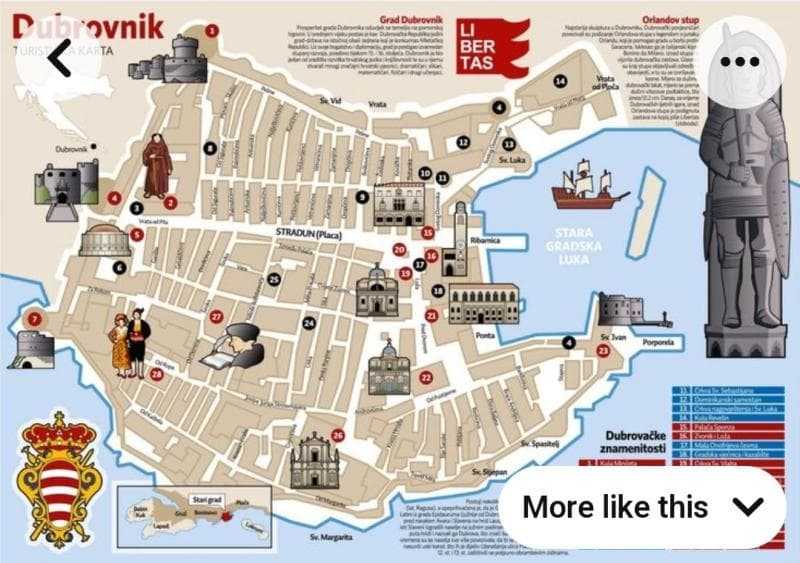
Pile Gate, or Vrata od Pila as it is known locally, stands as the grand western entrance to the historic heart of Dubrovnik, Croatia. This magnificent complex serves as the primary gateway for countless visitors eager to step back in time into the medieval Old Town. More than just an entry point, Pile Gate is an architectural marvel and a significant historical landmark, offering a memorable introduction to the UNESCO World Heritage site it guards. It seamlessly connects the bustling modern city with the serene, ancient streets within the fortified walls.
Comprising an outer and an inner gate, a stone bridge, and a former moat now transformed into a verdant garden, Pile Gate embodies centuries of defensive engineering and artistic expression. It is often the first stop for visitors embarking on a journey through Dubrovnik's rich past, leading directly to the iconic Stradun, the city's main promenade.
History & Cultural Background
The name 'Pile' itself is believed to originate from the Greek word 'pylaj', meaning 'gate', underscoring its ancient purpose. The construction of Pile Gate evolved over several centuries, reflecting the strategic importance and changing architectural styles of the Republic of Ragusa (Dubrovnik). A fortification likely existed on this site as early as 972 AD.
The inner gate, characterized by its Gothic arch, dates back to 1460, while the more elaborate outer gate, built in the Renaissance style, was completed in 1537. These two gates were originally connected by a wooden drawbridge that would be ceremoniously raised each evening, cutting off access to the city and ensuring its security against invaders. This wooden drawbridge has since been replaced by a permanent stone bridge, designed by the prominent city engineer Paskoje Milicevic in 1471.
Above both the inner and outer arches, visitors will find statues of Saint Blaise (Sveti Vlaho), Dubrovnik's revered patron saint. The statue above the Renaissance outer arch is as old as the gate itself, while the one in the inner gate's niche was sculpted in the 20th century by the renowned Croatian artist Ivan Mestrovic. These figures are not merely decorative but symbolize the spiritual protection believed to guard the city.
Pile Gate has borne witness to pivotal moments in Dubrovnik's history, including Napoleon's entry in 1806, which marked the end of the independent Dubrovnik Republic. A plaque found between the inner and outer gates also serves as a somber reminder of the damage inflicted upon the city during the Homeland War between 1991 and 1992, highlighting Dubrovnik's resilience.
What Makes It Special
What truly distinguishes Pile Gate is its multifaceted role as both a functional entrance and a symbolic threshold. It is the grandest and most historically significant entry into Dubrovnik's Old Town, instantly transporting visitors from the contemporary world to a living medieval storybook.
The architectural blend of Gothic and Renaissance styles, evident in its multiple layers and arches, showcases the city's continuous development and defensive innovations. The remnants of the old drawbridge mechanism, including mechanical counterweights, hint at the elaborate measures once taken to protect the prosperous maritime republic.
Furthermore, Pile Gate is a vital starting point for those wishing to walk the famous City Walls, offering breathtaking views and a deeper understanding of Dubrovnik's formidable defenses. The dry moat, once filled with water, has been beautifully transformed into a peaceful garden, adding a touch of natural beauty to the imposing stone structure.
Stories, Fun Facts & Local Details
For many, Pile Gate holds a particular charm due to its appearance in the internationally acclaimed TV series 'Game of Thrones', where it served as a filming location for scenes set in King's Landing. This connection has brought a modern layer of fame to its ancient stones.
Imagine the daily ritual centuries ago: as dusk fell, the massive wooden drawbridge would creakily ascend, sealing off the city for the night and protecting its inhabitants. Today, while the gate remains open, the historical echoes of that nightly closure still resonate.
A curious local detail, sometimes pointed out by guides, is a small indentation in the street near the gate. Legend has it that those who step in it risk bad romantic luck. Whether true or not, it adds a playful layer to the ancient passageway. Above the inner gate, look closely at Ivan Mestrovic's rendition of Saint Blaise, a powerful and artistic representation of the city's enduring protector.
The journey through Pile Gate culminates as you descend a short flight of steps directly onto the Stradun, Dubrovnik's main artery. This bustling promenade, lined with charming 17th-century buildings, is where the city's pulse truly beats, offering a vibrant welcome into the Old Town.
Visitor Perspective
For most visitors, Pile Gate is their inaugural experience of Dubrovnik's Old Town, serving as a natural meeting point and a hub for tours. It's common to find groups gathering here before venturing into the city's labyrinthine streets.
Given its popularity, especially during peak tourist season, arriving early in the morning is highly recommended to experience the gate with fewer crowds and to capture its majestic beauty in a more serene setting. The strategic location of Pile Gate also makes it easily accessible via local buses and taxis, as it functions as a primary transport terminal just outside the city walls.
Passing through Pile Gate is an immersive experience. You cross the stone bridge, walk over the former moat, and finally pass through the inner arch. This progression feels like a transition through time, preparing you for the historical wonders that lie beyond. While there is no entrance fee to pass through the gate itself, it provides convenient access to the paid City Walls walk, which begins just inside.
Coordinates: 18.10537, 42.64102
View on Google Maps💬 How Travelers Describe This Place
Based on community votes
Photogenic
674Must See
585Beautiful
546Interesting
503Unique
92
Traveler Stories
Discover memorable experiences shared by travelers who have visited this place.
No traveler stories yet.
Be the first traveler to share what made this place memorable.

Tour
By
Spot
Discover amazing places around the world. Your journey starts here.
Explore
© 2026 TourBySpot. All rights reserved.