Phra Chedi Rai
Bangkok, Thailand
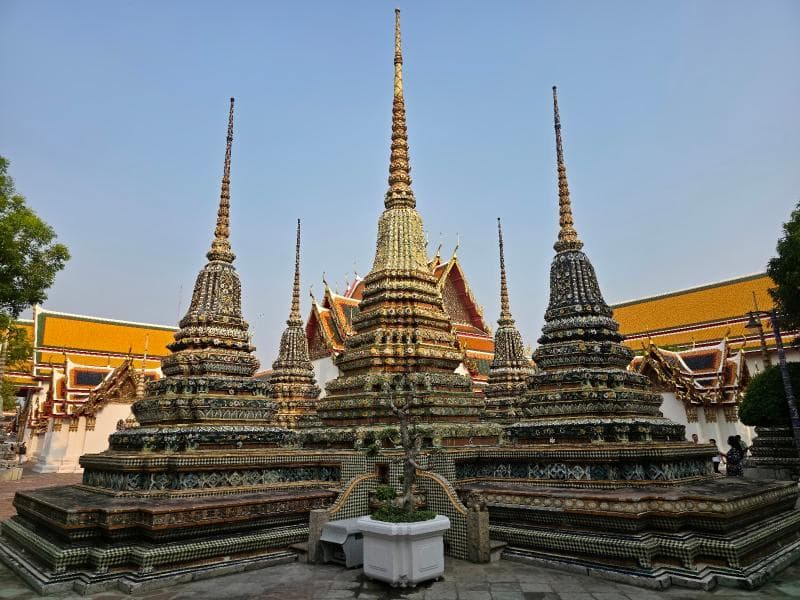
Discover Phra Chedi Rai, the beautiful smaller stupas within Wat Pho in Bangkok, Thailand, holding royal ashes and Buddha relics.
Overview
Nestled within the expansive grounds of Wat Pho, one of Bangkok's oldest and largest temples, lies a captivating ensemble known as Phra Chedi Rai. These 'smaller chedis' or stupas are an integral part of the temple's landscape, presenting a visual feast of traditional Thai architecture and profound spiritual significance. Dotted prominently outside the Phra Rabiang cloisters, they contribute to the temple's reputation as a sprawling open-air museum. While the grander structures of Wat Pho often capture immediate attention, the Phra Chedi Rai offer a more intimate glimpse into the rich history and cultural practices of Thailand, serving as repositories for the ashes of royalty and relics of the Buddha.
A visit to Phra Chedi Rai is an exploration of meticulous craftsmanship and quiet reverence, revealing layers of meaning behind each intricately decorated spire. They are not merely ornamental but deeply embedded in the spiritual fabric of the temple, collectively forming a significant part of the over 91 chedis found throughout Wat Pho.
History & Cultural Background
The history of Phra Chedi Rai is intertwined with the foundational and developmental periods of Wat Pho itself. While Wat Pho existed even before Bangkok was established as the capital, its major expansion and renovation efforts, particularly during the reigns of King Rama I (who rebuilt the complex) and King Rama III, shaped much of what we see today. It was King Rama III who notably commissioned the construction of seventy-one of these Phra Chedi Rai, each standing at five meters in height. These specific chedis were built to enshrine the ashes of the royal family, reflecting a deep tradition of honoring ancestors and royal lineage within sacred spaces.
Adding to their historical depth, four distinct groups, each comprising five chedis, were erected by King Rama I. These twenty chedis, strategically placed at each corner outside the cloister, hold an even more sacred purpose: they house relics of the Buddha. This dual function of preserving both royal lineage and holy relics underscores the profound cultural and religious importance of Phra Chedi Rai within the broader context of Thai Buddhism and monarchy.
What Makes It Special
The Phra Chedi Rai are distinctive for their specific design and their collective visual impact. Unlike the towering, often singularly grander chedis elsewhere in Wat Pho, these are smaller, yet numerous, creating a striking aesthetic. They are characterized by their square base and spire, a departure from the round bell shape often preferred at the time of their construction. Each chedi is adorned with vibrant ceramic tiles and three-dimensional ceramic pieces, meticulously arranged to form intricate floral patterns. This level of detail transforms each small chedi into a miniature work of art, showcasing the skilled craftsmanship of the period. The collective display of these colorful, tile-encrusted structures adds a unique texture and palette to the temple grounds, distinguishing them from other monumental structures.
Their uniform height of five meters, as built by Rama III, along with the distinct groupings of those built by Rama I, creates a harmonious yet varied landscape within the temple. They are not just architectural elements but serve as silent guardians of history and faith, each one a testament to devotion and artistic expression.
Stories, Fun Facts & Local Details
While specific stories directly linked to individual Phra Chedi Rai might be less publicized than those of the Reclining Buddha, their very presence tells a compelling story of collective memory and spiritual continuity. The practice of enshrining the ashes of the royal family within these chedis highlights the deep veneration for royalty and the belief in spiritual merit. For local Thais, encountering these chedis is a connection to their heritage and a reminder of the many generations that have contributed to the nation's spiritual landscape. The presence of Buddha relics in some further amplifies their sacred status, making them focal points for quiet reflection and reverence.
Wat Pho itself is renowned as Thailand's first public university, established by King Rama III, who inscribed various fields of knowledge – from medicine and history to literature and customs – onto marble slabs placed around the temple. The Phra Chedi Rai, constructed during this same enlightened reign, subtly echo this spirit of preservation and cultural transmission. They remind visitors that every corner of Wat Pho, even the seemingly smaller elements, carries a piece of Thailand's grand narrative. The meticulous ceramic work on the chedis also reflects a broader Thai artistic tradition, where even functional or commemorative structures are imbued with beauty and symbolic detail.
Visitor Perspective
Approaching the Phra Chedi Rai offers a contemplative experience, inviting travelers to slow down and appreciate the intricate details often overshadowed by the temple's more colossal attractions. Walking among these 71 smaller chedis, built by King Rama III, and the four clusters of five chedis by King Rama I, one can feel a tangible connection to Thailand's past. The sheer number and uniformity of the chedis, each with its unique ceramic embellishments, create an almost meditative rhythm as you stroll through the courtyards. It is a moment to observe the fine artistry of Thai craftsmen and consider the lives of those honored within. These chedis stand as a testament to devotion and history, offering a peaceful and profound experience for anyone exploring the spiritual heart of Bangkok. They are a vivid reminder that the grandeur of Wat Pho lies not only in its massive statues but also in the delicate beauty and deep significance of its countless smaller treasures.
Coordinates: 100.4933, 13.7465
View on Google Maps💬 How Travelers Describe This Place
Based on community votes
Must See
717Photogenic
618Interesting
449Beautiful
335Unique
22
Traveler Stories
Discover memorable experiences shared by travelers who have visited this place.
No traveler stories yet.
Be the first traveler to share what made this place memorable.

Tour
By
Spot
Discover amazing places around the world. Your journey starts here.
Explore
© 2026 TourBySpot. All rights reserved.