Photo Platforms
Podgorica, Montenegro
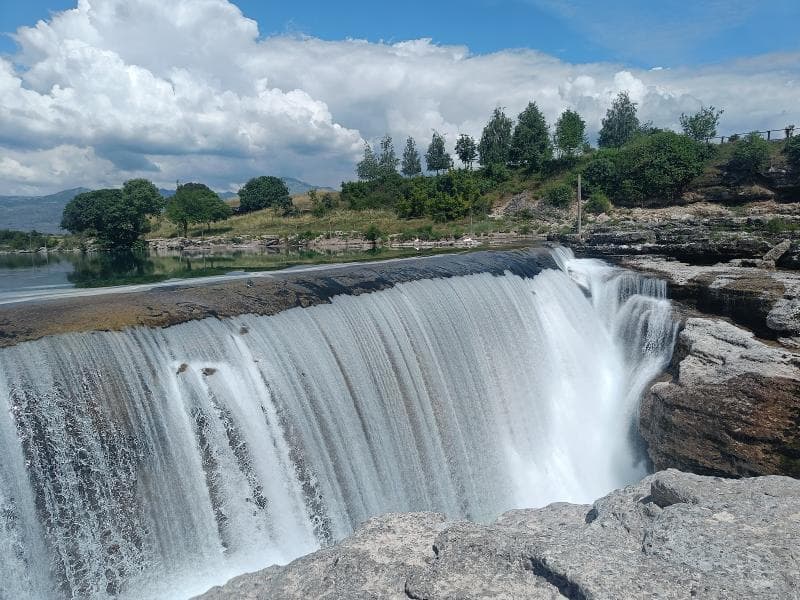
Explore Podgorica's 'Niagara Falls' on the Cijevna River, a seasonal Montenegrin natural wonder perfect for photography and local charm.
Overview
Nestled just a short drive from Podgorica, Montenegro, the charming waterfalls on the Cijevna River are affectionately known by locals as 'Niagara Falls.' While not on the colossal scale of its North American namesake, this natural wonder offers a picturesque escape, particularly renowned for its numerous ‘Photo Platforms’—the collective term for the many vantage points and accessible areas along the riverbank that provide exceptional opportunities for capturing its beauty. The Cijevna River, with its clear, often emerald-green waters, carves a shallow canyon through the karst landscape, creating a scene that shifts dramatically with the seasons, from roaring cascades in spring to more serene flows in drier periods.
Visitors are drawn to these informal platforms to witness the unique spectacle of water spilling over wide, multi-tiered limestone ledges. The area around the falls provides a tranquil respite, blending natural grandeur with a laid-back, local atmosphere. It's a place where the simplicity of nature's artistry invites contemplation and photography, making it a popular spot for both Montenegrins and curious travelers alike.
History & Cultural Background
The ‘Niagara Falls’ of Podgorica owes its distinctive name to the broad, multi-tiered appearance of the cascades, particularly when the Cijevna River is swollen with water. This local moniker highlights the visual impact of the falls, despite their smaller scale compared to the famous North American site. The Cijevna River itself is a significant waterway, originating in the rugged Prokletije Mountains and flowing through both Albania and Montenegro before merging with the Morača River. Historically, the Cijevna River valley served as a frontier, including a period marking the boundary between Montenegro and the Ottoman Empire, imbuing the landscape with echoes of a rich past.
Perhaps the most intriguing historical detail about these falls is their surprising origin. While appearing entirely natural, the waterfall was, in fact, formed approximately 150 years ago by local farmers. They constructed a dam on the Cijevna River to power a water mill, inadvertently creating the beautiful, wide, and multi-streamed waterfall that exists today. This blend of human ingenuity and natural forces adds a unique layer to its story, revealing how a practical need transformed the landscape into a scenic attraction.
What Makes It Special
What truly sets the Niagara Falls in Podgorica apart is its captivating seasonal transformation. During late winter and spring, fueled by snowmelt from the surrounding mountains and heavy rainfall, the Cijevna River swells, transforming the falls into a powerful, thunderous display of white water and mist. This is when the cascades are at their most dramatic, spreading across the full width of the limestone barrier.
Conversely, during the dry summer months, particularly by late August, the water flow can diminish significantly, sometimes even drying up completely. This seasonal ebb and flow exposes the underlying karst rock formations, revealing smooth terraces where visitors can walk and appreciate the riverbed's intricate geology. The clear, cool water in the pools during warmer months also makes it a favored spot for locals seeking a refreshing dip. This dynamic character ensures that each visit can offer a unique experience, whether witnessing its powerful flow or exploring its exposed rock art.
Stories, Fun Facts & Local Details
The nickname 'Niagara' is a testament to the waterfall's broad and sweeping aesthetic, captivating the imagination of locals who saw a resemblance to its world-famous counterpart. This local affection is further cemented by the presence of a traditional riverside restaurant, also named 'Niagara,' which offers national cuisine, including local carp and river trout, often enjoyed with scenic views of the cascades. This restaurant serves as a central hub, allowing visitors to combine natural beauty with authentic Montenegrin hospitality.
A remarkable fun fact centers on the falls' creation: the waterfall, often perceived as a purely natural phenomenon, resulted from the construction of a dam around 150 years ago to operate a water mill. This fascinating detail underscores the long-standing relationship between the local community and the Cijevna River. Furthermore, the area is surrounded by the extensive vineyards of the 'Plantaža' winery, one of Europe's largest continuous vineyards, adding a viticultural charm to the natural landscape and creating a picturesque backdrop.
Visitor Perspective
For visitors, the 'Photo Platforms' around Podgorica's Niagara Falls offer diverse perspectives and opportunities. The most rewarding time to experience the falls in their full glory, and thus for the most spectacular photographs, is during spring—typically March and April—or immediately after significant rainfall. Mornings are often cited as providing the best light for photography, illuminating the cascading water and vibrant greenery.
Visitors can easily access the riverbank and various viewpoints, often via metal stairs or well-trodden paths that allow for close-up views of the water thundering over the ledges. Comfortable walking shoes are advisable, especially when exploring the rocky areas. While the falls may not be signposted prominently, GPS coordinates can guide travelers directly to this hidden gem. Many travelers combine a visit here with other nearby attractions, such as the Dajbabe Monastery or Lake Skadar, making it an ideal half-day excursion from the capital. It offers a relaxed, unhurried experience, deeply rooted in the local Montenegrin way of life.
Coordinates: 19.2792, 42.3835
View on Google Maps💬 How Travelers Describe This Place
Based on community votes
Unique
639Interesting
526Must See
421Beautiful
366Photogenic
181
Traveler Stories
Discover memorable experiences shared by travelers who have visited this place.
No traveler stories yet.
Be the first traveler to share what made this place memorable.

Tour
By
Spot
Discover amazing places around the world. Your journey starts here.
Explore
© 2026 TourBySpot. All rights reserved.