Permanent Collection
Amsterdam, Netherlands
Explore the Van Gogh Museum's Permanent Collection in Amsterdam, Netherlands, featuring the world's largest array of Van Gogh's masterpieces, drawings, and letters.
Overview
The Permanent Collection within the Van Gogh Museum in Amsterdam, Netherlands, offers an unparalleled journey into the artistic world and personal life of Vincent van Gogh. Housed largely in the Rietveld building, this renowned collection features the world's most extensive assembly of works by the Dutch master, alongside pieces by his contemporaries. Visitors are invited to immerse themselves in Van Gogh's creative evolution, exploring his paintings, drawings, and deeply personal letters.
The museum's focus is to present a comprehensive narrative of Van Gogh's life and art, showcasing his distinctive style and the profound themes he explored. It's a place where art enthusiasts can witness his technical development and emotional depth firsthand, experiencing the intensity with which he approached life and his craft.
History & Cultural Background
The origins of the Van Gogh Museum's Permanent Collection are rooted in a poignant family legacy. Following Vincent van Gogh's death in 1890, his unsold works were inherited by his brother, Theo. Tragically, Theo passed away just six months later, leaving the vast collection to his widow, Johanna van Gogh-Bonger. Johanna became a tireless advocate for Vincent's art, actively selling many pieces to popularize his work while carefully preserving a significant private collection.
This cherished collection was eventually passed down to her son and Vincent's nephew, Vincent Willem van Gogh, in 1925. To ensure its perpetual preservation and public access, Vincent Willem established the Vincent van Gogh Foundation in 1962. This monumental effort paved the way for the opening of the Van Gogh Museum on June 2, 1973, in a building thoughtfully designed by Dutch architect Gerrit Rietveld. The museum's core mission became the display of this foundational collection, complemented by works from artists who influenced or were influenced by Van Gogh, including notable figures like Paul Gauguin, Claude Monet, and Henri Toulouse-Lautrec.
What Makes It Special
What truly sets the Van Gogh Museum's Permanent Collection apart is its singular focus and remarkable breadth. It is the largest collection of Van Gogh's works in the world, encompassing over 200 paintings, approximately 500 drawings, and more than 750 of his personal letters.
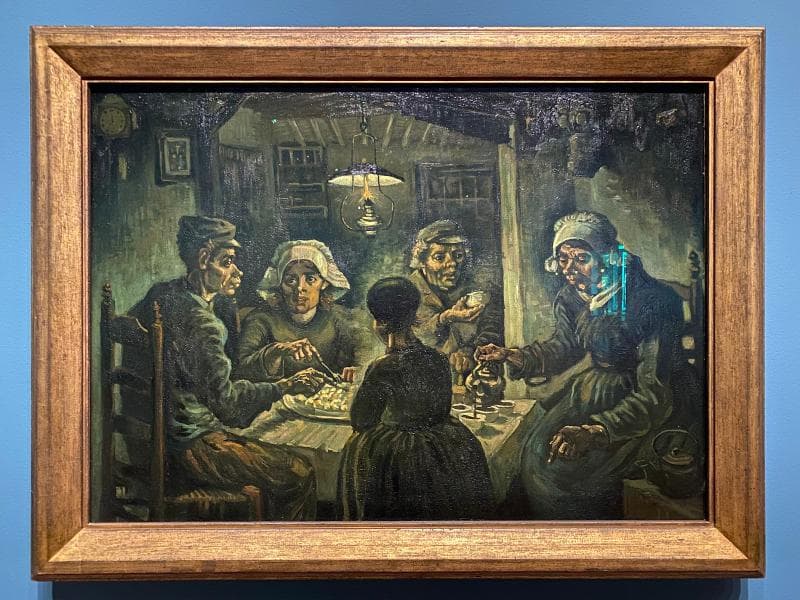
The collection is meticulously arranged to trace Van Gogh's entire artistic journey, from his early, somber Dutch period, marked by masterpieces like 'The Potato Eaters', through to the vibrant and expressive works of his later years in Arles and Saint-Rémy, such as 'Sunflowers', 'Almond Blossom', and 'The Bedroom'. This chronological presentation allows visitors to observe his artistic and personal transformation, highlighting his evolving use of color, brushwork, and thematic concerns.
Beyond the sheer volume of his output, the inclusion of his letters offers an intimate window into the artist's mind, revealing his thoughts, struggles, and artistic ambitions. The museum's dedication to presenting his works alongside those of his contemporaries further enriches the experience, illustrating the artistic dialogues and influences of the late 19th century.
Stories, Fun Facts & Local Details
The collection is rich with stories that bring Van Gogh's intense life and artistic philosophies to light. For example, 'The Potato Eaters', one of his earliest significant works from 1885, vividly captures his dedication to depicting peasant life with raw honesty. Though initially met with criticism, its dark, earthy palette and expressive figures reveal his conscious use of color to convey meaning and his radical social leanings, a testament to his belief in portraying the dignity of labor.
Another fascinating detail surrounds 'The Bedroom', one of Van Gogh's most iconic works. Research has revealed that the vibrant blues seen today on the walls and doors were originally a rich purple, having discolored over time. This offers a glimpse into the dynamic nature of historical artworks and how time can alter our perception of them.
A popular misconception often associated with 'Wheatfield with Crows' is that it was Van Gogh's final painting, reflecting his despair. However, historical records indicate he completed several other works after this powerful piece, challenging the long-standing myth.
The museum also proudly displays Van Gogh's collection of Japanese prints, which profoundly influenced his use of color, perspective, and composition, demonstrating the global cultural exchanges that shaped his unique vision.
Visitor Perspective
Visiting the Permanent Collection at the Van Gogh Museum is an emotionally resonant experience for many travelers. The thoughtfully curated exhibition space guides you through the distinct periods of Van Gogh's life, from his initial artistic explorations in the Netherlands to his prolific years in France. Each gallery feels like turning a page in a visual biography, allowing for a deep connection with the artist's personal and creative struggles and triumphs.
The museum's layout in the Rietveld building is designed to immerse visitors in Van Gogh's world, presenting his development in a logical and engaging manner. Seeing his masterpieces up close, such as the swirling impasto of 'Sunflowers' or the intimate details of his self-portraits, provides a profound appreciation for his innovative techniques and enduring legacy. To ensure a smooth visit, it's highly recommended to book timed-entry tickets online in advance, as this popular attraction frequently sells out. The museum's location in Amsterdam's Museum Square also places it conveniently amidst other major cultural institutions, making it an essential stop on any art lover's itinerary.
Coordinates: 4.881076, 52.358416
View on Google Maps💬 How Travelers Describe This Place
Based on community votes
Must See
673Photogenic
336Interesting
219Unique
186Beautiful
80
Traveler Stories
Discover memorable experiences shared by travelers who have visited this place.
No traveler stories yet.
Be the first traveler to share what made this place memorable.

Tour
By
Spot
Discover amazing places around the world. Your journey starts here.
Explore
© 2026 TourBySpot. All rights reserved.