Performance Stage
Lyon, France
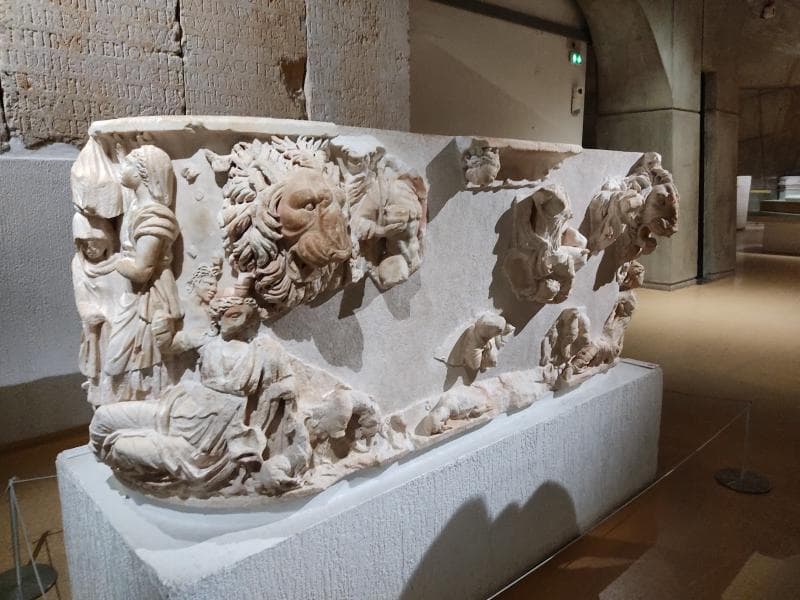
Explore the historic Performance Stage at Théâtres Romains De Fourvière in Lyon, France. Discover ancient Roman history, architecture, and cultural significance.
Overview
Nestled on the Fourvière hill in Lyon, France, the Théâtres Romains De Fourvière offers a captivating journey back to the heart of ancient Lugdunum, the Roman city that once thrived here. This remarkable archaeological site is not merely a collection of ruins but a living testament to Roman ingenuity and cultural life, comprising two distinct yet interconnected structures: the grand Ancient Theatre and the smaller, more intimate Odeon. The 'Performance Stage' within this complex refers primarily to the stage area of the larger theatre, which for centuries has been the nerve center of dramatic and musical expression. Today, it continues to echo with performances, most notably as the prestigious setting for the Nuits de Fourvière festival, seamlessly blending two millennia of history with contemporary artistry.
History & Cultural Background
The construction of the Ancient Theatre began around 15 BC, during the reign of Emperor Augustus, making it one of the oldest Roman theatres in France. Initially, it had a diameter of 90 meters, accommodating approximately 4,500 spectators. Early in the 2nd century AD, under Emperor Hadrian, the theatre underwent a significant expansion, growing to a diameter of 108 meters and increasing its capacity to an impressive 10,000 to 10,700 people. This grand venue was once the vibrant gathering place for thousands who came to enjoy theatrical performances, musical concerts, and civic events in what was then the capital of Roman Gaul. Adjacent to the main theatre, the Odeon was constructed in the early to mid-2nd century AD. Smaller in scale, with a diameter of 73 meters and a seating capacity of around 3,000, it was designed for more refined performances such as poetry readings, musical recitals, and intellectual gatherings. After the 3rd century AD, the site was gradually abandoned and eventually became a stone quarry, with its structures disappearing piece by piece. It wasn't until the 19th and 20th centuries that excavations brought these significant Roman monuments back to light, leading to their meticulous restoration. Today, the Théâtres Romains De Fourvière are recognized as a UNESCO World Heritage Site, preserving a crucial chapter of Lyon's past.
What Makes It Special
What truly distinguishes the Théâtres Romains De Fourvière, and specifically its performance stages, is the remarkable preservation of its ancient architecture and its continued relevance as a cultural venue. The semi-circular tiers of seating, known as the 'cavea', were built directly into the natural slope of the Fourvière hill, a testament to Roman engineering that also contributed to the theatre's exceptional acoustics. Even without modern amplification, a voice on the stage can be heard clearly throughout the seating areas, a marvel that continues to impress visitors and performers alike. The grand theatre's stage was supported by a wall, known as the 'pulpitum', which has been fitted with floorboards to allow its modern use. The smaller Odeon is particularly noted for its well-preserved orchestra area, featuring distinctive decorative inlaid marble and porphyry floors, showcasing the luxurious character of the building. The presence of both a large theatre and a smaller odeon in such close proximity is a rare find in Roman Gaul, offering a comprehensive glimpse into the diverse entertainment and cultural life of ancient Lugdunum.
Stories, Fun Facts & Local Details
Imagine the spectacle of ancient Romans, citizens of Lugdunum, flocking to these hillsides, eagerly anticipating a performance. The grand theatre would have buzzed with activity, hosting everything from dramatic tragedies and comedies to public speeches that shaped the city's political landscape. The Odeon, meanwhile, offered a more intimate setting, perhaps for a poet's recital or a musical competition, its covered structure designed to enhance the sound of nuanced performances. A delightful aspect of the site is its panoramic view of modern Lyon, offering a striking contrast between ancient ruins and the bustling city below. This breathtaking backdrop adds a unique layer to the experience, allowing visitors to ponder the continuous thread of human activity over two millennia. Each summer, the spirit of ancient performances is rekindled with the Nuits de Fourvière festival, which transforms the historic stage into a vibrant platform for contemporary music, dance, and theatre. This ongoing tradition ensures that the 'Performance Stage' remains a dynamic cultural hub, connecting past and present. It's a place where history isn't just observed but actively relived.
Visitor Perspective
Visiting the Performance Stage at the Théâtres Romains De Fourvière is a uniquely immersive experience. Unlike many ancient sites, visitors are free to walk among the ruins, sit on the ancient stone steps, and explore the stage areas, truly feeling the presence of history. The site is open to the public free of charge, inviting curious travelers to wander at their leisure. For a deeper understanding of Roman life in Lyon, the adjacent Lugdunum Museum provides a wealth of artifacts and context, complementing the outdoor archaeological site. Whether attending a performance during the Nuits de Fourvière festival, or simply enjoying a quiet moment at sunset, the atmosphere is profoundly moving. The incredible acoustics remain a highlight, allowing one to imagine the sounds of ancient applause. Exploring the stage, one can almost envision Roman actors, dancers, and musicians captivating their audiences, making it clear why this site was, and remains, a focal point of cultural expression in Lyon.
Coordinates: 4.81972, 45.75972
View on Google Maps💬 How Travelers Describe This Place
Based on community votes
Photogenic
1.0kUnique
869Must See
416Interesting
309Beautiful
33
Traveler Stories
Discover memorable experiences shared by travelers who have visited this place.
No traveler stories yet.
Be the first traveler to share what made this place memorable.

Tour
By
Spot
Discover amazing places around the world. Your journey starts here.
Explore
© 2026 TourBySpot. All rights reserved.