Pen Tower
Hanoi, Vietnam
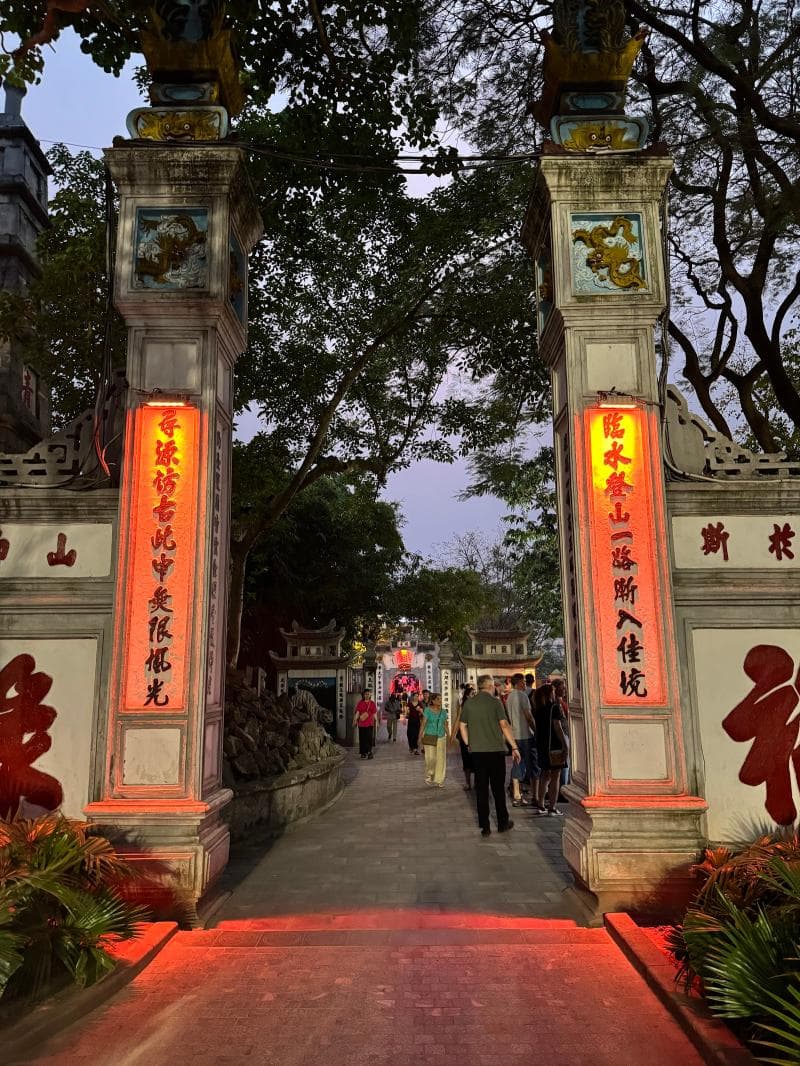
Discover the Pen Tower (Thap But) at Hoan Kiem Lake in Hanoi, Vietnam – a symbolic landmark embodying literature, education, and history.
Overview
Nestled gracefully at the northern edge of Hoan Kiem Lake in Hanoi, Vietnam, stands the Pen Tower, locally known as Thap But. This distinctive five-story stone structure is more than just an architectural landmark; it is a profound symbol of Vietnam's enduring reverence for literature, education, and the intellectual spirit. Erected atop a small artificial mound called Doc Ton Hill, the tower serves as a poignant gateway to the Ngoc Son Temple complex, itself a historical and cultural gem. With its unique design culminating in a stone pen nib pointing skyward, the Pen Tower offers visitors a glimpse into the rich historical and cultural tapestry of Vietnam's capital city.
History & Cultural Background
The Pen Tower was constructed in 1865, during the reign of Emperor Tu Duc, a period marked by significant transformation and external pressures in Vietnam. It was masterminded by the esteemed scholar Nguyen Van Sieu, a revered intellectual figure of Hanoi known for his patriotic zeal and advocacy for education. Sieu undertook extensive renovations of the Ngoc Son Temple complex, of which the Pen Tower became a central and symbolic addition. Its construction also subtly commemorates a martial victory of Lord Trinh in suppressing an uprising led by Nguyen Danh Phuong, linking military prowess with cultural advancement. The tower's location on Doc Ton Hill further nods to this historical context.
Culturally, the Pen Tower, along with the nearby Ink Slab (Dai Nghien), forms a symbolic pair. The pen signifies expression and creativity, while the ink represents knowledge and foundational wisdom. This ensemble reflects the deep-seated values of learning and scholarly pursuit within Vietnamese society, making it a powerful reminder of the nation's intellectual heritage.
What Makes It Special
What truly sets the Pen Tower apart is its eloquent symbolism and intricate design. Rising approximately 28 meters high, the tower is crafted from stacked stones, culminating in an upside-down brush nib that points dramatically towards the heavens. Engraved vertically on its body are three Chinese characters, 'Ta Thanh Thien' (Tả Thanh Thiên), which translate to 'Writing in the blue sky' or 'Write on the Clear Blue Sky'. This inscription powerfully conveys the aspiration to conquer knowledge, reach high intellectual and spiritual levels, and uphold truthfulness in one's pursuits.
The tower's architecture and inscriptions embody Confucian ideals and historical narratives, serving as a beacon of cultural significance. It stands as a testament to the harmony between humanity and nature, embodying 'Thien - Nhan' architecture that reaches for the sky. The tower's special feng shui significance, connecting heaven, earth, and humanity, further enhances its mystique and importance.
Stories, Fun Facts & Local Details
The Pen Tower is not just a structure of stone; it is steeped in intriguing legends and cultural nuances. One popular tale suggests that on the 5th day of the 5th lunar month, the shadow of the Pen Tower aligns perfectly with the Ink Slab below, a blue stone carved in the shape of half a peach and supported by three stone frogs. While modern astronomy might question the precision of this alignment, the legend adds a layer of enchantment and mystery, captivating the imagination of visitors and locals alike.
The Ink Slab itself bears a profound message inscribed by Nguyen Van Sieu, reflecting on the contemplative nature of study and the scenic beauty of Hoan Kiem Lake. Together, the Pen Tower and Ink Slab encourage future generations to embrace learning and contribute to the nation's development, symbolizing knowledge and aspirations that transcend ordinary limits. Locals often view the Pen Tower as a guiding light on the path of education, where dreams are written in the sky, fostered by faith and perseverance.
Visitor Perspective
For a traveler exploring Hanoi, the Pen Tower offers a tranquil and insightful experience, easily integrated into a visit to Hoan Kiem Lake. It is located conveniently at the entrance to Ngoc Son Temple, accessible via the iconic red Huc Bridge. There is no entrance fee to admire the tower from the outside, allowing for casual viewing or more reflective contemplation. Many visitors choose to combine their visit with an exploration of Ngoc Son Temple, enhancing their cultural journey.
The best times to experience the Pen Tower are during the early morning or late afternoon. These hours offer a calm atmosphere, ideal for photography, as the natural light beautifully illuminates the tower and its surroundings. It's a place to pause, reflect on tradition and spiritual values, and appreciate a historical landmark that beautifully encapsulates Vietnam's intellectual spirit and cultural resilience.
Coordinates: 105.8525, 21.02889
View on Google Maps💬 How Travelers Describe This Place
Based on community votes
Interesting
685Unique
446Photogenic
399Must See
152Beautiful
33
Traveler Stories
Discover memorable experiences shared by travelers who have visited this place.
No traveler stories yet.
Be the first traveler to share what made this place memorable.

Tour
By
Spot
Discover amazing places around the world. Your journey starts here.
Explore
© 2026 TourBySpot. All rights reserved.