Paseo de la Argentina
Madrid, Spain
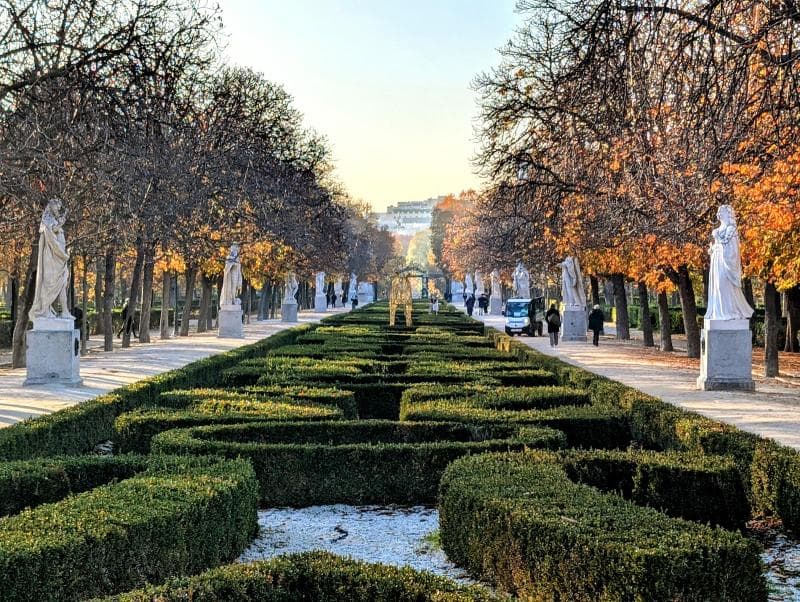
Explore Paseo de la Argentina, Madrid's 'Walkway of the Statues' in Retiro Park, featuring royal sculptures and rich Spanish history.
Overview
Nestled within the vibrant expanse of Madrid's renowned Retiro Park lies the captivating Paseo de la Argentina, a historical promenade often affectionately known as the 'Paseo de las Estatuas' or 'Walkway of the Statues'. This elegant avenue serves as a grand open-air gallery, guiding visitors from the Gate of Spain towards the tranquil Large Pond, a central feature of the park. It is distinguished by a remarkable collection of sculptures depicting Spanish monarchs, offering a unique blend of history, art, and natural beauty. As an integral part of the larger 'Landscape of Light' ensemble, Retiro Park and its features, including this historic promenade, were deservedly inscribed as a UNESCO World Heritage Site in 2021, recognizing their outstanding universal value to culture and nature alike.
The Paseo de la Argentina stands as a testament to Spain's rich royal heritage, transforming a simple pathway into a journey through centuries of monarchy. It invites curious travelers to slow their pace, admire the artistry, and reflect on the stories etched in stone and time. Lined with century-old London plane trees, the promenade offers a serene, shaded retreat, making it a perfect spot for leisurely strolls amidst the bustling heart of Madrid.
History & Cultural Background
The story of the statues lining the Paseo de la Argentina is as rich and intricate as Spain's royal lineage itself. These regal figures were originally conceived in 1743 by the Benedictine friar Martín Sarmiento, intended to adorn the cornice of Madrid's grand Royal Palace. The ambitious project aimed to feature 114 sculpted monarchs. However, fate, or perhaps royal superstition, intervened. According to a popular legend, Queen Isabel de Farnesio, wife of King Felipe V, was plagued by disturbing dreams of these colossal statues toppling from the palace façade, posing a threat to passersby.
These unsettling visions led to a royal decree in 1760 during Carlos III's reign, resulting in the removal and redistribution of the stone monarchs. Many were scattered across various public spaces in Madrid, and some even sent to other Spanish cities. The statues, designed for distant viewing from the palace's great height, feature robust forms and somewhat rudimentary finishes, a detail that now adds to their unique character. Around a century later, during the reign of Isabel II (around 1842-1847), the statues were dusted off, restored, and redistributed across Madrid, including their prominent placement along the Paseo de la Argentina in Retiro Park.
What Makes It Special
What truly makes the Paseo de la Argentina special is its unique function as an open-air historical gallery, showcasing over 50 marble statues of Spanish kings and queens. These sculptures represent monarchs spanning from Pelayo in the 8th century to Fernando VII in the 19th century, creating a compelling visual timeline of Spain's royal past. Each figure, perched on tall granite pedestals, captures the distinct physiognomy and attire of its subject, offering a fascinating glimpse into different historical periods.
The avenue itself, approximately 200 meters long, is flanked by magnificent century-old London plane trees whose canopies filter sunlight, creating a dappled, tranquil ambiance. The uniform plinths with engraved names and reigns create a rhythmic repetition that draws the eye, inviting visitors to observe the subtle variations in sculptural style, from neoclassical poise to more expressive 19th-century realism. This elegant promenade serves as a tranquil artery, seamlessly connecting the park's iconic boating lake to its picturesque rose garden and the exquisite Crystal Palace, making it a central and memorable feature of Retiro Park.
Stories, Fun Facts & Local Details
The legend of Queen Isabel de Farnesio's recurring nightmares, where the statues tumbled from the Royal Palace, is one of the most charming anecdotes associated with the Paseo de la Argentina. This tale, though perhaps apocryphal, adds a layer of whimsical intrigue to the statues' journey from palace rooftop to park promenade.
Another fascinating detail involves the numbering of the statues. For many years, the promenade housed an 'unlucky' and asymmetrical number of statues, leading to an empty pedestal being installed during a 1989 park redesign to restore balance. This empty spot was reportedly reserved, perhaps for Alfonso VII. However, in 2021, a new figure finally took her place: Queen Juana I of Castile, famously known as 'Juana the Mad.' Her addition completed the historical narrative and added another compelling story to the walkway. Queen Juana's tragic life, caught between love, power, and fragile mental health, has inspired countless works of art and literature, solidifying her as one of Spain's most misunderstood monarchs.
Visitor Perspective
Walking along the Paseo de la Argentina offers a deeply immersive experience for any traveler. It's an opportunity to connect with Spain's royal legacy not through textbooks or museum glass, but in the open air, under the shade of ancient trees. As you stroll, you can appreciate the intricate details of each monarch's sculpture, imagining their lives and times, while surrounded by the vibrant life of Retiro Park.
The promenade provides a serene blend of history and greenery, perfect for quiet reflection and contemplation amidst the urban pulse of Madrid. Visitors often pause to read the names and reigns inscribed on the plinths, learning about figures who shaped Spanish history. It's a place where the grandeur of the past meets the peaceful present, a path that encourages a slow, mindful exploration. Whether you are a history enthusiast, an art lover, or simply seeking a peaceful escape, the Paseo de la Argentina offers a unique perspective on Madrid's rich cultural tapestry, seamlessly integrating royal history with the natural beauty of one of Europe's most beloved parks.
Coordinates: -3.68389, 40.415
View on Google Maps💬 How Travelers Describe This Place
Based on community votes
Interesting
953Beautiful
695Photogenic
658Must See
396Unique
22
Traveler Stories
Discover memorable experiences shared by travelers who have visited this place.
No traveler stories yet.
Be the first traveler to share what made this place memorable.

Tour
By
Spot
Discover amazing places around the world. Your journey starts here.
Explore
© 2026 TourBySpot. All rights reserved.