Panoramic Terrace
Dubrovnik, Croatia
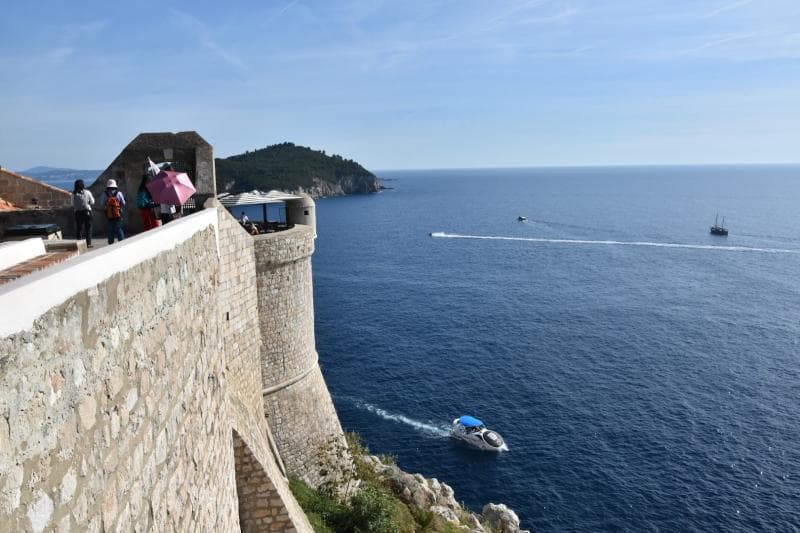
Discover the Panoramic Terrace at Dubrovnik Cable Car in Dubrovnik, Croatia, offering breathtaking views of the Old City, Adriatic Sea, and Fort Imperial.
Overview
High above the terracotta rooftops and shimmering Adriatic Sea, the Panoramic Terrace at the top of Mount Srđ offers an unparalleled vantage point of Dubrovnik, Croatia. Reached by the iconic Dubrovnik Cable Car, this elevated perch provides a sweeping vista that encapsulates the city's ancient charm, its surrounding islands, and the vast expanse of the sea. It is a place where history, natural beauty, and a poignant past converge, inviting travelers to gaze upon one of the world's most stunning cityscapes.
From this privileged height, approximately 412 meters above sea level, visitors can observe the intricate layout of Dubrovnik's Old City, a UNESCO World Heritage site, with its robust walls, the iconic Stradun, and the distinct pattern of its centuries-old architecture. The view stretches far beyond the city, encompassing the verdant Lokrum Island nestled close to shore, the distant Elaphiti Islands, and the rugged Dalmatian coastline that stretches towards Montenegro. On a clear day, visibility can extend up to an impressive 60 kilometers, painting a picture of breathtaking natural grandeur.
History & Cultural Background
Mount Srđ itself holds a deep historical and strategic significance for Dubrovnik. Its commanding position made it a crucial defensive outpost throughout various periods. The most notable structure at its summit, Fort Imperial, was constructed by Napoleon's forces between 1806 and 1812. Dedicated to Napoleon I, the fort was strategically positioned to control the high ground overlooking the city, a common military principle of the era.
However, the fort's most poignant role emerged much later, during the Croatian Homeland War from 1991 to 1995. Fort Imperial became a frontline command headquarters for the Croatian Army's 163rd Dubrovnik Brigade and was central to the city's defense against Serbian and Montenegrin aggression. The fierce battle for the fort on December 6, 1991, is considered a turning point, as Croatian defenders successfully held the position, preventing the city from being taken from above. Today, the fort houses the Museum of the Homeland War, a sobering reminder of the conflict through photographs, documents, and artifacts, offering a direct, unsanitized account of Dubrovnik's resilience.
The Dubrovnik Cable Car itself has its own history, first built in 1969. It was enthusiastically used for decades until it ceased operations in 1991 due to the war. After extensive renovation, the cable car proudly reopened in 2010, once again connecting the city with its panoramic peak.
What Makes It Special
The Panoramic Terrace isn't merely a viewpoint; it is an experience that profoundly connects visitors to Dubrovnik's soul. What makes it truly special is the convergence of spectacular natural scenery with a tangible sense of history and endurance. The aerial perspective allows for a unique geographical understanding of Dubrovnik, revealing the city's perfect oval of limestone walls and the straight line of the Stradun bisecting its interior. From here, one can spot patches of newer roof tiles, visual scars marking where mortar shells landed during the siege, a subtle yet powerful historical imprint on the cityscape below.
Beyond the visual spectacle, the terrace offers a variety of amenities to enhance the visit. Multiple viewing platforms provide different perspectives, while the Panorama Restaurant & Bar allows guests to enjoy Croatian and international cuisine with an unparalleled backdrop. The blend of a modern, comfortable experience with the ancient, resilient city below creates a truly unforgettable atmosphere.
Stories, Fun Facts & Local Details
One of the captivating details about Mount Srđ is its name. Originally, it was named after St. Sergius, one of Dubrovnik's patron saints until 972 AD, when St. Blaise took over that role. Locals hold a deep affection for this mountain, viewing it not just as a landmark but as a symbol of the city's spirit and resilience.
The strategic importance of Mount Srđ can also be traced back to its role in the former Astarea of Dubrovnik, the city-state's initial territory, highlighting its long-standing significance in the region's development. For many, visiting the terrace is an emotional journey, witnessing the beauty that endured through conflict and appreciating the strength of the community. Standing here, one can almost feel the whispers of history carried on the wind, from Napoleonic soldiers to the Croatian defenders of the 1990s.
Visitor Perspective
For a curious traveler, the Panoramic Terrace offers a moment of reflection and awe. The ride up the cable car itself is an integral part of the experience, offering ever-expanding views as you ascend. Once at the top, visitors are encouraged to take their time, exploring the various terraces to find their perfect photographic angles or simply to soak in the atmosphere. The upper station is well-equipped with souvenir shops for mementos and restrooms for convenience.
While the views are consistently magnificent, a clear day promises the most dramatic visibility. Many find the experience deeply rewarding, providing a comprehensive understanding of Dubrovnik's geography that is impossible to gain from street level. It's a place to ponder the city's enduring spirit, capture stunning photographs, and carry away a memory that connects the grandeur of nature with the profound narrative of human history.
Coordinates: 18.11056, 42.65
View on Google Maps💬 How Travelers Describe This Place
Based on community votes
Unique
931Must See
692Photogenic
655Beautiful
491Interesting
266
Traveler Stories
Discover memorable experiences shared by travelers who have visited this place.
No traveler stories yet.
Be the first traveler to share what made this place memorable.

Tour
By
Spot
Discover amazing places around the world. Your journey starts here.
Explore
© 2026 TourBySpot. All rights reserved.