Palm House
Frankfurt, Germany
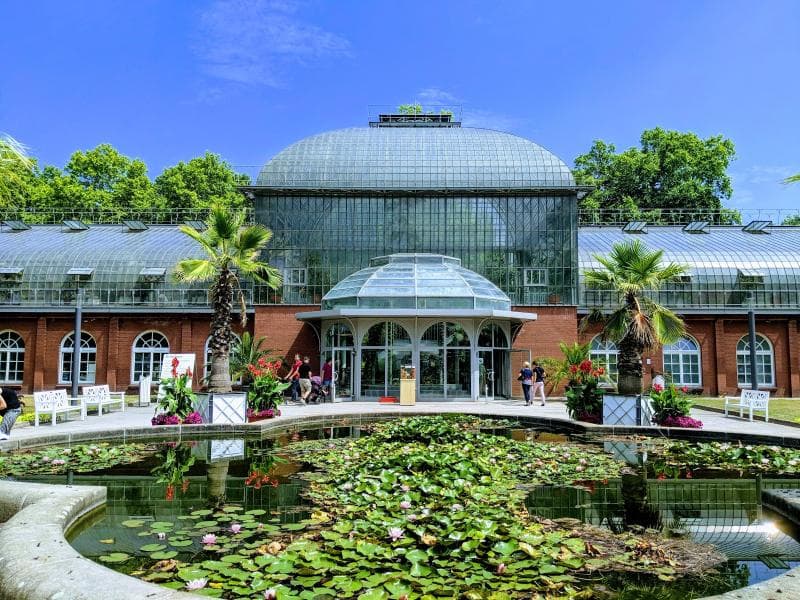
Explore the historic Palm House at Palmengarten Frankfurt, Germany. Discover its stunning Victorian architecture, lush tropical plants, and rich cultural past.
Overview
Nestled within the verdant expanse of Palmengarten Frankfurt, the historic Palm House stands as a magnificent testament to nineteenth-century engineering and botanical passion. Opened in November 1869, it predates the official establishment of Palmengarten itself by over a year, serving as its foundational heart and showpiece. This grand glass and steel structure is recognized as one of the largest surviving buildings of its kind in the world and Europe, immediately captivating visitors with its immense scale and tropical allure.
The Palm House was envisioned not merely as a conservatory for exotic flora but also as a vibrant social hub, combining a vast winter garden with an elegant anterior building, the Society House, which featured a glamorous ballroom. Today, it continues to offer a captivating escape, housing an extensive collection of towering palm trees and other tropical plants from across the globe, creating an immersive, warm, and humid environment for all who step inside.
History & Cultural Background
The genesis of the Palm House, and indeed the entire Palmengarten, is a fascinating story rooted in a unique blend of financial circumstance and civic ambition. In 1866, the Duchy of Nassau faced annexation by Prussia, leading Duke Adolph of Nassau to sell his esteemed collection of exotic plants from the Winter Gardens of Biebrich. The renowned horticulturist Heinrich Siesmayer stepped in, envisioning a public botanical garden for Frankfurt. To realize this ambitious dream, Siesmayer proposed 'Palmengarten shares,' which were enthusiastically purchased by affluent citizens of Frankfurt, demonstrating a collective desire for a cultural and natural sanctuary.
The Palm House, designed by Friedrich Kayser, was a marvel of its era. Its construction in 1869 utilized innovative steel and glass technology, inspired by structures seen at the 1867 Paris World Expo. The resulting hall boasts impressive dimensions—52.6 meters long, 30.5 meters wide, and 18.5 meters high—achieved without any internal supporting pillars, a significant architectural feat for its time. Following its official inauguration in 1871, the Palm House quickly became a prestigious center of social life, hosting concerts, balls, and attracting esteemed visitors, including Emperor Wilhelm I in 1874 and even the American entertainer Buffalo Bill in 1890. After significant restoration efforts, including the meticulous rebuilding of its ballroom, the Palm House has regained its original splendor, preserving its historical integrity while welcoming contemporary visitors.
What Makes It Special
The Palm House's enduring appeal lies in several distinct characteristics that set it apart. Firstly, its sheer scale and age distinguish it as one of the largest and oldest surviving structures of its kind, offering a glimpse into Victorian-era grandeur and botanical exploration. Its revolutionary pillar-free steel and glass architecture was a pinnacle of nineteenth-century construction, showcasing advanced engineering that allowed for unobstructed views and an expansive interior.
Botanically, the Palm House is a treasure trove. It houses an exceptional collection of palms, featuring 390 accessions representing 220 species, including majestic Washingtonia, delicate Caryota, and graceful Chamaedoria varieties. These towering specimens thrive in the carefully maintained tropical climate, transporting visitors far from the temperate European surroundings. Beyond the impressive plant life, the Palm House creates an enchanting atmosphere with features like an artificial waterfall and grottoes containing fish tanks, enhancing the illusion of a lush, vibrant tropical forest. It’s a sensory experience, offering both visual splendor and the gentle sounds of flowing water, making it a truly immersive destination.
Stories, Fun Facts & Local Details
Perhaps one of the most intriguing facts about the Palm House is its unique chronology: it opened its doors in 1869, a year and a half before the Palmengarten itself was officially established. This highlights its pivotal role as the initial catalyst and central attraction for the entire botanical garden. The very existence of Palmengarten and its magnificent Palm House can be attributed to a stroke of financial fortune for Frankfurt's citizens. When the Duke of Nassau was compelled to sell his plant collection, Heinrich Siesmayer seized the opportunity, funding his vision through a pioneering public-private partnership by selling 'Palmengarten shares' to local patrons.
Architecturally, the Palm House drew inspiration from the grandiose designs of terminal railway stations and the innovative exhibition halls of the Paris World Fair, showcasing a blend of functionality and artistic ambition. Initially, the Palmengarten and its stunning glasshouse served as a fashionable meeting point for Frankfurt's upper middle class, a place to see and be seen. Over time, it has evolved into a beloved public space, welcoming people of all backgrounds and interests. Beyond its botanical wonders, Palmengarten continues its legacy as a cultural hub, regularly hosting a diverse array of events from jazz concerts to art exhibitions, ensuring it remains a vibrant part of Frankfurt's cultural landscape.
Visitor Perspective
For the curious traveler, visiting the Palm House offers an immediate and profound sense of escape. Stepping through its doors is akin to being instantly transported to a distant tropical forest, far removed from the bustling city of Frankfurt. The warmth, the humidity, and the vibrant greenery create an enveloping experience that engages all senses.
The grandeur of the architecture combined with the lush botanical displays invites visitors to linger. Benches strategically placed throughout the space encourage quiet contemplation, allowing you to absorb the tranquil atmosphere and admire the diverse plant life at your own pace. The Palm House is a highlight within the broader Palmengarten, a sprawling 22-hectare botanical garden. While it is a magnificent destination in itself, it also serves as a perfect starting point for further exploration of the garden's numerous other show houses and themed areas. Easily accessible by public transport, and offering facilities like wheelchair access, the Palm House provides a welcoming and enriching experience for every visitor seeking a moment of natural beauty and historical intrigue in the heart of Germany.
Coordinates: 8.65643, 50.12326
View on Google Maps💬 How Travelers Describe This Place
Based on community votes
Interesting
869Must See
445Beautiful
416Photogenic
309Unique
33
Traveler Stories
Discover memorable experiences shared by travelers who have visited this place.
No traveler stories yet.
Be the first traveler to share what made this place memorable.

Tour
By
Spot
Discover amazing places around the world. Your journey starts here.
Explore
© 2026 TourBySpot. All rights reserved.