Palais Saint-Pierre
Lyon, France
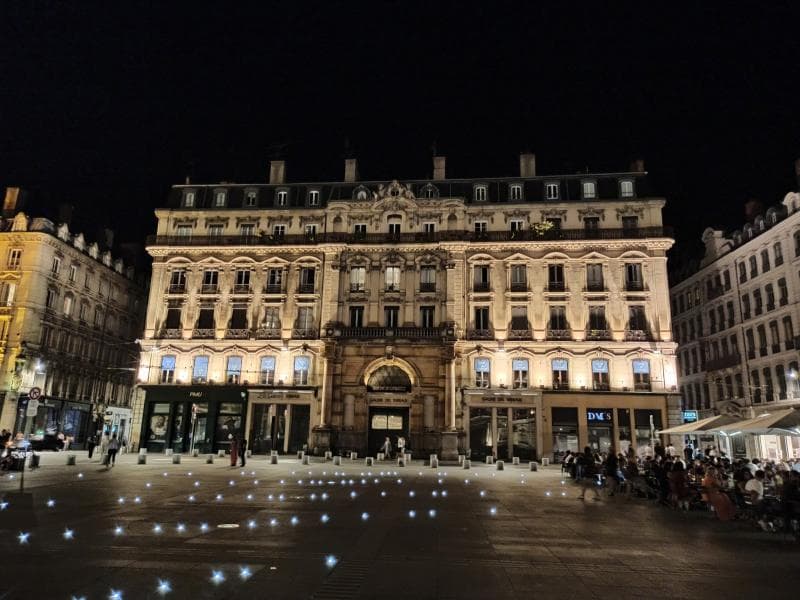
Explore Palais Saint-Pierre in Lyon, France, home to the Musée des Beaux-Arts. Discover its rich history as a royal abbey and its vast art collections.
Overview
Nestled in the vibrant heart of Lyon, France, on the renowned Place des Terreaux, stands the majestic Palais Saint-Pierre. More than just a striking architectural marvel, this grand edifice is home to the Musée des Beaux-Arts de Lyon, often hailed as France's second-largest fine arts museum after the Louvre. It's a place where centuries of history and artistic expression converge, offering visitors an unparalleled journey through time and culture. From its origins as a royal abbey to its current role as a world-class museum, the Palais Saint-Pierre invites curious travelers to delve into layers of heritage, art, and intriguing narratives, right in the bustling center of Lyon.
The palace's imposing 17th-century Baroque architecture, characterized by its four wings surrounding a tranquil cloister garden, immediately captivates. This serene oasis, once reserved for Benedictine nuns, is now a public sculpture garden, providing a peaceful escape amidst ancient and modern masterpieces. Exploring the Palais Saint-Pierre means walking through corridors that once echoed with monastic life, now filled with the silent eloquence of art, from Egyptian antiquities to modern movements, all while appreciating the building's own rich story.
History & Cultural Background
The story of Palais Saint-Pierre begins long before its current Baroque facade graced Place des Terreaux. Its roots stretch back to a 6th-century monastery, an ancient Benedictine convent known as the Abbey of the Dames de Saint-Pierre or Saint-Pierre-les-Nonnains. This esteemed institution was fully rebuilt in a magnificent Italian-inspired Baroque style between 1659 and 1685 under the patronage of Abbess Anne de Chaulnes. During this period, it functioned as a Royal Abbey, a privileged residence for aristocratic nuns, reflecting the era's social and religious hierarchies.
The French Revolution marked a pivotal transformation. In 1792, with the expulsion of the nuns, the abbey was repurposed by the Municipal Council to safeguard precious art objects and medals, preventing their destruction. This act laid the groundwork for its future. In 1801, under the Chaptal decree, Lyon was designated to host a fine arts museum, which officially opened to the public in the former abbey in 1803. Throughout the 19th century, the building proved remarkably versatile, temporarily housing institutions such as the Stock Exchange, the School of Fine Arts, and even faculties of science and arts, before fully dedicating itself to its role as the Musée des Beaux-Arts.
What Makes It Special
What truly sets Palais Saint-Pierre apart is its seamless fusion of historical grandeur and artistic wealth. It's a place where the building itself is as much a masterpiece as the collections it houses. The Baroque architecture, with its impressive scale and design, evokes a sense of bygone royalty and spiritual devotion. The former cloister, now the museum's serene garden, is a highlight. This green sanctuary offers a unique outdoor gallery, adorned with sculptures and providing a calming counterpoint to the indoor exhibits.
Inside, the Musée des Beaux-Arts de Lyon presents an encyclopedic journey through 5,000 years of art history. Its extensive collections span ancient Egyptian antiquities, including sarcophagi and artifacts that illuminate millennia of life along the Nile, to masterpieces of European painting and sculpture, and modern art by luminaries like Matisse and Picasso. This breadth of artistic heritage, coupled with the building's own layers of history, creates a rich, immersive experience that transcends a typical museum visit. The careful preservation and restoration of the palace, particularly during significant works between 1988 and 1998, ensure its continued magnificence.
Stories, Fun Facts & Local Details
The Palais Saint-Pierre is steeped in fascinating stories. Imagine the aristocratic Benedictine nuns who once called this grand structure home, their lives structured by prayer and contemplation within these very walls. The central pond in the garden, still present today, was a feature even in their time, providing a focal point for their cloistered world. Another intriguing detail is that the former abbey church, Église Saint-Pierre, which was part of the original complex, now serves as an exhibition space for the museum's 19th and 20th-century sculptures, offering a unique blend of sacred and secular art.
A fun fact for architecture enthusiasts: the design of the Palais Saint-Pierre, with its distinct Italian influences and four wings around a cloister, was a deliberate choice by architect François Royers de la Valfrenière in the 17th century. It reflects a common architectural trend of the time to create grand, symmetrical structures. The garden, too, holds historical quirks; it was redeveloped in the 19th century to include plaster casts of Greek friezes from the Parthenon and bronze medallions celebrating famous Lyonnais artists, adding layers of cultural homage to its serene beauty. The reservoir of the garden's fountain even incorporates an ancient Gallo-Roman sarcophagus from Lyon, connecting visitors to the city's deep Roman past.
Visitor Perspective
For the curious traveler, visiting Palais Saint-Pierre offers a profound sense of connection to Lyon's rich past and its enduring artistic legacy. Standing on Place des Terreaux, the imposing façade hints at the treasures within. Stepping through its historic entrance, one is immediately enveloped in an atmosphere of cultural richness. The contrast between the lively urban square outside and the tranquil, art-filled interiors is striking. Many visitors find immense pleasure in wandering through the serene cloister garden, a quiet respite from city life, where sculptures invite contemplation and the architecture provides a stunning backdrop.
Inside the museum, the sheer diversity of the collections means there is something to capture every interest, from the mystique of ancient Egypt to the bold strokes of modern masters. It's a place where one can easily spend hours, getting lost in different artistic epochs. The experience is not just about observing art but also about appreciating the historical context of the building itself—how a Benedictine abbey evolved into a beacon of culture. Palais Saint-Pierre offers an enriching journey, a chance to slow down, absorb beauty, and reflect on the continuous human endeavor of creation, making it an indispensable stop for anyone exploring Lyon.
Coordinates: 4.833544, 45.767175
View on Google Maps💬 How Travelers Describe This Place
Based on community votes
Interesting
912Must See
875Unique
820Beautiful
718Photogenic
479
Traveler Stories
Discover memorable experiences shared by travelers who have visited this place.
No traveler stories yet.
Be the first traveler to share what made this place memorable.

Tour
By
Spot
Discover amazing places around the world. Your journey starts here.
Explore
© 2026 TourBySpot. All rights reserved.