Palace On The Isle
Warsaw, Poland
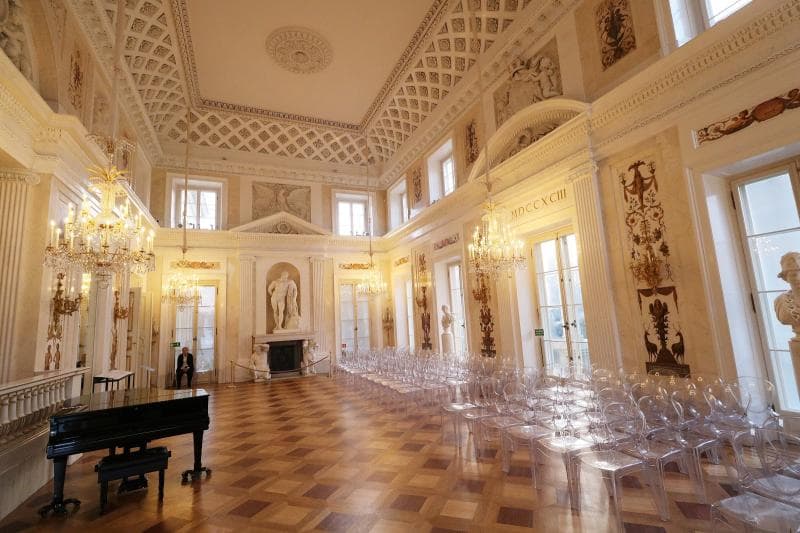
Explore the majestic Palace On The Isle in Lazienki Park, Warsaw, Poland. Discover its royal history, Neoclassical architecture, and serene island setting.
Overview
Nestled within the sprawling Lazienki Park in Warsaw, Poland, stands the enchanting Palace On The Isle, often referred to as the Palace on the Water or Łazienki Palace. This architectural gem is a captivating blend of Baroque origins and Neoclassical grandeur, serving as one of Poland's most significant historical residences. Its distinct location on an artificial island, seemingly floating on the serene lake and connected by two elegant bridges, creates a truly picturesque and unforgettable scene. The palace, surrounded by lush gardens, embodies the artistic and intellectual aspirations of Poland's last monarch, King Stanisław August Poniatowski, making it a focal point of cultural heritage in the heart of the city.
History & Cultural Background
The story of the Palace On The Isle began in the late 17th century as a private Baroque bathhouse. Commissioned by Polish magnate Stanisław Herakliusz Lubomirski, the original pavilion was designed by the acclaimed Dutch architect, Tylman van Gameren, around 1683-1690. This 'bathhouse' or 'łazienka' in Polish, eventually gave the entire park complex its name.
A century later, in 1764, the property caught the eye of King Stanisław August Poniatowski. The King, a fervent patron of the arts and sciences, purchased the estate and embarked on a grand transformation. Under the guidance of architects Domenico Merlini and Johann Christian Kammsetzer, the Baroque bathhouse was reimagined into the splendid Neoclassical summer residence visible today. This period, spanning from the 1770s to the 1790s, saw the palace become a vibrant center for enlightenment and culture, reflecting the King's vision of an ideal, modern state. He established it as a villa museum, housing a vast collection of valuable European artworks. The palace also famously hosted his 'Thursday Dinners', intellectual gatherings where artists, scholars, and thinkers convened to discuss contemporary issues and cultural developments.
During World War II, the palace suffered significant damage when occupying Nazi German forces set it on fire and drilled holes for demolition, though thankfully the explosives were never detonated. Its precious historical furnishings and royal painting collections were evacuated beforehand to the National Museum. The palace was meticulously reconstructed and reopened as a museum in 1960, a testament to its enduring historical and cultural value.
What Makes It Special
The most striking feature of the Palace On The Isle is undoubtedly its magnificent setting. Perched gracefully on an artificial island, it appears to float on the waters of the lake, connected to the mainland by two elegant arcaded bridges. This clever architectural design, inspired by Italian villas, creates a unique sense of intimacy and grandeur simultaneously.
Inside, the palace boasts a series of lavishly decorated rooms that offer a glimpse into 18th-century royal life. Visitors can explore the magnificent Ballroom, the former royal Bacchus Room (originally royal baths, later a portrait gallery), and the ornate Solomon Room, famed for its symbolic decorations representing the virtues of a good ruler. The Dining Room is especially significant, having been the venue for the King's influential 'Thursday Dinners'. While masterpieces by Rubens and Rembrandt were once displayed here, a considerable collection of 18th-century art, carefully curated to reflect the King's original taste and vision, remains for public viewing. The harmonious blend of Baroque and Neoclassical elements throughout the interiors speaks volumes about the artistic transitions of the era.
Stories, Fun Facts & Local Details
The very name 'Łazienki' translates to 'baths' from Polish, harking back to the palace's humble beginnings as a royal bathhouse. King Stanisław August Poniatowski's decision to transform this modest structure into his summer residence and an enlightened cultural hub showcases his innovative spirit and dedication to art and knowledge. The 'Thursday Dinners' were not merely social events but integral to the Polish Enlightenment, fostering intellectual exchange and artistic patronage.
Beyond the palace's walls, the expansive Lazienki Park itself is a living museum, home to charming bridges, classical sculptures, and diverse flora and fauna. Visitors often encounter majestic peacocks strutting gracefully across the lawns and swans gliding elegantly on the canals, adding a fairytale quality to the experience. The park also hosts various cultural events, including popular Chopin concerts during the summer months, making it a vibrant cultural space even today.
Visitor Perspective
Visiting the Palace On The Isle offers a journey back in time, allowing travelers to immerse themselves in the elegance and intellectual fervor of 18th-century Poland. The peaceful ambiance of the palace, combined with the tranquility of Lazienki Park, provides a perfect escape from the bustling city. Strolling through the meticulously preserved interiors, one can almost hear the echoes of royal conversations and philosophical debates. The surrounding gardens invite leisurely walks, offering picturesque views of the palace reflected in the water, particularly enchanting at sunset. It's an opportunity to appreciate not just the architectural beauty but also the rich history and cultural legacy that King Stanisław August Poniatowski bequeathed to his nation.
Coordinates: 21.035825, 52.215067
View on Google Maps💬 How Travelers Describe This Place
Based on community votes
Interesting
799Must See
639Beautiful
526Unique
181Photogenic
30
Traveler Stories
Discover memorable experiences shared by travelers who have visited this place.
No traveler stories yet.
Be the first traveler to share what made this place memorable.

Tour
By
Spot
Discover amazing places around the world. Your journey starts here.
Explore
© 2026 TourBySpot. All rights reserved.