Palace Courtyard
Bucharest, Romania
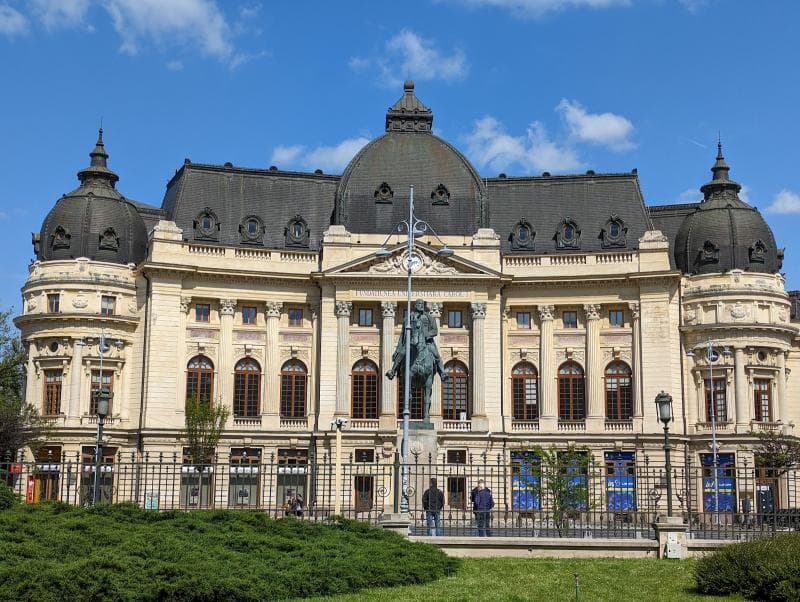
Explore the historic Palace Courtyard at the National Museum Of Art Of Romania in Bucharest, Romania. Discover its royal past and architectural grandeur.
Overview
The Palace Courtyard, while not a distinctly named formal garden, encompasses the magnificent exterior grounds and the grand entrance leading to the National Museum Of Art Of Romania in Bucharest. It is, in essence, the ceremonial gateway to what was once the Royal Palace, a landmark brimming with Romanian history and culture. Standing proudly on Calea Victoriei, facing the expansive Revolution Square, this area provides visitors with their first immersive encounter with a building that has profoundly shaped the nation's narrative. It's a space where architectural grandeur meets historical resonance, setting the stage for the artistic treasures housed within. Approaching the museum, one steps onto grounds steeped in centuries of royal legacy and pivotal national events.
History & Cultural Background
The site's history traces back to the early 19th century when it was first home to the Golescu Mansion, a significant neoclassical residence built between 1812 and 1815. Over the years, this mansion evolved into the official residence of Wallachian princes before becoming the Royal Palace. The transformation intensified with King Carol I, Romania's first king, who took residence here in 1866 and initiated significant renovations to reflect the burgeoning monarchy's prestige. A devastating fire in 1926 heavily damaged the central body of the palace, leading to a comprehensive reconstruction completed in 1937 under King Carol II, resulting in the more simplified, yet stately, Neo-Classical style visible today. After the monarchy's abolition in 1947, the palace was repurposed, eventually becoming the National Museum Of Art Of Romania, opening its doors to the public in 1950. The courtyard, therefore, has witnessed the comings and goings of royalty, hosted state functions, and endured revolutionary upheavals, making it a silent guardian of Romania's past.
What Makes It Special
What makes the Palace Courtyard truly special is its profound connection to Romania's soul. It's not merely an open space; it's a monumental witness to the country's journey. The neoclassical facade of the former Royal Palace, serving as its dramatic backdrop, exudes an aristocratic elegance that immediately transports one back in time. The very ground beneath your feet here has felt the tread of kings, politicians, and ordinary citizens through centuries of change. Directly adjacent, Revolution Square amplifies this historical aura, featuring the equestrian statue of King Carol I, an enduring tribute to the monarch who laid the foundations of modern Romania. Visitors may also discover sculptures on the museum grounds, such as 'Mihai the Madman' by Stefan Ionescu-Valbudea, adding artistic layers to the historical landscape. The courtyard stands as a testament to resilience, having borne the scars of conflict, including bullet holes from the 1989 Revolution that brought down the communist regime. This palpable sense of history, combined with the architectural splendor, creates an unforgettable first impression.
Stories, Fun Facts & Local Details
The Palace Courtyard holds many unspoken stories. Imagine the grand carriages arriving, royalty descending amidst fanfare, or the hushed excitement of official ceremonies taking place within these very walls. During the tumultuous Romanian Revolution of December 1989, the palace and its immediate surroundings became a focal point of intense fighting. The bullet marks and traces of fire that were once visible on its walls serve as stark reminders of those dramatic days when history was rewritten right here. A poignant fun fact is that the palace, despite its royal grandeur, began its life as a boyar's private residence, the Golescu Mansion, before being deemed fitting for a princely and then royal abode. The evolution of this single site, from a boyar's home to a princely court, then a royal palace, and finally a national art museum, perfectly mirrors Romania's own complex and fascinating journey through time. It's a space that has consistently adapted, bearing witness to shifting power dynamics and preserving cultural heritage.
Visitor Perspective
For any traveler, approaching the National Museum Of Art Of Romania through its Palace Courtyard offers a unique blend of anticipation and historical immersion. It's an opportunity to pause and reflect on the monumental significance of the building before stepping inside. The vastness of the exterior, the detailed neoclassical architecture, and the historical echoes emanating from Revolution Square, all contribute to a sense of awe. This is where your journey into Romania's artistic soul and royal past truly begins. The courtyard acts as a decompression chamber, allowing you to shed the bustle of modern Bucharest and prepare for the quiet contemplation of art and history within. Whether you seek to photograph its stately facade, admire the sculptures on its grounds, or simply absorb the atmosphere of a place where royalty once lived and revolutions transpired, the Palace Courtyard provides a meaningful and memorable introduction to one of Bucharest's most important cultural institutions.
Coordinates: 26.095943, 44.439362
View on Google Maps💬 How Travelers Describe This Place
Based on community votes
Must See
950Beautiful
287Photogenic
255Unique
231Interesting
86
Traveler Stories
Discover memorable experiences shared by travelers who have visited this place.
No traveler stories yet.
Be the first traveler to share what made this place memorable.

Tour
By
Spot
Discover amazing places around the world. Your journey starts here.
Explore
© 2026 TourBySpot. All rights reserved.