Painted Ceilings
Dushanbe, Tajikistan
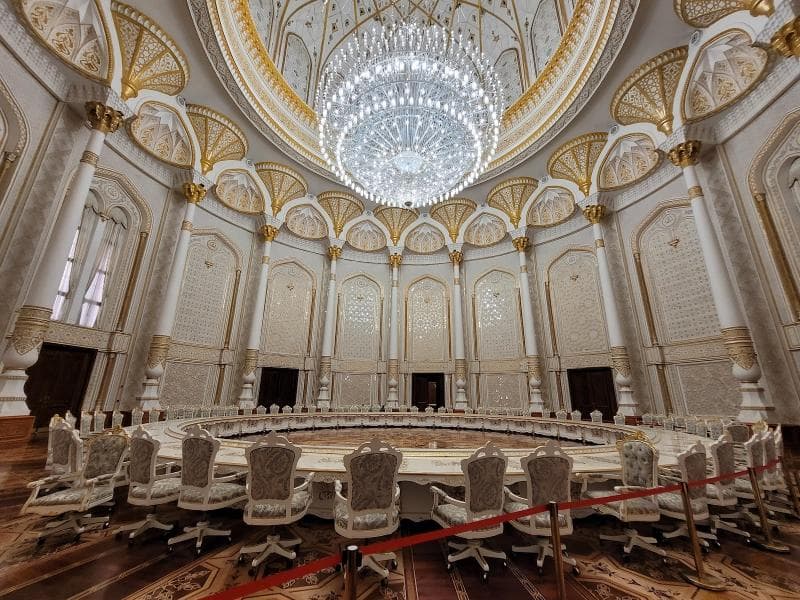
Discover the breathtaking painted ceilings of Kokhi Navruz in Dushanbe, Tajikistan. Explore intricate traditional Tajik artistry and cultural heritage.
Overview
Deep within the vibrant cultural heart of Dushanbe, Tajikistan, lies the magnificent Kokhi Navruz complex, a true testament to the nation's rich artistic heritage. Among its many breathtaking features, the 'Painted Ceilings' stand out as a highlight, offering visitors a mesmerizing journey into traditional Tajik craftsmanship. This sprawling palace, initially envisioned as Central Asia's largest teahouse, transformed during its construction into a monumental museum showcasing a diverse array of national artisanry. The complex, inaugurated in 2014, is not just a building; it's a celebration of Tajik culture, hosting national and international events and welcoming curious travelers to explore its exquisitely adorned halls.
The Painted Ceilings of Kokhi Navruz are more than mere decorations; they are intricate works of art that encapsulate centuries of history and traditional techniques. Each hall within the complex, particularly the Didor Hall, boasts ceilings meticulously hand-painted with colorful motifs, reflecting a deep connection to nature and historical narratives. These vibrant overhead canvases, alongside elaborate wood carvings, mosaics, and stucco work, immerse visitors in an atmosphere of unparalleled artistic splendor, inviting them to look up and marvel at the skill and dedication of thousands of Tajik craftsmen.
History & Cultural Background
The genesis of Kokhi Navruz dates back to the early 21st century, with construction commencing in 2009 and concluding in 2014. The vision, championed by Tajikistan's President Emomali Rahmon, was to create a modern center that would also serve as a profound expression of Tajik folk art and national identity. What began as a plan for the largest teahouse in Central Asia evolved organically into a grand palace, a living museum of national Tajik artisanry.
Approximately 4,000 craftsmen from across all parts of Tajikistan contributed their expertise to the complex's architecture and decoration. This extensive collaboration highlights the communal spirit and the widespread presence of skilled artisans within the country. The design seamlessly blends traditional Eastern motifs with modern architectural solutions, featuring natural stone, wood, and exquisite stucco. The name 'Navruz' itself holds significant cultural weight, referring to an ancient holiday marking the arrival of spring and the renewal of nature, symbolizing new beginnings and cultural continuity in Tajikistan.
What Makes It Special
The Painted Ceilings of Kokhi Navruz are particularly special due to their exceptional artistry and the deep cultural narratives they convey. They exemplify the traditional Tajik art of plafond painting, where artists carefully consider both the structural characteristics of the building and the intricate details of each design. The Didor Hall, for instance, features ceilings painted colorfully in a beautiful way, complemented by walls adorned with colorful gypsum and 'kundal' motifs. Kundal is a polychrome decorative painting technique known for its gilded relief details and geometric patterns, often used in interior decoration and rooted in Central Asian artistic traditions.
Traditional Tajik ceiling art employs two primary types of ornaments: 'girikh,' which are geometric patterns, and 'islimi,' plant-like forms depicting trailing stems with leaves, buds, and flowers. Artists historically used natural pigments, often mixed with egg yolk, selecting cold tones like blue or green for backgrounds to make the reds, oranges, and yellows of the designs vividly stand out. This choice of intense colors was practical, as the semi-darkness of shaded interiors would otherwise diminish their brightness. The sheer scale of the handiwork—covering about 40,000 square meters across five floors—underscores the dedication to preserving and showcasing these rich artistic traditions.
Stories, Fun Facts & Local Details
A fascinating detail about Kokhi Navruz is its initial conception as the largest tea house in Central Asia. Over its five-year construction period, however, it transformed into the grand palace and cultural complex we see today, a testament to evolving ambitions and a desire to create a lasting monument to Tajik heritage. The involvement of approximately 4,000 craftsmen from every corner of Tajikistan means that the palace is a mosaic of diverse regional artistic styles and techniques, making each hall uniquely adorned.
The palace incorporates 11 halls decorated with various Tajik national handicrafts, including plaster, colored glass mosaics, woodwork, and stone carving, in addition to the remarkable painted ceilings. For example, the Zarandud Hall, often called the 'Golden Hall,' is known for its extensive use of 24-carat gold leaf and a massive 6.7-ton chandelier, reflecting a different facet of Tajik opulence. These artistic elements not only beautify the space but also narrate stories of Tajik history and folklore, with legendary scenes sometimes painted on ceilings in older styles.
Visitor Perspective
For any traveler to Dushanbe, a visit to Kokhi Navruz, and particularly an appreciation of its Painted Ceilings, is an experience of awe and cultural immersion. The intricate details demand attention, encouraging visitors to slow down, look up, and absorb the vibrant storytelling etched into every pattern. One visitor noted being 'constantly looking up, walking slowly, and whispering 'wow' in awe' at the incredible craftsmanship.
The ceilings, with their vivid colors and complex motifs, offer a profound glimpse into the soul of Tajik artistry and the enduring traditions passed down through generations. It's an opportunity to witness how traditional art continues to thrive and be celebrated in a contemporary setting. Whether admiring the geometric precision of 'girikh' or the flowing beauty of 'islimi' designs, visitors leave with a deeper understanding and appreciation for the rich cultural tapestry of Tajikistan.
Coordinates: 68.76855, 38.58277
View on Google Maps💬 How Travelers Describe This Place
Based on community votes
Beautiful
551Must See
547Photogenic
421Unique
298Interesting
212
Traveler Stories
Discover memorable experiences shared by travelers who have visited this place.
No traveler stories yet.
Be the first traveler to share what made this place memorable.

Tour
By
Spot
Discover amazing places around the world. Your journey starts here.
Explore
© 2026 TourBySpot. All rights reserved.