Outer Gate
Dubrovnik, Croatia
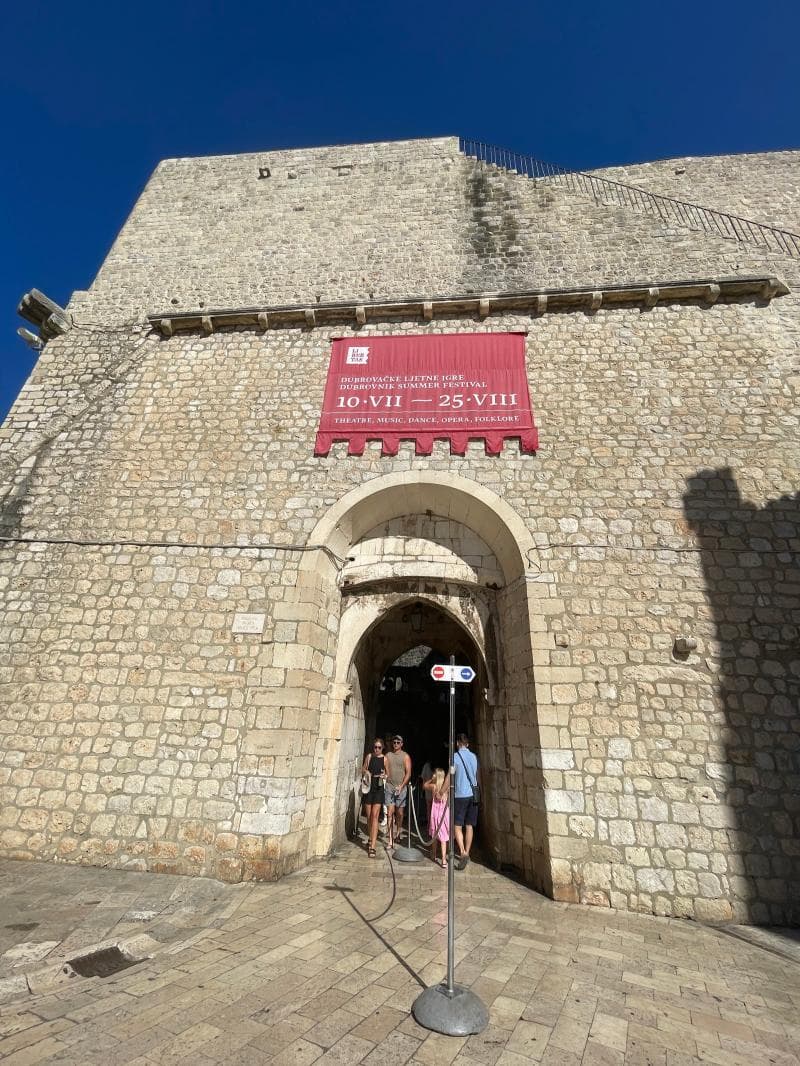
Discover the historic Outer Gate of Pile Gate in Dubrovnik, Croatia. This 16th-century Renaissance entrance guards the Old Town, revealing centuries of rich history.
Overview
The Outer Gate of Pile Gate serves as the grand and historically significant entrance to Dubrovnik's Old Town, a UNESCO World Heritage site in Croatia. Located on the western side of the city walls, it is the first impressive structure encountered by most visitors arriving from the modern part of Dubrovnik. This architectural marvel, built in the 16th century, is an integral part of the broader Pile Gate complex, which developed over several centuries to fortify the city. It acts not merely as a passage but as a symbolic threshold, transitioning travelers from the contemporary world into the ancient, storied streets of the former Republic of Ragusa. The Outer Gate, with its Renaissance arch and formidable design, immediately conveys the defensive prowess and rich history of Dubrovnik.
As part of the Pile Gate, which takes its name from the Greek word 'pylaj' meaning 'gate', the Outer Gate has been a pivotal point of entry for centuries. It stands as a testament to the city's ingenuity in creating a multi-layered defense system, designed to protect its freedom and prosperity from numerous threats. The complex itself consists of several defensive layers, including an outer and inner gate, stone bridges, and a former moat, all meticulously crafted to safeguard the city's heart.
History & Cultural Background
The construction of Pile Gate, and specifically its Outer Gate, spans a period reflecting Dubrovnik's political and economic evolution. While fortifications existed on this site as early as 972 AD, the Outer Gate in its current form, featuring a Renaissance arch set within a semicircular fortress wall, was primarily constructed in 1537. This later phase of building saw the integration of advanced defensive features, demonstrating the Republic of Ragusa's commitment to protecting its maritime trade and independence. The Outer Gate is approached via a three-arched stone bridge, originally built in 1471 by the prominent city engineer Paskoje Miličević. This bridge once connected to a wooden drawbridge that was ceremoniously raised each night, severing physical connection with the outside world and securing the city.
This nightly ritual was a powerful symbol of Dubrovnik's sovereignty, as the city's keys were delivered to the Rector, signifying absolute control over entry and exit. The deep moat that once lay beneath the bridge, serving as an additional defensive barrier, has since been transformed into a tranquil garden, offering a peaceful contrast to the gate's formidable past. Above the Renaissance arch of the Outer Gate, a statue of Saint Blaise, Dubrovnik's revered patron saint, silently watches over those who pass, a constant reminder of the city's protector and its deep-rooted faith. This sculptural detail, dating back to the gate's construction, reinforces the spiritual and cultural significance woven into Dubrovnik's defenses.
What Makes It Special
The Outer Gate's special allure lies in its unique combination of Renaissance architectural beauty and its enduring legacy as a symbol of resilience. Unlike a simple entrance, it is a complex defensive system that eloquently tells the story of a city determined to preserve its liberty. Its semicircular design and robust stonework are not just visually striking; they represent centuries of strategic planning and engineering ingenuity. The transition from the three-arched stone bridge to the gate itself, and the historical memory of the wooden drawbridge, offers a tangible connection to Dubrovnik's past, when access was tightly controlled for security.
Moreover, the continuous presence of Saint Blaise, carved into the stone above the arch, infuses the gate with a spiritual guardian presence, linking the city's physical defense with its cultural identity. The gate stands as a living museum, where the very act of passing through its arches is a journey back in time, allowing one to appreciate the meticulous detail and formidable strength required to protect a flourishing maritime republic. It is a powerful reminder that every stone in Dubrovnik has a story, and the Outer Gate is where many of those stories begin.
Stories, Fun Facts & Local Details
The Outer Gate holds many fascinating stories within its ancient stones. Imagine the nightly scene during the Republic of Ragusa: the drawbridge, once made of wood, would be dramatically raised, cutting off the city from the outside world for the night. This wasn't merely a practical measure; it was a grand ceremonial act that underscored Dubrovnik's self-governance and its dedication to safeguarding its citizens. This ritual ceased only when Napoleon's forces marched into the city in 1806, marking a significant turning point in Dubrovnik's history and the end of its independent republic.
Today, the former moat beneath the stone bridge, once a crucial defensive trench, has been transformed into a serene green area. This lush garden offers a peaceful spot amidst the bustling entrance, a gentle nod to nature reclaiming its space where defenses once stood vigilant. As you pass deeper into the gate complex, between the Outer and Inner Gates, you will encounter a plaque commemorating the damage sustained by the city during the Siege of Dubrovnik in the Croatian War of Independence (1991-1992). This stark reminder highlights that while the city's defenses are ancient, its struggles for freedom have continued into modern times.
Visitor Perspective
For the curious traveler, passing through the Outer Gate is often the first, most impactful experience of Dubrovnik's Old Town. It's more than just an entrance; it's a sensory and historical immersion. As you approach, the imposing stone walls and the archway itself create a sense of anticipation, preparing you for the journey into a meticulously preserved medieval city. Walking across the stone bridge, you can pause to admire the serene garden in what was once a defensive moat, a peaceful moment before stepping into the vibrant heart of the Old Town.
The sheer scale and detail of the architecture, from the Renaissance arch to the vigilant statue of Saint Blaise, offer a profound sense of stepping back in time. It’s an opportunity to visualize centuries of history, from merchants and dignitaries entering its confines to the strategic decisions made to protect its inhabitants. Once past the Outer Gate and through the subsequent passages, you find yourself directly on Stradun, Dubrovnik's main promenade. This direct connection makes the Outer Gate the natural starting point for exploring the city's renowned streets, fountains, monasteries, and palaces, setting the stage for an unforgettable visit to this 'Pearl of the Adriatic'.
Coordinates: 18.107139, 42.641686
View on Google Maps💬 How Travelers Describe This Place
Based on community votes
Interesting
965Must See
862Photogenic
629Beautiful
443Unique
184
Traveler Stories
Discover memorable experiences shared by travelers who have visited this place.
No traveler stories yet.
Be the first traveler to share what made this place memorable.

Tour
By
Spot
Discover amazing places around the world. Your journey starts here.
Explore
© 2026 TourBySpot. All rights reserved.