Outdoor Exhibits
San Francisco, United States
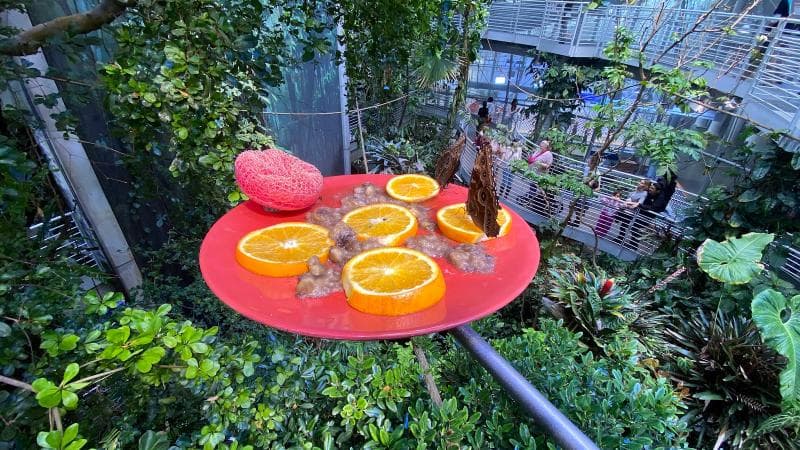
Explore the unique Outdoor Exhibits at the Exploratorium in San Francisco, United States. Engage with interactive, open-air installations showcasing science, art, and the San Francisco Bay.
Overview
Nestled along San Francisco's historic Embarcadero, the Outdoor Exhibits at the Exploratorium on Piers 15 and 17 offer a unique extension of the museum's renowned interactive learning experience. These open-air installations invite visitors to engage directly with the dynamic environment of the San Francisco Bay, blending science, art, and direct observation. A significant portion of these outdoor spaces is freely accessible to the public, allowing anyone to explore the natural phenomena and urban landscape that define this vibrant waterfront. Here, the boundary between museum and world blurs, creating a living laboratory where curiosity is the only guide.
These exhibits encourage a heightened awareness of the surrounding elements – from the shifting tides to the subtle play of light and wind – making them a must-visit for anyone seeking a deeper connection with San Francisco's unique setting.
History & Cultural Background
The Exploratorium itself was founded in 1969 by physicist and educator Frank Oppenheimer, with a revolutionary vision: to create a 'public laboratory' where learning occurs through active, hands-on exploration rather than passive observation. This philosophy profoundly shaped the institution, which quickly became a global model for interactive science museums. Originally housed in the Palace of Fine Arts, the Exploratorium relocated to its current waterfront home at Piers 15 and 17 in 2013.
This move was pivotal, as it allowed the museum to dramatically expand its outdoor exhibit space, directly integrating the San Francisco Bay into its educational mission. Oppenheimer's initial concept always envisioned learning extending beyond traditional walls, and the outdoor exhibits perfectly embody this spirit, transforming the city's edge into an expansive canvas for discovery. The Outdoor Exhibits are a natural evolution of Oppenheimer's belief that art and science are complementary ways of understanding the world, encouraging experimentation and collaboration in a public space.
What Makes It Special
What truly sets the Outdoor Exhibits apart is their profound connection to the immediate environment of the San Francisco Bay. Unlike typical museum displays, many of these installations utilize the natural forces of the Bay itself – the wind, water, and fog – as integral components of the experience. This direct interaction allows for real-time observation of environmental processes and their effects. For instance, the famous 'Fog Bridge #72494' envelops visitors in a swirling mist, mimicking San Francisco's iconic atmospheric conditions and offering a sensory immersion into local weather patterns.
Another notable exhibit is the 'Aeolian Harp', a towering 27-foot structure that 'sings' when the wind passes through its strings, transforming an invisible natural force into an audible art form. These exhibits are not merely about demonstrating scientific principles; they are artistic interpretations that invite contemplation and appreciation of the natural world. The collection encompasses around 40 exhibits, thoughtfully designed to be both playful and profound, revealing unseen aspects of the Bay's ecosystem and urban infrastructure. They provide unique vantage points to investigate local ecology, tidal patterns, and even the historical context of the Embarcadero.
Stories, Fun Facts & Local Details
Among the many engaging exhibits, the 'Bay Windows' offer a fascinating insight into the Bay's composition. These rotating disks contain sediment collected directly from the Bay, swirling into mesmerizing patterns that reveal the varied materials beneath the surface. This simple yet effective display highlights the geological and ecological richness of the waterfront. The 'Bay Bridge Model' provides a hands-on opportunity to understand the engineering marvel across the Bay, allowing visitors to interact with a suspension bridge model before gazing at the real structure in the distance.
Even the historic seawall supporting the Embarcadero becomes an exhibit, with subtle signs pointing out its age and vulnerability, subtly connecting visitors to the city's infrastructure challenges and the impact of sea level rise. The public spaces between Piers 15 and 17 also feature interactive elements, like parabolic listening vessels that allow whispers to travel surprisingly long distances, fostering unexpected connections between people and their surroundings. These details transform a visit into a rich narrative about San Francisco itself.
Visitor Perspective
Visiting the Outdoor Exhibits is an immersive journey that encourages active participation and open-ended discovery. It's a place where learning feels effortless, as visitors are naturally drawn to touch, manipulate, and observe. The informal, exploratory atmosphere means that whether you're watching the 'Color of Water' change with the Bay's conditions or playing with the 'Bike Rope Squirter', you're engaging with complex concepts in a tangible and enjoyable way.
The blend of free public access with ticketed museum areas means that even a casual stroll along the Embarcadero can turn into a moment of scientific or artistic revelation. It's an invitation to become an 'expert noticer' of the natural and built world, fostering a deeper appreciation for the environment and an understanding of how human actions and natural forces continuously shape our surroundings. The exhibits here reinforce the Exploratorium's core belief that everyone has the capacity for scientific inquiry, making it a profoundly empowering experience for all ages.
Coordinates: -122.39853, 37.8009
View on Google Maps💬 How Travelers Describe This Place
Based on community votes
Beautiful
995Interesting
839Must See
603Unique
388Photogenic
289
Traveler Stories
Discover memorable experiences shared by travelers who have visited this place.
No traveler stories yet.
Be the first traveler to share what made this place memorable.

Tour
By
Spot
Discover amazing places around the world. Your journey starts here.
Explore
© 2026 TourBySpot. All rights reserved.