Otemon Gate
Osaka, Japan
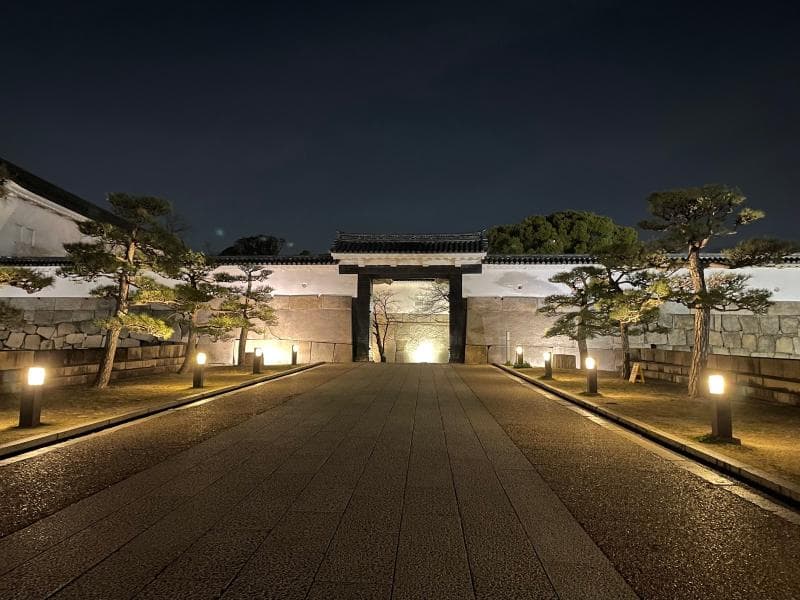
Explore Otemon Gate, the grand and historically rich main entrance to Osaka Castle in Osaka, Japan. Discover its Edo-period architecture and defensive secrets.
Overview
The Otemon Gate stands as a majestic and historically significant entrance to Osaka Castle, one of Japan's most iconic landmarks, nestled in the vibrant city of Osaka. Serving as the primary gateway, it ushers visitors into a rich tapestry of history and culture. This grand structure, alongside its formidable stone walls and defensive features, is an integral part of the sprawling Osaka Castle Park, offering a picturesque and informative start to any exploration of the castle grounds. Designated as an Important Cultural Property, the Otemon Gate is not merely an entry point but a historical artifact in its own right, inviting travelers to step back in time.
History & Cultural Background
The history of Otemon Gate is deeply intertwined with the turbulent past of Osaka Castle. While the original Osaka Castle was constructed by Toyotomi Hideyoshi in 1583, it was destroyed during the Summer Siege of Osaka in 1615. The Otemon Gate that stands today was built in 1628 by the Tokugawa shogunate during their extensive reconstruction of the castle.
This reconstruction was a monumental undertaking, showcasing the advanced architectural and defensive techniques of the Edo period. The gate was strategically positioned as part of a complex defensive system, designed to repel potential invaders. Unlike many other structures within the castle grounds that succumbed to natural disasters or conflicts, the Otemon Gate has remarkably endured, making it a rare and authentic Edo-period remnant.
Alongside the gate, the surrounding structures, such as the earthen walls and nearby watchtowers like Tamon Yagura and Sengan Yagura, further emphasize its role in the castle's formidable defense. These elements collectively form a Special Historic Site of Japan, providing invaluable insights into Japan's feudal era and its military architecture.
What Makes It Special
Beyond its historical resilience, the Otemon Gate boasts several distinctive features that highlight the engineering prowess of its builders. It is constructed in the Korai-mon Gate style, characterized by a large main roof over the front pillars and smaller roofs supported by both front and rear pillars on the sides. The gate was also iron-plated, a testament to its intended durability and defensive strength.
A notable architectural marvel is the 'column underpinning' technique used in its construction. This intricate method features convex 'ari-tsugi' joints on the east and west sides and mountain-shaped 'sogi-tsugi' joints on the north and south, creating a seamlessly interlocked structure that is both robust and aesthetically pleasing.
Furthermore, the gate is part of a 'masugata' courtyard, a square-shaped defensive enclosure. This design was a clever trap: if enemies breached the outer gate, they would be funneled into this courtyard, slowing their advance and making them vulnerable to attacks from watchtowers positioned strategically above. The varying sizes and arrangements of the stone walls flanking the gate also reveal the evolution of construction skills during the Tokugawa shogunate's nine-year rebuilding effort.
Stories, Fun Facts & Local Details
The Otemon Gate holds a charming anecdote reflecting the social hierarchy of feudal Japan. Legend has it that the gate, despite being the main entrance, would only be fully opened for the Shogun himself. Even local feudal lords were permitted only a half-open passage. Today, this stately gate is always open, allowing every visitor to pass through 'like a Shogun,' experiencing a touch of historical grandeur.
Nearby, the Sengan Yagura watchtower, an Important Cultural Property, carries a name that translates to 'a lot of money.' This name reportedly originated from Oda Nobunaga's promise of a thousand 'kan' (a unit of money) to anyone who could break through the formidable defenses of the Ishiyama Honganji Temple, which once occupied this site.
The area surrounding Otemon Gate transforms beautifully with the seasons. During late winter, the nearby Plum Grove bursts into fragrant bloom, offering a serene atmosphere. Come spring, Osaka Castle Park, including the approach from Otemon, becomes a renowned spot for 'hanami,' the traditional cherry blossom viewing, attracting visitors with its breathtaking displays of pink and white.
Visitor Perspective
Approaching Osaka Castle through the Otemon Gate is an immersive experience that immediately transports visitors into the past. It provides a grand, historical entry, setting the tone for the adventure ahead. Many find this route particularly convenient as it offers a direct path to the castle's interior and minimizes uphill walking compared to other entrances, making it ideal for many travelers.
As you walk through the towering stone walls and gaze across the moats, you gain a tangible sense of the castle's defensive might and its enduring legacy. The Otemon Gate complex is not just a photo opportunity but a place for quiet contemplation on centuries of history. Exploring the extensive Osaka Castle Park, which is free to enter, is an essential part of the visit. It is advisable to wear comfortable shoes to fully enjoy the vast grounds, seasonal gardens, and various historical structures. The gate is easily accessible from Tanimachi 4-chome Station, providing a straightforward journey for curious travelers.
Coordinates: 135.522586, 34.685077
View on Google Maps💬 How Travelers Describe This Place
Based on community votes
Photogenic
1.0kUnique
869Must See
416Interesting
309Beautiful
33
Traveler Stories
Discover memorable experiences shared by travelers who have visited this place.
No traveler stories yet.
Be the first traveler to share what made this place memorable.

Tour
By
Spot
Discover amazing places around the world. Your journey starts here.
Explore
© 2026 TourBySpot. All rights reserved.