Ordination Hall
Chiang Mai, Thailand
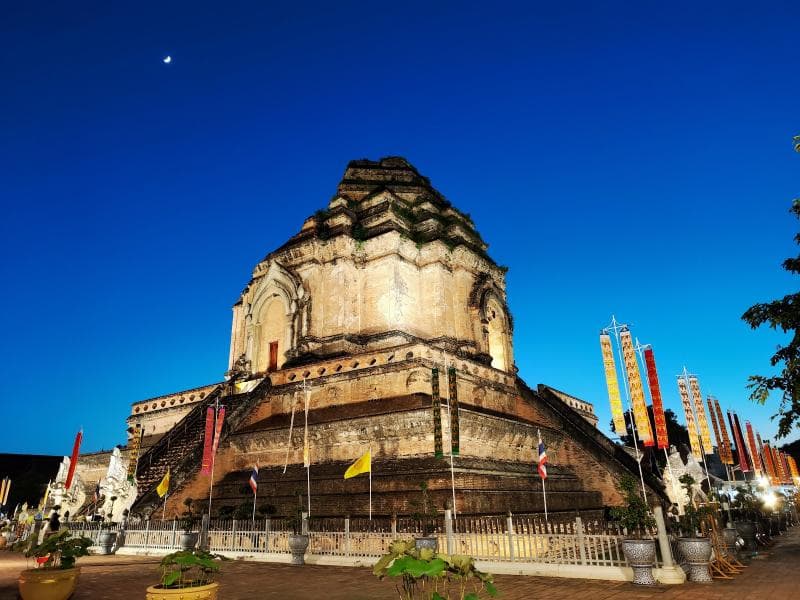
Explore the serene Ordination Hall (Ubosot) at Wat Chedi Luang in Chiang Mai, Thailand, a historic site of monastic vows and Lanna architecture.
Overview
Tucked away within the sprawling grounds of Wat Chedi Luang in the heart of Chiang Mai, Thailand, lies the tranquil and historically rich Ordination Hall, also known as the Ubosot. While the colossal chedi (stupa) often captures immediate attention, this venerable structure offers a profound glimpse into the spiritual heart of Thai Buddhism. Once the sacred space where aspiring monks took their vows and significant monastic ceremonies unfolded, the Ordination Hall now stands as a serene monument to centuries of religious practice and Lanna architectural tradition. Its understated beauty, particularly its sober facade and functional design, contrasts with the more ornate main viharn (assembly hall), inviting a moment of quiet reflection for visitors exploring this ancient temple complex.
History & Cultural Background
The history of the Ordination Hall is deeply intertwined with that of Wat Chedi Luang, a temple whose origins trace back to the 14th century. While the main chedi's construction began in 1391 under King Saen Muang Ma to inter his father's ashes, the Ubosot itself has a more defined recent history. The present Ordination Hall dates back to 1883. It served as the central venue for the ordination of new monks and other vital monastic rituals, acting as the spiritual crucible for generations of Buddhist practitioners. This sacred space underwent renovations in 1948 and again in 1997, ensuring its preservation while retaining its original character. Historically, the Ubosot is set apart from other buildings by eight boundary stones, known as 'bai sema,' which delineate its consecrated ground, signifying its unique spiritual purpose within the temple compound.
What Makes It Special
The special allure of Wat Chedi Luang's Ordination Hall lies not in extravagant decoration but in its profound simplicity and historical significance. Unlike the grand and gilded main viharn, this Ubosot presents a more modest and sober aesthetic, featuring a white facade and a low roof, often adorned with a 'chofa' – a bird-like ornament at the gable's apex. This understated elegance highlights its functional purpose as a place of serious religious rite rather than public display. Within its walls, important traditions, such as the recitation of monastic rules and the formal acceptance of novices into the monkhood, were upheld for decades. Although it is no longer actively used for these ceremonies today, its architecture and ambiance evoke a palpable sense of reverence and past devotion. It contains a brass seated Buddha image believed to date back to the 14th century, adding another layer of historical depth.
Stories, Fun Facts & Local Details
Visiting the Ordination Hall offers a unique opportunity to connect with the living history of Lanna Buddhism. Imagine the quiet anticipation of young men awaiting their ordination, the solemn chants filling the hall, and the profound commitment made within these very walls. It's a space that whispers tales of spiritual journeys and ancient traditions. A fascinating detail is its location behind the giant chedi, placing it in a more secluded and perhaps more introspective part of the temple grounds, away from the bustling main entrance. The presence of the 'bai sema' stones around the perimeter is a cultural detail marking it as hallowed ground, traditionally understood as a space where certain ceremonies are uniquely valid. While it no longer hosts daily ordinations, its enduring presence helps tell the story of the wider Wat Chedi Luang complex, which itself was originally comprised of three distinct temples: Wat Chedi Luang, Wat Ho Tham, and Wat Sukmin, all merging over time to form the extensive grounds seen today.
Visitor Perspective
For the curious traveler, the Ordination Hall offers a moment of peaceful contemplation amidst the grandeur of Wat Chedi Luang. While many flock to admire the towering chedi or participate in a 'monk chat' at other temple areas, seeking out the old Ubosot is a rewarding experience. It is easily accessible within the temple complex and provides a different perspective on the temple's multifaceted spiritual life. The simplicity of its design, combined with its historical role as the heart of monastic initiations, encourages visitors to reflect on the deeper spiritual aspects of their journey. Its beauty lies in its authenticity and the quiet dignity it exudes, offering a rare glimpse into the solemn world of Buddhist monasticism. Take a moment to appreciate the humble yet powerful aura of this sacred space, a testament to the enduring faith and cultural heritage of Chiang Mai.
Coordinates: 98.98651602444616, 18.78692357971049
View on Google Maps💬 How Travelers Describe This Place
Based on community votes
Photogenic
680Must See
514Interesting
432Unique
316Beautiful
196
Traveler Stories
Discover memorable experiences shared by travelers who have visited this place.
No traveler stories yet.
Be the first traveler to share what made this place memorable.

Tour
By
Spot
Discover amazing places around the world. Your journey starts here.
Explore
© 2026 TourBySpot. All rights reserved.