Opera Performance Area
Split, Croatia
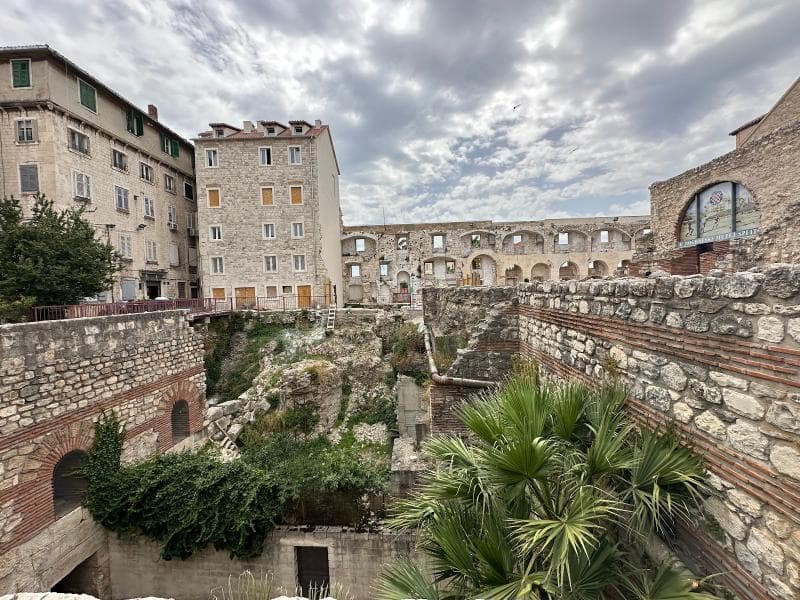
Discover the Opera Performance Area in Split's Peristyle Square, Croatia. Experience world-class opera amidst ancient Roman architecture and unique acoustics.
Overview
The Opera Performance Area within Peristyle Square in Split, Croatia, is not merely a historic site but a living stage where ancient Roman grandeur meets world-class artistic expression. This monumental courtyard, nestled in the heart of Diocletian's Palace, transforms each summer into an extraordinary open-air theater, primarily renowned for its breathtaking opera performances. Visitors are invited to step back in time, witnessing dramatic narratives unfold against a backdrop that has stood for nearly two millennia. It is a place where every stone tells a story, and every performance resonates with the echoes of history.
History & Cultural Background
Peristyle Square was originally conceived in the late 3rd and early 4th centuries AD as the central ceremonial court of Emperor Diocletian's immense palace. This architectural marvel was designed to awe and impress, serving as the grand entrance to the emperor's private quarters. It was here that Emperor Diocletian, celebrated as the living son of Jupiter, would appear before his subjects, who would approach him kneeling, kissing the hem of his scarlet cloak, a ritual emphasizing his deified status. The towering red granite columns, imported from Egypt, and an ancient Egyptian sphinx, dating back 3500 years, further underscore the square's imperial origins and the emperor's vast reach. Over the centuries, Peristyle adapted; after the decline of the Roman Empire, it transitioned into a religious center, with the emperor's mausoleum becoming the impressive Cathedral of Saint Domnius. Despite these transformations, its core structure and cultural significance endured, blending Roman, medieval, and later architectural styles into a unique urban tapestry.
What Makes It Special
What truly sets the Opera Performance Area in Peristyle Square apart is its unparalleled synthesis of history, architecture, and acoustics. The square's unique beauty and natural, resonant acoustics create an ideal 'theatre scenery' for opera classics and ancient literature, requiring no artificial amplification for the voices to carry. The imposing Roman columns, the ancient Egyptian sphinx, and the surrounding historic palaces provide an authentic, monumental backdrop that no modern stage can replicate. It is a dynamic, living monument that effortlessly bridges two millennia, evolving from an imperial court to a vibrant cultural hub. During performances, the historical setting is not just a passive backdrop but an active participant, with elements like the sphinx occasionally integrated into the stage design, especially for grand operas such as Verdi's 'Aida'. Furthermore, the steps surrounding the Peristyle transform into an impromptu open-air cafe, allowing visitors to immerse themselves in the atmosphere, sipping drinks under the stars while being enveloped by the echoes of imperial grandeur.
Stories, Fun Facts & Local Details
Peristyle Square holds a special place in the hearts of Split's citizens, many of whom consider it not just the center of their town, but 'the center of the entire world'. Its deep historical resonance is captured in Pope John Paul II's amazed exclamation, 'Dear God, how many feet have stepped through here', upon visiting. The square is the iconic heart of the Split Summer Festival, one of Croatia's oldest and most prestigious cultural events, running annually from mid-July to mid-August since 1954. This festival is renowned for staging spectacular opera productions, with masterpieces like Verdi's 'Don Carlos' and 'Nabucco' frequently gracing this historic stage. Beyond formal performances, the Peristyle often hosts spontaneous musical acts, with live guitar music sometimes transporting listeners back to the Roman Empire. Daily, particularly during the tourist season, visitors can witness the 'Change of the Diocletian's Roman Guard' at noon, a historical reenactment bringing the past to life. The square truly embodies the spirit of Split, offering a unique blend of ancient heritage and vibrant contemporary life.
Visitor Perspective
For the curious traveler, experiencing an opera or a cultural event at Peristyle Square offers a profound connection to history and art. It is a rare opportunity to witness world-class performances within the walls of a genuine ancient Roman palace, an experience far removed from a conventional indoor theatre. The atmosphere evolves throughout the day, from a serene, sun-drenched archaeological wonder in the early mornings, ideal for quiet contemplation, to a bustling social and cultural hub by midday and evening. Performances typically take place in the cooler evening hours, adding to the magical ambiance under the Dalmatian sky. When planning a visit, it is advisable to wear comfortable, flat footwear, as navigating the ancient stone steps and uneven paths of the square requires practicality over fashion. Attending a performance here is more than just entertainment; it is an immersive journey into Split's soul, leaving a lasting impression of culture, history, and Mediterranean magic.
Coordinates: 16.43915, 43.50891
View on Google Maps💬 How Travelers Describe This Place
Based on community votes
Beautiful
839Photogenic
445Must See
388Unique
289Interesting
141
Traveler Stories
Discover memorable experiences shared by travelers who have visited this place.
No traveler stories yet.
Be the first traveler to share what made this place memorable.

Tour
By
Spot
Discover amazing places around the world. Your journey starts here.
Explore
© 2026 TourBySpot. All rights reserved.