One Pillar Pagoda
Hanoi, Vietnam
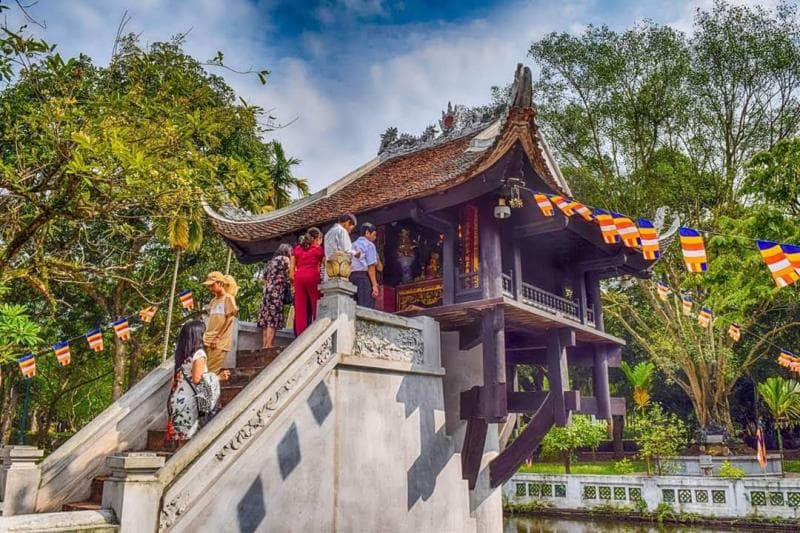
Explore the One Pillar Pagoda in Hanoi, Vietnam, an iconic Buddhist temple known for its unique lotus-inspired architecture and rich history.
Overview
Nestled within the historic Ba Dinh Complex in Hanoi, Vietnam, the One Pillar Pagoda stands as an enduring symbol of the city's rich spiritual and architectural heritage. Known locally as Chua Mot Cot, this iconic Buddhist temple captivates visitors with its distinctive design: a delicate wooden shrine seemingly floating atop a single stone pillar, emerging gracefully from a serene lotus pond. This unique structure is widely recognized for its profound symbolism, representing purity, enlightenment, and spiritual awakening, much like a lotus blossom rising untainted from muddy waters. It is an unmissable highlight for anyone exploring the historical heart of Hanoi, offering a tranquil escape and a glimpse into Vietnam's deeply rooted cultural identity.
History & Cultural Background
The origins of the One Pillar Pagoda trace back to the year 1049, under the patronage of Emperor Ly Thai Tong, who reigned from 1028 to 1054. According to revered legend, the emperor, who was childless, dreamt of Guan Yin, the Goddess of Mercy, seated upon a radiant lotus flower, presenting him with a baby boy. Following this auspicious dream, a Buddhist monk named Thien Tue advised the emperor to construct a pagoda on a single pillar, mirroring the lotus throne from his vision, as an act of gratitude and devotion to the goddess. This led to the creation of the original structure, initially named Dien Huu, which translates to 'long happiness and prosperity' or 'pagoda of extended blessings'.
Throughout the Ly Dynasty, the pagoda served as a significant site for royal ceremonies, including the annual celebration of Vesak, the birthday of Gautama Buddha. During these rituals, the monarch would lead a Buddha-bathing ceremony and release a bird, observed by monks and laypeople alike. Over centuries, the pagoda underwent numerous renovations and expansions. However, its history is also marked by destruction; notably, in 1954, French Union forces demolished the pagoda before their withdrawal from Vietnam. Thankfully, it was meticulously reconstructed in 1955, preserving its original architectural spirit and ensuring its legacy for future generations. Today, the One Pillar Pagoda is recognized as a National Historical and Cultural Site, affirming its profound importance to Vietnam.
What Makes It Special
The defining feature of the One Pillar Pagoda is its exceptionally unique architecture. The shrine, a square wooden structure known as Lien Hoa Dai, or the Lotus Dais, rests entirely on a single stone pillar. This pillar, approximately 1.25 meters in diameter and 4 meters in height, rises majestically from a tranquil pond, creating the illusion of a lotus blossom emerging from the water. The design elegantly embodies the Buddhist symbol of purity and enlightenment, as a lotus maintains its pristine beauty despite growing from muddy depths. The stone pillar itself is often described as being composed of two expertly joined stone blocks, contributing to its solid yet graceful appearance.
The visual harmony created by the elevated shrine and its reflection in the surrounding pond adds to the pagoda's sacred and serene ambiance. The pagoda's roof, curved at its four corners, is adorned with traditional Vietnamese patterns featuring two dragons facing the moon, a motif symbolizing holy power, wisdom, and vitality. This architectural marvel has garnered international recognition, notably being awarded 'The Pagoda with the Most Unique Architecture in Asia' by the Asia Record Organization in 2012. It stands as a testament to the ingenuity and spiritual depth of ancient Vietnamese craftsmanship.
Stories, Fun Facts & Local Details
The legend of Emperor Ly Thai Tong's dream remains the most captivating story associated with the One Pillar Pagoda. His longing for an heir and the subsequent vision of the Goddess of Mercy on a lotus, offering him a son, formed the spiritual blueprint for this remarkable temple. This legend has imbued the pagoda with a special significance, making it a place where many couples still come to pray for blessings, particularly for fertility and children.
The square pond from which the pagoda rises, originally known as Linh Chieu Lake, was added in 1105 and is not merely a decorative element but integral to the pagoda's lotus symbolism. In traditional Vietnamese philosophy, the round pillar supporting the pagoda represents the sky (Yang), while the square pond beneath symbolizes the earth (Yin), illustrating the harmonious circulation of the universe. Adding to the tranquil atmosphere of the grounds is a Bodhi tree, which grew from a cutting gifted by the President of India in 1958, further connecting the site to its Buddhist roots.
Visitor Perspective
Visiting the One Pillar Pagoda offers a deeply enriching cultural experience. It is conveniently situated within the larger Ba Dinh Complex, placing it in close proximity to other significant sites such as the Ho Chi Minh Mausoleum and the Ho Chi Minh Museum. This makes it an ideal stop on a historical tour of Hanoi, easily accessible from the bustling Old Quarter.
As a sacred site, visitors are encouraged to dress modestly, ensuring shoulders and knees are covered, as a sign of respect for local customs and religious traditions. Inside the shrine, maintaining silence and avoiding flash photography are customary. While the pagoda itself is relatively small, a visit typically takes about 30 to 45 minutes, allowing ample time to appreciate its unique architecture, learn about its history, and soak in the peaceful ambiance. Entry to the One Pillar Pagoda is generally free, making it an accessible and meaningful destination for all travelers seeking to understand the spiritual and historical essence of Hanoi.
Coordinates: 105.83355842448212, 21.035808123783173
View on Google Maps💬 How Travelers Describe This Place
Based on community votes
Photogenic
982Beautiful
903Must See
481Unique
458Interesting
197
Traveler Stories
Discover memorable experiences shared by travelers who have visited this place.
No traveler stories yet.
Be the first traveler to share what made this place memorable.

Tour
By
Spot
Discover amazing places around the world. Your journey starts here.
Explore
© 2026 TourBySpot. All rights reserved.