Old Orthodox Church
Sarajevo, Bosnia and Herzegovina
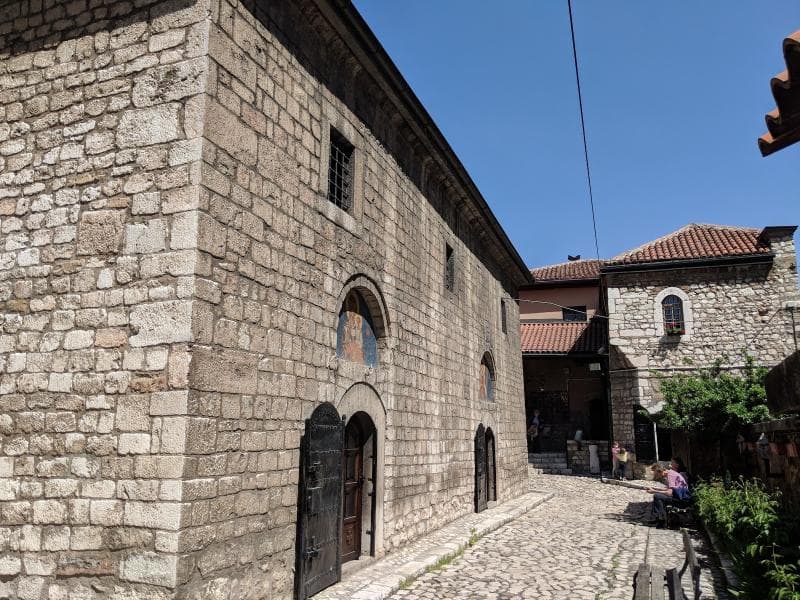
Discover the Old Orthodox Church in Sarajevo, Bosnia and Herzegovina – the city's oldest religious site. Explore its rich history, unique museum, and fascinating legends. An essential cultural experience.
Overview
Nestled within the bustling Baščaršija, Sarajevo's historic heart, stands the Old Orthodox Church, officially known as the Church of the Holy Archangels Michael and Gabriel. This venerable institution is not merely a place of worship but a profound testament to the city's layered past and enduring multicultural spirit. Recognized as the oldest religious building in Sarajevo, its seemingly modest exterior belies a rich interior and a treasure-filled museum that attracts curious travelers seeking a deeper understanding of Bosnia and Herzegovina's cultural tapestry.
Its location in Baščaršija places it amidst a vibrant convergence of faiths, earning Sarajevo the moniker 'Jerusalem of Europe' where a mosque, a Catholic church, an Orthodox church, and a synagogue can be found in close proximity. The church, along with its invaluable museum, offers a unique window into centuries of Serbian Orthodox heritage, art, and community life in this dynamic crossroads of civilizations.
History & Cultural Background
The history of the Old Orthodox Church is as ancient and complex as Sarajevo itself. While officially established in 1539, historical evidence suggests it was built upon foundations that date back to an even older basilica, possibly from the 5th or 6th century. This long lineage positions it as a rare survivor, a steadfast beacon of faith through Ottoman rule, Austro-Hungarian times, and into the modern era. The church has faced numerous trials, including damage from fires, but has been diligently restored each time, with the current stone structure largely dating back to 1730.
In 2006, its profound historical and cultural significance was formally acknowledged when it was declared a National Monument of Bosnia and Herzegovina, encompassing not just the church but also its courtyard, museum, and a collection of movable property including icons and liturgical objects. This designation underscores its importance as a repository of national heritage and a symbol of the continuous presence of the Serbian Orthodox community in Sarajevo.
What Makes It Special
What truly sets the Old Orthodox Church apart is the harmonious blend of its enduring spiritual function and its role as a custodian of priceless cultural artifacts. The church's exterior, reflecting a medieval Serbian-Byzantine architectural style, is often described as plain, but stepping inside reveals a breathtaking world of artistry. The interior is adorned with a magnificent gilded iconostasis, dating back to 1674, intricate paintings, and colossal chandeliers that command attention. The night-blue ceiling, speckled with metallic gold stars, symbolizes the Virgin Mary and adds to the ethereal atmosphere.
Adjacent to the church, its museum, founded in 1889, is recognized as one of the five most important Orthodox museums globally. It houses an extraordinary collection of approximately 700 exhibits, including rare Cyrillic manuscripts from the 14th to 17th centuries, icons spanning the 12th to 19th centuries (many from Greek, Russian, and Cretan traditions, some of the Italokrit school), liturgical vestments, metalwork, and even ancient currency. Among its most prized possessions is the 14th-century Sarajevo Codex, a testament to the region's long-standing literary and religious traditions.
Stories, Fun Facts & Local Details
The Old Orthodox Church is rich with fascinating tales that highlight the resilience and ingenuity of its community. One popular legend recounts how the construction of the church was permitted during the Ottoman period. Sultan Ghazi Husrev-Bey reportedly granted permission for a church 'the size of an ox hide.' Resourceful locals then cut the ox hide into extremely thin strips, using them to encircle a significantly larger plot of land for the church, a clever interpretation that the regent admired and ultimately allowed.
Another deeply moving story surrounds a mummified child's body housed on an upper floor within the church. According to local belief, this child possesses healing powers. To this day, women seeking to encourage fertility or protect their children traditionally walk around the structure three times and then crawl beneath it, a powerful ritual connecting generations to this sacred space.
Visitor Perspective
For the curious traveler, visiting the Old Orthodox Church offers a profoundly enriching experience. The church itself can be explored for free, allowing visitors to absorb its serene ambiance and admire its centuries-old artistry. There is a modest entrance fee for the museum, which is highly recommended for its unparalleled collection of artifacts that illuminate the spiritual and cultural history of the region. Many visitors laud the church for its ancient atmosphere and the deep sense of history it evokes. It is centrally located within Baščaršija, making it easily accessible on foot from most parts of central Sarajevo.
During quieter hours, one might even have the chance to engage with caretakers who are often willing to share captivating stories and insights into the church's past and the traditions it upholds. The Old Orthodox Church stands not just as a monument, but as a living bridge to Sarajevo's intricate history, offering a peaceful and reflective counterpoint to the vibrant energy of the old bazaar around it.
Coordinates: 18.4299933, 43.8602483
View on Google Maps💬 How Travelers Describe This Place
Based on community votes
Unique
799Must See
526Photogenic
424Beautiful
181Interesting
30
Traveler Stories
Discover memorable experiences shared by travelers who have visited this place.
No traveler stories yet.
Be the first traveler to share what made this place memorable.

Tour
By
Spot
Discover amazing places around the world. Your journey starts here.
Explore
© 2026 TourBySpot. All rights reserved.