Old Masters Collection
Frankfurt, Germany
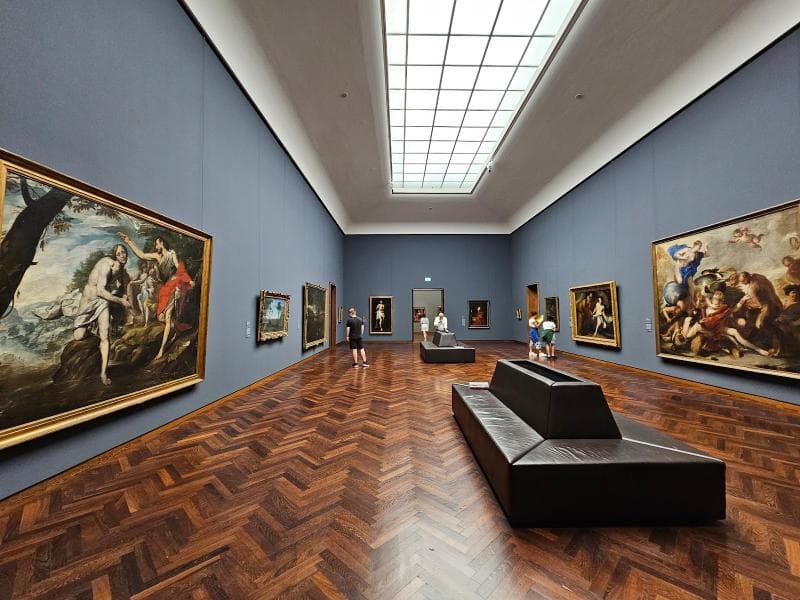
Explore the Städel Museum's Old Masters Collection in Frankfurt, Germany. Discover European painting from 1300-1800, featuring Vermeer, Botticelli, and Rembrandt.
Overview
The Städel Museum in Frankfurt, Germany, hosts an outstanding European art collection spanning over 700 years. Central to this institution is the Old Masters Collection, a dedicated sub-spot exhibiting European painting from 1300 to 1800. This significant segment guides visitors through the artistic developments of the late Middle Ages, the profound Renaissance, the dynamic Baroque period, and refined Neo-Classicism. As a cornerstone of the museum's permanent exhibition, it presents masterpieces that have fundamentally shaped art history.
History & Cultural Background
The Städel Museum's genesis, and its Old Masters Collection, stems from an extraordinary act of civic philanthropy. In 1816, Johann Friedrich Städel, a prominent Frankfurt banker, bequeathed his entire fortune and vast art collection to establish a public art institute and school. This pioneering initiative made the Städel Germany's oldest museum foundation, opening its doors in 1817 and championing early democratic access to art. A unique clause in Städel's will allowed for selling less exceptional works to acquire superior pieces. This foresight ensured the collection's high quality and maintained the museum's prestige for over two centuries.
What Makes It Special
The Old Masters Collection at the Städel Museum distinguishes itself through comprehensive scope and the sheer brilliance of its artworks. Covering five centuries, it meticulously charts the evolution of European painting, revealing shifts in themes, techniques, and philosophies. Visitors encounter iconic works by revered artists like Jan van Eyck, Johannes Vermeer, Lucas Cranach the Elder, Rembrandt, Sandro Botticelli, Albrecht Dürer, and Peter Paul Rubens. This journey provides unparalleled engagement with the aesthetic and intellectual currents that defined these pivotal periods. A new room dedicated to founder Johann Friedrich Städel was unveiled in March 2024, celebrating his enduring vision.
Stories, Fun Facts & Local Details
Beyond its visual splendor, the Städel's Old Masters Collection is rich with intriguing stories. The museum's foundation rests upon Johann Friedrich Städel's innovative will, which permitted selling less exceptional works to fund finer acquisitions, guaranteeing sustained artistic excellence.
A standout piece is 'The Little Garden of Paradise' by the Upper Rhenish Master (circa 1410–1420). This intricate artwork portrays an idyllic garden with the Virgin Mary, Christ, and saints, rich in symbolism from an ape signifying evil tamed, to a tree stump symbolizing the old covenant alongside fresh branches representing the new. Remarkably, the painting accurately details 24 plant species and 12 bird types.
Botticelli's 'Idealised Portrait of a Lady (Portrait of Simonetta Vespucci as a Nymph)' also draws considerable attention, embodying Renaissance beauty. Johannes Vermeer's 'The Geographer' is another profound experience; with only about 36 verified Vermeer paintings existing globally, its presence at the Städel makes it an exceptionally rare and valuable highlight. The Städel Museum also played a foundational role in establishing Frankfurt's renowned Museum Embankment, the 'Museumsufer', which now clusters 39 museums along the Main River.
Visitor Perspective
A visit to the Old Masters Collection at the Städel Museum offers an enriching experience. The collection is integrated within the museum's extensive permanent exhibition, spread across more than 15,000 square meters. To fully appreciate the Städel's vast offerings, dedicating 5 to 7 hours for a visit is often recommended.
The museum is designed for broad accessibility, including wheelchair access. For deeper understanding, the Städel provides various guided tours and workshops. Embracing modern technology, the museum also maintains a comprehensive Digital Collection, enabling art enthusiasts globally to explore its works online. Conveniently situated at Schaumainkai 63 on Frankfurt's Museumsufer, the Städel is easily accessible. A new terrace on the museum's roof, opened in March 2024, provides breathtaking panoramic views of the Frankfurt skyline.
Coordinates: 8.6741, 50.1032
View on Google Maps💬 How Travelers Describe This Place
Based on community votes
Must See
995Unique
839Beautiful
388Interesting
289Photogenic
141
Traveler Stories
Discover memorable experiences shared by travelers who have visited this place.
No traveler stories yet.
Be the first traveler to share what made this place memorable.

Tour
By
Spot
Discover amazing places around the world. Your journey starts here.
Explore
© 2026 TourBySpot. All rights reserved.