Odéon Theatre
Lyon, France
Explore the ancient Odéon Theatre in Lyon, France, a remarkably preserved Roman odeon built for intimate musical and literary performances.
Overview
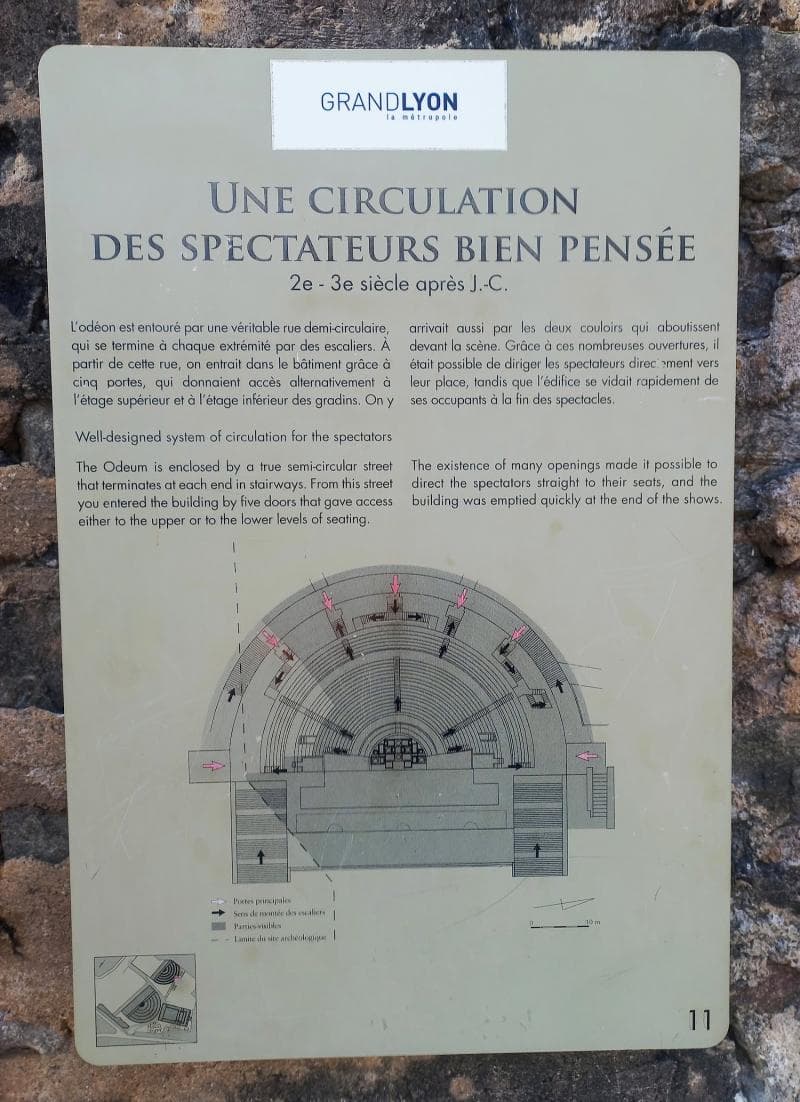
Perched gracefully on the Fourvière hill in Lyon, France, the Odéon Theatre stands as a remarkable testament to the grandeur of Roman Lugdunum. As part of the larger Théâtres Romains De Fourvière archaeological site, this ancient Roman odeon, though smaller than its grander neighbour, holds a unique charm and significant historical value. Unlike the sprawling main theatre designed for large public spectacles, the Odéon was an intimate venue, purpose-built for refined cultural events such as musical performances, poetry readings, and public lectures. It served as a sophisticated gathering place for the city's elite and intellectuals.
Today, visitors can freely explore the well-preserved ruins, imagining the intellectual and artistic life that once thrived within its semi-circular walls. Its strategic location offers not only a journey back in time but also breathtaking panoramic views of modern Lyon.
History & Cultural Background
The Odéon Theatre's construction dates back to the late 1st or early 2nd century AD, marking a period of prosperity and cultural flourishing for Lugdunum, which was then a significant capital in Roman Gaul. It was likely built during the same era as the expansion of the adjacent larger theatre, possibly under Emperor Hadrian's reign. The architectural pairing of a grand theatre and a smaller odeon at a single site is notably rare in the Roman world, with only one other known example in Gaul, located in Vienne. This unique configuration underscores Lyon's importance as a Roman cultural hub.
For centuries after the decline of the Roman Empire, the Odéon, like its larger counterpart, fell into disuse and was eventually buried under debris, even serving as a stone quarry during the Middle Ages. Its ruins, however, remained partially visible, albeit often misinterpreted, with some 16th-century scholars mistakenly believing it to be an amphitheatre associated with early Christian persecutions. Extensive archaeological excavations and restoration efforts throughout the 20th century, particularly between 1941 and 1958, finally brought the Odéon back to light, revealing its true purpose and historical significance. In 1998, the Odéon, along with the entire historic centre of Lyon, was deservedly inscribed on the UNESCO World Heritage List, acknowledging its invaluable contribution to human heritage.
What Makes It Special
The Odéon Theatre distinguishes itself through several unique characteristics. Firstly, its design as a dedicated space for musical and literary performances sets it apart from the larger theatrical venues, emphasizing a different facet of Roman cultural life. Secondly, its remarkable state of preservation allows visitors to clearly discern its original layout, including the tiered seating and, most notably, the striking orchestra floor. This floor features intricate geometric patterns crafted from beautifully inlaid marble and porphyry, a detail that hints at the building's prestigious character and the sophisticated artistry of its time.
Furthermore, ancient records suggest the Odéon originally featured a roof, a design element crucial for enhancing the acoustics of musical performances and providing a more intimate atmosphere. This covered structure made it ideal for quieter, more contemplative events than the boisterous public gatherings at the main theatre. The rarity of such a well-preserved odeon, especially one paired with a larger theatre, makes it an archaeological gem and an exceptional example of Roman urban planning and cultural provision.
Stories, Fun Facts & Local Details
- The Odéon could once accommodate approximately 3,000 spectators, a substantial number for a 'small' theatre, highlighting the scale of Roman public life in Lugdunum.
- The well-preserved remnants of the orchestra floor, with its colourful mosaic-like patterns of marble and porphyry, offer a tangible connection to the luxurious aesthetics enjoyed by Roman audiences.
- The term 'odeon' itself derives from the Greek word for a 'singing space', accurately reflecting its primary function.
- Today, the site continues its ancient legacy by occasionally hosting cultural events, including parts of the annual Nuits de Fourvière festival, bringing modern music and performances to these historic stones.
- Visiting the Odéon is often coupled with a trip to the nearby Lugdunum Museum, which provides deeper insights into Gallo-Roman life and showcases artifacts unearthed from the site.
Visitor Perspective
A visit to the Odéon Theatre offers a tranquil and reflective experience, distinct from the grandiosity of larger Roman sites. The open-air setting, coupled with its position on Fourvière hill, provides a serene atmosphere and splendid views over Lyon, making it an ideal spot for a leisurely stroll or quiet contemplation. The site is easily accessible, and admission is free, encouraging an unhurried exploration. Comfortable shoes are recommended for navigating the uneven stone surfaces.
Stepping onto the ancient tiers and gazing at the intricately patterned orchestra floor, one can almost hear the echoes of ancient melodies and spoken word. The compact nature of the Odéon provides a clear sense of the focused environment it once created for its audiences. It's a place where history feels palpable, inviting visitors to connect with the rich cultural heritage of Roman Lyon and appreciate the enduring legacy of its architecture and artistic traditions. For those with an interest in history and ancient civilizations, the Odéon Theatre is an essential and deeply rewarding stop on any Lyon itinerary.
Coordinates: 4.81972, 45.75861
View on Google Maps💬 How Travelers Describe This Place
Based on community votes
Must See
996Unique
673Photogenic
186Beautiful
143Interesting
80
Traveler Stories
Discover memorable experiences shared by travelers who have visited this place.
No traveler stories yet.
Be the first traveler to share what made this place memorable.

Tour
By
Spot
Discover amazing places around the world. Your journey starts here.
Explore
© 2026 TourBySpot. All rights reserved.