Observatory
Prague, Czech Republic
Explore Štefánik's Observatory on Petřín Hill in Prague, Czech Republic. Discover celestial wonders through powerful telescopes and learn astronomy.
Overview
Nestled amidst the lush greenery of Petřín Hill in Prague, Czech Republic, lies the Štefánik's Observatory, a beacon for stargazers and curious minds alike. Far from being merely a viewpoint, this operational astronomical observatory offers a unique opportunity to connect with the cosmos, providing both daytime solar observations and enchanting nighttime explorations of the celestial sphere. Named after a revered figure, it stands as a testament to scientific curiosity and public education, drawing visitors into the mysteries of the universe from its historic perch above the city.
The observatory distinguishes itself by making astronomy accessible, inviting visitors to peer through powerful telescopes and learn from professional scientists. It is a cherished spot on Petřín Hill, complementing the surrounding gardens and the well-known Petřín Lookout Tower with its distinct focus on scientific discovery rather than panoramic views.
History & Cultural Background
The Štefánik's Observatory, known in Czech as Štefánikova hvězdárna, was officially established in 1928, marking a significant milestone for the Czech Astronomical Society which had initiated fundraising efforts as early as 1917. It was purposefully built on Petřín Hill, close to the medieval Hunger Wall, an area rich in history that dates back to the 14th century reign of Charles IV.
The observatory bears the name of Milan Rastislav Štefánik, a distinguished Slovak astronomer, politician, and diplomat. His legacy continues to inspire, associating the observatory with a deep respect for scientific pursuit and national pride. Throughout its existence, the observatory has undergone several transformative phases. While it suffered damage during World War II, its exterior was extensively renovated in the 1970s, giving it its contemporary appearance. More recently, in the early 2000s, both the telescope equipment and internal exhibition spaces were modernized. A notable restoration of its primary Zeiss telescope took place between 2022 and 2024, ensuring its continued functionality for generations to come.
What Makes It Special
What sets the Štefánik's Observatory apart is its dedicated mission to popularize astronomy and related natural sciences for the general public. It is not a passive museum but an active center where visitors can engage directly with astronomical observation.
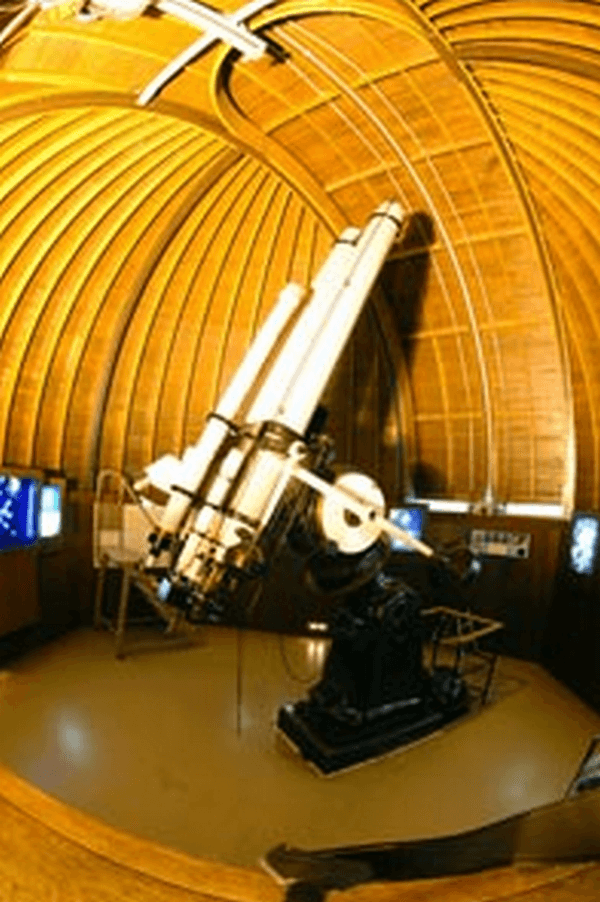
The observatory features three distinct domes and an observation house equipped with a retractable roof, housing a suite of impressive instruments. The centerpiece is a large Zeiss double-refractor astrograph, originally from 1905, which has been the main telescope since 1930 and recently underwent a major renovation. Complementing this, a mirror Maksutov-Cassegrain telescope is located in the western dome. These powerful tools allow for incredible observations: during the day, guests can safely view the Sun's surface, sunspots, and solar flares through specialized filters, while evenings unveil the wonders of the Moon, planets, distant star clusters, and even galaxies, depending on the season and sky conditions.
Beyond the telescopes, the observatory also hosts engaging permanent exhibitions covering the history of astronomy and the institution itself. A particularly captivating addition is the meteorite museum, showcasing a fascinating collection of meteorites, including rare specimens originating from the Moon and Mars.
Stories, Fun Facts & Local Details
The very existence of the Štefánik's Observatory is a story of collective vision and perseverance. The fundraising efforts for its construction, initiated by the Czech Astronomical Society, demonstrated a widespread enthusiasm for scientific exploration among the public. The observatory's name honors Milan Rastislav Štefánik, whose multifaceted career as an astronomer, aviator, and statesman left a lasting impact. His dedication to both scientific and national endeavors makes the observatory a cultural landmark with deep historical resonance.
Interestingly, the observatory's resilience mirrors that of Prague itself. Surviving wartime damage and adapting through various political periods, it has consistently upheld its role as a bridge between humanity and the cosmos. Its renovation history, from external restoration in the 1970s to recent telescope upgrades, speaks to a continuous commitment to modern astronomy while preserving its historical integrity.
For local residents, the observatory is a cherished educational institution, often hosting courses and lectures for all ages, fostering a new generation of astronomy enthusiasts. This blend of rich history, scientific endeavor, and continuous public engagement makes it a truly unique and meaningful place on Petřín Hill.
Visitor Perspective
Visiting the Štefánik's Observatory is an experience that combines education with a sense of wonder. Travelers researching this destination should anticipate a stimulating encounter with the night (or day) sky. During observation sessions, professional scientists are on hand to guide visitors through the process, explain the instruments, and provide context to the celestial objects being viewed.
The atmosphere is one of focused curiosity, a quiet contrast to the bustling city below. While it's advisable to check the observatory's schedule in advance, as opening hours can vary by season and are weather-dependent, a clear night promises an unexpectedly moving experience. The exhibitions, particularly the meteorite museum, offer fascinating insights even if weather conditions aren't ideal for direct observation.
Reaching the observatory involves a pleasant journey up Petřín Hill. Many choose to walk through the scenic parklands, while others opt for the historic Petřín Funicular when it's operational, adding another layer of charm to the visit. Regardless of how you arrive, the Štefánik's Observatory provides a rewarding and contemplative escape, offering a window to the universe from the heart of Prague.
Coordinates: 14.39822, 50.08119
View on Google Maps💬 How Travelers Describe This Place
Based on community votes
Photogenic
972Unique
726Interesting
720Must See
597Beautiful
300
Traveler Stories
Discover memorable experiences shared by travelers who have visited this place.
No traveler stories yet.
Be the first traveler to share what made this place memorable.

Tour
By
Spot
Discover amazing places around the world. Your journey starts here.
Explore
© 2026 TourBySpot. All rights reserved.