Observation Area
Astana, Kazakhstan
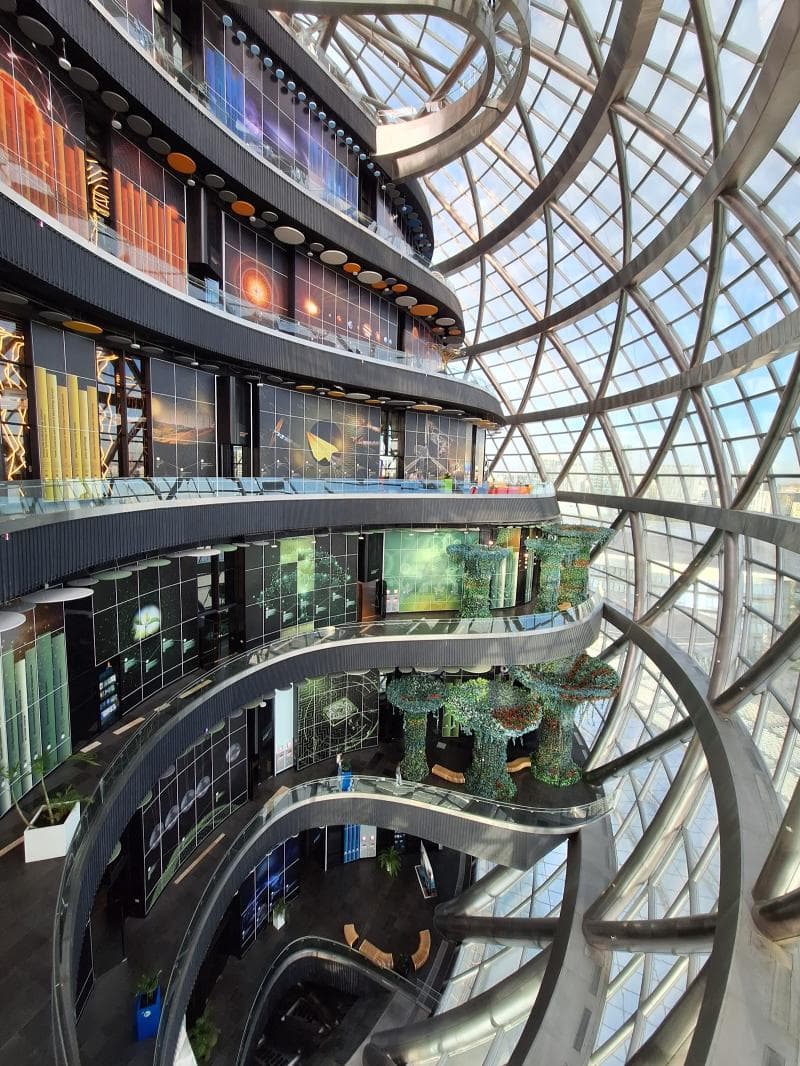
Discover the former Observation Area of Nur Alem Museum Of Future Energy in Astana, Kazakhstan, an iconic spherical building now transformed into the Alem.AI Centre for Artificial Intelligence.
Overview
Nestled in the heart of Astana, Kazakhstan, the monumental Nur Alem Museum Of Future Energy, a colossal spherical structure, once stood as a beacon of innovation and architectural prowess. This impressive building, originally conceived as the central pavilion for EXPO-2017, captivated visitors with its forward-thinking exhibitions on energy and sustainability. While the building itself remains an iconic landmark, its internal function has undergone a significant transformation. The 'Observation Area' within, formerly a highlight on the eighth floor, offered breathtaking panoramic views of Astana's futuristic skyline and the vast Kazakh steppe, serving as a symbolic peak of the museum's exploration into the future.
Today, the Nur Alem sphere is no longer home to the Museum of Future Energy. As of December 2024, the museum completed its operations and the building is being renovated and re-equipped to house the international Alem.AI Centre for Artificial Intelligence. Therefore, the original 'Observation Area' as part of the Future Energy Museum is not accessible in its former context. This transition reflects Kazakhstan's continued commitment to embracing new technologies and leading in the realm of innovation.
History & Cultural Background
The Nur Alem sphere was built as the centerpiece of the International Specialized Exhibition EXPO-2017, which took place in Astana from June to September 2017. The exhibition's theme, 'Future Energy', aimed to address global energy challenges and showcase advancements in green technology, renewable energy, and sustainability. Designed by the acclaimed American architectural bureau Adrian Smith + Gordon Gill Architecture, known for their work on global landmarks, Nur Alem quickly became a symbol of Astana's ambition and Kazakhstan's vision for a sustainable future.
After the EXPO concluded, the pavilion was repurposed into the Museum of Future Energy, becoming Kazakhstan's first technological energy museum. It housed interactive exhibits across eight floors, each dedicated to a different energy concept, from space and sun to wind, biomass, water, and kinetic energy. The building itself was a testament to its theme, integrating photovoltaic panels into its walls and silent wind generators at its peak to produce its own energy.
What Makes It Special
The Nur Alem building, standing at 100 meters tall with an 80-meter diameter, is renowned as the largest spherical building in the world. Its unique, double-curved glass facade, crafted from specially heated and molded glass, gave it a smooth, pure-glass appearance that captured the steppe sun. This innovative design was not merely aesthetic; it was optimized to minimize energy use, maximize daylighting, and harness renewable sources, embodying the 'Future Energy' theme.
The museum's previous incarnation, the Museum of Future Energy, was notable for its highly interactive displays that invited visitors to touch, experiment, and even participate in scientific experiments. For many, the ultimate experience was ascending to the 8th floor to the 'Observation Area'. This elevated vantage point offered an unrivalled perspective of Astana, allowing visitors to see how the city itself aimed to transition to up to 50% renewable electricity by 2050.
Stories, Fun Facts & Local Details
During EXPO-2017, the Nur Alem pavilion was the most visited at the exhibition, and after sunset, it transformed into the object of a grand laser show, captivating audiences. It quickly became an unofficial symbol of the Kazakh capital, recognized for its striking form and futuristic appeal. The sheer scale of its construction is impressive; the sphere required over 13,000 tonnes of metal and 3,535 insulated glass windows, each custom-designed for its spot and weighing up to 800 kilograms. The sphere was supported by a central double core, and eight passenger elevators, often glass-enclosed, provided a journey through the building's interior, culminating at the top level.
Locally, the building's transformation from the Museum of Future Energy to the Alem.AI Centre for Artificial Intelligence reflects Astana's ongoing evolution as a hub for innovation and technology. The concept behind Alem.AI is to create a space for education, research, and entrepreneurship in artificial intelligence, aiming to train thousands of specialists and launch numerous AI startups annually.
Visitor Perspective
For travelers planning a visit to Astana, it is important to note the current status of the Nur Alem building. While it once housed the captivating Museum of Future Energy and its popular 'Observation Area', this iteration of the attraction has since concluded. The building, a marvel of architectural design, is presently dedicated to the Alem.AI Centre for Artificial Intelligence.
This means that the experience of exploring energy exhibits and taking in panoramic city views from the original 'Observation Area' is no longer available. Instead, the sphere now offers an immersive journey into the world of artificial intelligence, with interactive exhibitions, art installations, and robotics zones, as described by the Alem.AI Centre. Visitors seeking an iconic view of Astana may explore other landmarks in the city, but the specific 'Observation Area' of the former Nur Alem Museum Of Future Energy is part of its rich history. The building continues to represent Kazakhstan's forward-looking spirit, transitioning from a focus on future energy to the cutting edge of artificial intelligence.
Coordinates: 71.4160066, 51.0892454
View on Google Maps💬 How Travelers Describe This Place
Based on community votes
Unique
836Interesting
797Photogenic
286Beautiful
255Must See
86
Traveler Stories
Discover memorable experiences shared by travelers who have visited this place.
No traveler stories yet.
Be the first traveler to share what made this place memorable.

Tour
By
Spot
Discover amazing places around the world. Your journey starts here.
Explore
© 2026 TourBySpot. All rights reserved.