Nikola Tesla Museum
Belgrade, Serbia
Explore the Nikola Tesla Museum in Belgrade, Serbia, housing the inventor's original legacy, interactive exhibits, and his ashes.
Overview
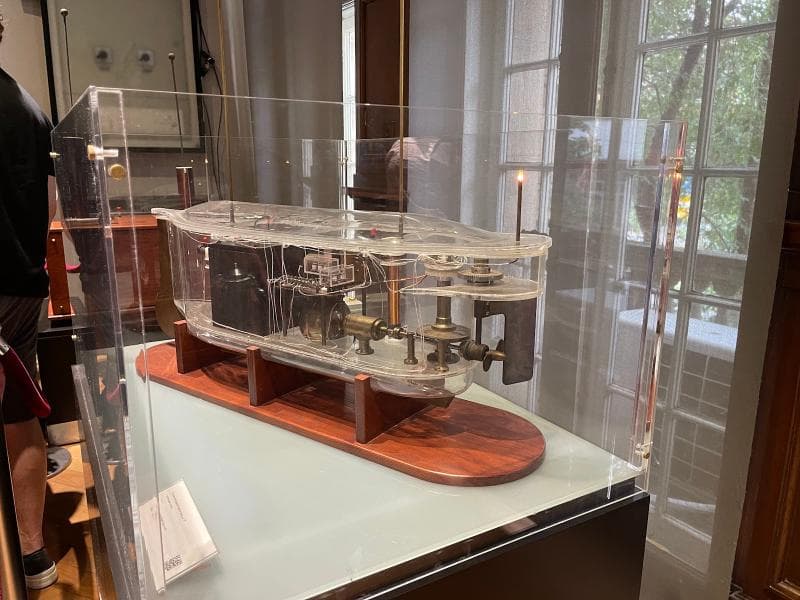
Nestled in the heart of Belgrade, Serbia, the Nikola Tesla Museum stands as a unique testament to the life and groundbreaking work of one of history's most visionary scientists. More than just a science museum, it is the sole institution globally that safeguards Nikola Tesla's original personal legacy, offering an unparalleled insight into the mind of the man who profoundly shaped the modern world. Visitors can explore a vast collection of over 160,000 original documents, thousands of books and journals, and more than 1,200 historical technical exhibits, alongside numerous photographs, plans, and drawings. The museum's interactive displays bring Tesla's revolutionary concepts to life, including working models of his famous inventions such as the Tesla coil and demonstrations of wireless energy transmission. It is also the solemn resting place of Nikola Tesla's ashes, encased in a distinctive golden sphere, making it a place of both scientific enlightenment and historical reverence.
History & Cultural Background
The Nikola Tesla Museum was officially established by the Yugoslav government on December 5, 1952, and first opened its doors to the public in October 1955. The museum is housed within an elegant residential villa, originally built between 1927 and 1929 for industrialist Đorđe Genčić, following the designs of the prominent Serbian architect Dragiša Brašovan. This architectural gem is now recognized as a cultural monument.
The creation of the museum was made possible largely through the efforts of Sava Kosanović, Tesla's nephew, who diligently worked to transfer his uncle's entire personal property and extensive archive from New York to Belgrade in 1951, following an American court decision. Tesla's ashes later arrived in Belgrade in 1957, finding their permanent home within the museum. In a significant recognition of its importance, the Nikola Tesla Archive was inscribed on UNESCO's Memory of the World Programme Register in 2003, acknowledging its critical role in the history of electrification and technological advancements.
What Makes It Special
What truly sets the Nikola Tesla Museum apart is its role as the world's exclusive repository for the inventor's original and personal estate. The sheer volume and diversity of its collections – encompassing everything from intricate technical drawings and scientific correspondence to personal items and the meticulously preserved archive – offer an unparalleled window into Tesla's visionary world.
The museum's interactive exhibits are a highlight, allowing visitors to witness the magic of Tesla's inventions firsthand. Seeing a Tesla coil generate impressive electrical arcs or experiencing the principles of wireless energy transmission through a 'Columbus's Egg' demonstration provides an engaging and memorable educational experience. The museum also serves as the dignified final resting place for Nikola Tesla himself, with his ashes housed in a distinctive golden urn, adding a profound layer of personal connection to the scientific exhibits.
Stories, Fun Facts & Local Details
Nikola Tesla, though born in what is now Croatia and having spent the majority of his professional life in the United States, is revered as a national hero in Serbia, with Belgrade's main airport bearing his name. Interestingly, he is said to have spent only a single day of his life in Belgrade. His nephew, Sava Kosanović, was instrumental in fulfilling Tesla's wishes to have his legacy preserved in Belgrade, meticulously arranging for the transfer of his extensive archives and personal belongings after Tesla's death.
A notable, ongoing local detail surrounding the museum involves the debate over Tesla's ashes. Since 2006, there has been a recurring discussion, particularly championed by the Serbian Orthodox Church, about relocating his ashes from the museum to the Church of St. Sava. However, activist groups, most notably 'Leave Tesla Alone', have successfully argued for his remains to stay in the museum, honoring what they believe were Tesla's own preferences for a scientific resting place.
Visitor Perspective
For those planning a visit, the Nikola Tesla Museum offers an enriching experience, ideally enhanced by joining one of its guided tours. These tours, available in both English and Serbian, run hourly and last approximately 45 minutes. They typically include a captivating film about Tesla's life, followed by engaging demonstrations of his inventions, such as the famous Tesla Coil and wireless electricity experiments. Witnessing these demonstrations is often cited as a highlight, making the guided tour a highly recommended choice over a self-guided visit.
It's important for travelers to note that the museum operates on a cash-only basis for tickets, accepting only Serbian Dinars (RSD); credit cards are not accepted. While relatively compact, with most visits lasting around an hour, the museum packs a powerful punch of information and interactive marvels. Located conveniently in the central Vračar district at Krunska 51, the museum is easily accessible via Belgrade's public transport system, with nearby stops at Slavija Square and Pravni fakultet. The museum is open Monday from 10:00 to 18:00, and Tuesday through Sunday from 10:00 to 20:00.
Coordinates: 20.4707, 44.8051
View on Google Maps💬 How Travelers Describe This Place
Based on community votes
Must See
873Photogenic
521Unique
477Beautiful
422Interesting
157
Traveler Stories
Discover memorable experiences shared by travelers who have visited this place.
No traveler stories yet.
Be the first traveler to share what made this place memorable.
Things to see at Nikola Tesla Museum



Tour
By
Spot
Discover amazing places around the world. Your journey starts here.
Explore
© 2026 TourBySpot. All rights reserved.