Nave
Zurich, Switzerland
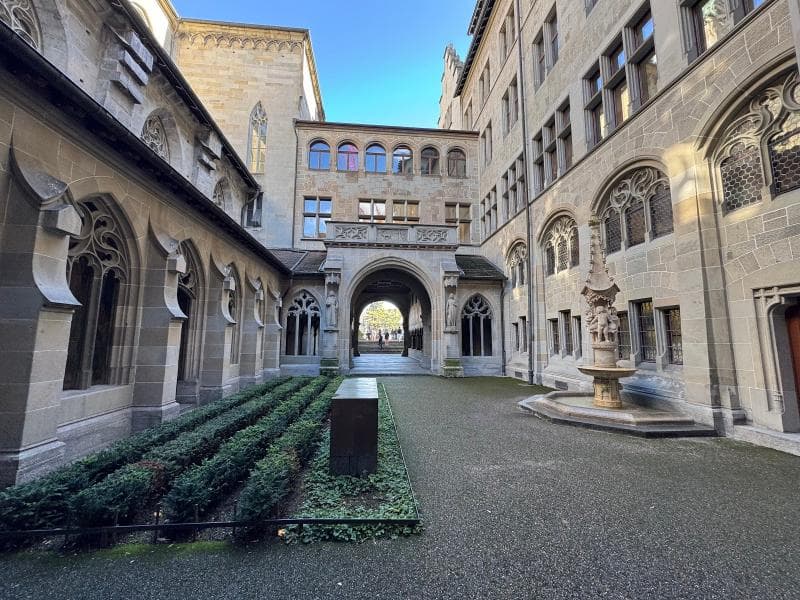
Explore the historic Nave of Fraumünster Church in Zurich, Switzerland, famed for its stunning Marc Chagall and Augusto Giacometti stained-glass windows.
Overview
The Nave of Fraumünster Church, nestled in the heart of Zurich, Switzerland, offers visitors a profound journey through history, art, and spirituality. This central part of the church serves as the main congregational area and is particularly renowned for its breathtaking stained-glass windows that bathe the interior in a kaleidoscope of colors. Located gracefully on the west bank of the Limmat River, the Fraumünster is easily recognized by its slender blue-green spire, a distinctive feature of the Zurich skyline. Stepping into the nave means entering a space where centuries of faith and artistic endeavor converge, creating an atmosphere of serene contemplation amidst Zurich's bustling city center.
History & Cultural Background
The history of Fraumünster Church dates back to 853 CE, when it was founded as a Benedictine convent for aristocratic women by King Louis the German, Charlemagne's grandson, for his daughter Hildegard. This imperial abbey quickly became one of the most powerful institutions in the region. Its abbesses wielded immense influence, holding significant privileges such as the right to mint coins, collect tolls, and even appoint the city's mayor, granting them substantial political power over medieval Zurich. The original church was built in the Romanesque style, with later enlargements and renovations in Gothic and Baroque styles. During the 16th century, the convent was dissolved in 1524 as part of the Swiss Reformation, and its administration passed to the city of Zurich. The nave itself has undergone various transformations, with the current majestic Gothic nave largely shaped in the 13th and 14th centuries, and significantly rebuilt in a Neo-Gothic style in the 19th century, with a renovation in 1911.
What Makes It Special
The nave of Fraumünster Church is globally celebrated for its extraordinary stained-glass windows, which are its undisputed highlight. The most famous are the five monumental windows in the choir, created by the renowned artist Marc Chagall and installed between 1970 and 1978. Each of these vibrant windows tells a biblical story and is dominated by a specific color, transforming the interior with ethereal light. For instance, the 'Prophets' window features yellow and green tones, 'Jacob' depicts his combat and dreams, the 'Christ' window illustrates various scenes from his life in intense blues, 'Zion' shows an angel trumpeting, and the 'Law' window presents Moses with the commandments. Equally impressive is the large, nine-meter-tall stained-glass window in the north transept, created by Augusto Giacometti in 1940. Titled 'The Heavenly Paradise,' this earlier work, with its lighter and more diffuse palette, offers a beautiful contrast to Chagall's intense hues. The nave also houses one of Switzerland's finest organs, boasting 5,793 pipes, making it the largest in the canton of Zurich.
Stories, Fun Facts & Local Details
The founding legend of Fraumünster speaks of King Louis the German's daughters, Hildegard and Bertha, who were guided by a shining stag to the spot where the church should be built. This captivating tale adds a mystical layer to the church's ancient origins. A fascinating detail from the medieval period, when the abbesses held significant power, is the legend of a deliberately narrow archway at the church's outer corner. This was reputedly designed to prevent vain women from entering with their fashionable wide hooped skirts, though other accounts note that many original convent buildings were demolished in the 19th century. Beneath the choir lies a crypt museum, which was sealed in 1900 and reopened to the public in 2016, showcasing artifacts and information about the abbey's history and the Reformation in Zurich. The juxtaposition of the church's ancient Romanesque choir with the more modern Gothic nave and the contemporary art of the stained-glass windows illustrates a continuous dialogue between different eras, a truly unique aspect of the Fraumünster.
Visitor Perspective
Walking through the nave of Fraumünster Church is an immersive experience where the interplay of light and color takes center stage. The admission fee, typically around 5 CHF for adults, includes an audio guide available in multiple languages, which is highly recommended for understanding the rich narratives behind the art and architecture. The audio guide provides valuable insights into the biblical themes depicted in Chagall's windows and the historical significance of the church. Many visitors suggest arriving in the morning, particularly on clear days, to witness the eastern light enhancing the blues and other colors of Chagall's masterpieces. Photography of the windows is generally permitted without flash for private purposes, though specific restrictions can vary and visitors should always observe posted signs and church guidelines to maintain the contemplative atmosphere. The relatively compact size of the church, compared to grander cathedrals, allows for a focused and intimate encounter with its artistic and historical treasures, making it a must-see for art lovers, history enthusiasts, and anyone seeking a moment of peace in Zurich.
Coordinates: 8.5413, 47.3696
View on Google Maps💬 How Travelers Describe This Place
Based on community votes
Beautiful
886Unique
564Must See
233Interesting
201Photogenic
121
Traveler Stories
Discover memorable experiences shared by travelers who have visited this place.
No traveler stories yet.
Be the first traveler to share what made this place memorable.

Tour
By
Spot
Discover amazing places around the world. Your journey starts here.
Explore
© 2026 TourBySpot. All rights reserved.