Myślewicki Palace
Warsaw, Poland
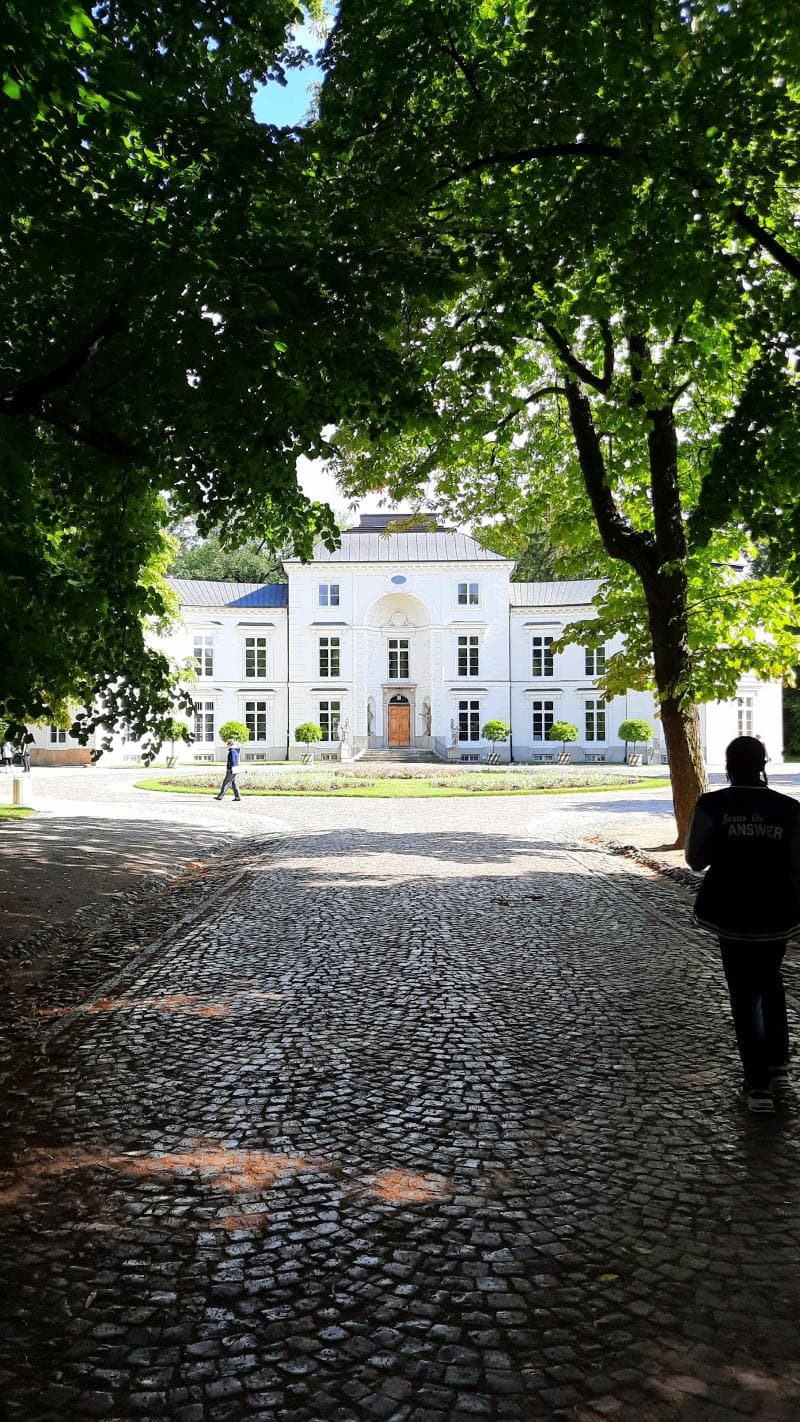
Discover Myślewicki Palace in Łazienki Park, Warsaw, Poland – an 18th-century Rococo-Neoclassical gem with rich history and stunning interiors.
Overview
Nestled within the sprawling, verdant expanse of Łazienki Park in Warsaw, Poland, stands the enchanting Myślewicki Palace. This architectural jewel, showcasing a captivating blend of Rococo and Neoclassical styles, is a must-visit for any discerning traveler. Commissioned by the last King of Poland, Stanisław August Poniatowski, the palace is a testament to the refined tastes of the late 18th century, offering a serene escape and a profound journey into Polish history and culture.
History & Cultural Background
The Myślewicki Palace was constructed between 1774 and 1779, designed by the esteemed royal architect Domenico Merlini. Initially, it served as a residence for the king's courtiers. However, it soon became closely associated with Prince Józef Antoni Poniatowski, the king's beloved nephew, who later gained fame as a military leader. Throughout its long history, the palace has played host to an array of distinguished guests, including figures as monumental as Napoleon I and U.S. President Richard Nixon, underscoring its significant role in both domestic and international affairs. Remarkably, the Myślewicki Palace survived the devastations of World War II, preserving much of its original splendor. In more recent times, specifically between 1958 and 1970, it gained international prominence as the clandestine venue for a series of diplomatic talks between the United States and the People's Republic of China, marking a crucial, early attempt to establish relations between these two global powers during the Cold War era. A significant renovation in 2015 meticulously restored its historical polychromes and gilding, bringing back the authentic charm of its 18th-century appearance.
What Makes It Special
The Myślewicki Palace captivates with its distinctive architecture, particularly its elegant semi-circular shape. The facade is adorned with a grand shell-bowl motif, intricately embellished with sculptures by Jakub Monaldi depicting the mythological figures of Zephyr and Flora. Adding to its unique character, the gentle curvature of its roof is a subtle nod to popular Chinese architectural designs, reflecting the era's fascination with exotic influences. Stepping inside, visitors are transported back to the 18th century. The interiors are remarkably preserved, featuring original murals by renowned artists such as Jan Bogumił Plersch and Antoni Gerżabka, intricate stucco decorations, and period furnishings. Among its most intriguing features is an 18th-century bathroom, connected by a hidden staircase, offering a rare glimpse into the intimate aspects of royal life. The painstaking restoration work in 2015 brought to light original polychromes and gilding, allowing visitors to appreciate the palace's vibrant, authentic color palette as it was originally conceived.
Stories, Fun Facts & Local Details
The palace derives its name from a nearby village called Myślewice, which no longer exists, a poignant reminder of the evolving landscape around historical landmarks. Above the main entrance, a cartouche features the initials 'JP,' commonly believed to honor Prince Józef Poniatowski, though historical sources offer varying interpretations. Beyond its royal connections, the Myślewicki Palace holds a fascinating place in modern diplomatic history. The secret meetings between US and Chinese ambassadors here from 1958 to 1970 were not just diplomatic exchanges but a bridge-building effort at a time of deep ideological divides, laying groundwork for future relations. This makes the palace more than just a historical residence; it's a site where global history quietly unfolded. Furthermore, the palace was also the setting for a pivotal agreement in Polish history on August 17, 1989, which led to the formation of Poland's first non-communist government since World War II.
Visitor Perspective
The Myślewicki Palace is conveniently situated in the eastern section of Łazienki Park, making it easily accessible for visitors exploring the wider park grounds. Public transport offers straightforward routes to the park, and the palace itself is reached via pleasant, flat, and well-maintained pathways suitable for all. While the palace is a captivating destination year-round, visiting during the spring and summer months allows for the added beauty of Łazienki Park in full bloom, enhancing the overall experience. Weekends can attract larger crowds, so planning an early morning or weekday visit might offer a more tranquil exploration. A single ticket often covers admission to the Myślewicki Palace along with other significant attractions within Łazienki Park, such as the Palace on the Isle and the Old Orangery. It is generally closed on Mondays, so it's advisable to check the official Łazienki Park website for the most current opening hours and ticketing information before your visit. Exploring this elegant palace provides a remarkable opportunity to immerse oneself in centuries of Polish art, history, and diplomacy within the serene embrace of one of Warsaw's most beautiful parks.
Coordinates: 21.03827, 52.21551
View on Google Maps💬 How Travelers Describe This Place
Based on community votes
Unique
853Photogenic
639Beautiful
190Interesting
93Must See
32
Traveler Stories
Discover memorable experiences shared by travelers who have visited this place.
No traveler stories yet.
Be the first traveler to share what made this place memorable.

Tour
By
Spot
Discover amazing places around the world. Your journey starts here.
Explore
© 2026 TourBySpot. All rights reserved.