Museum Park
Zurich, Switzerland
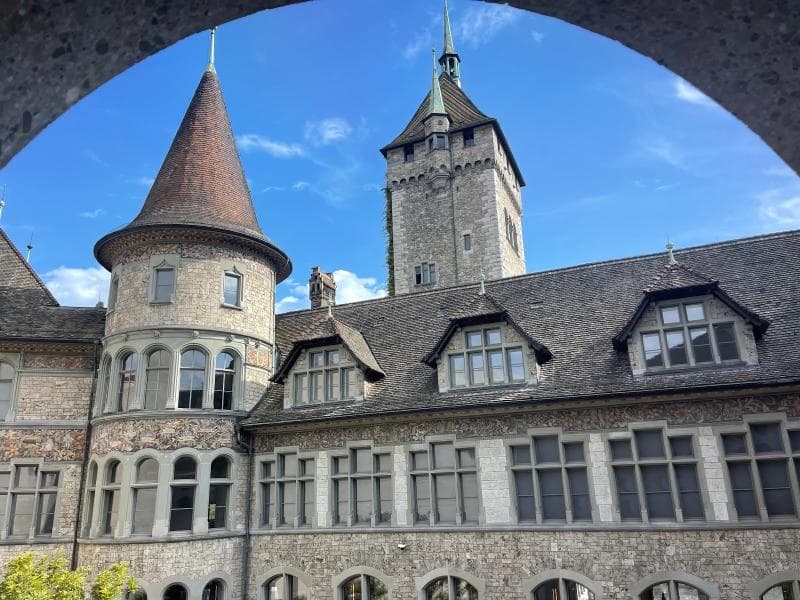
Discover Museum Park at the Swiss National Museum in Zurich, Switzerland – a historical oasis blending nature, stunning architecture, and cultural stories.
Overview
Nestled in the vibrant heart of Zurich, Switzerland, Museum Park offers a tranquil and historically rich green oasis, integral to the experience of the esteemed Swiss National Museum. This unique setting is found on a peninsula embraced by the Limmat and Sihl rivers, providing a picturesque backdrop to the museum's distinctive architecture. The park seamlessly blends natural beauty with impressive architectural design, featuring both the grand historicist building of the museum and its modern extensions.
Far more than just a surrounding landscape, Museum Park, alongside the adjacent Platzspitz Park, acts as a verdant extension of the museum's narrative, inviting visitors to pause, reflect, and appreciate the Swiss cultural heritage in an open-air environment. It serves as a calm respite from the urban bustle, located conveniently next to Zurich's main railway station.
History & Cultural Background
The genesis of Museum Park is deeply intertwined with the establishment of the Swiss National Museum itself. The museum building, inaugurated in 1898, was designed by architect Gustav Gull in a historicist style, echoing French Renaissance city chateaus and resembling a fairytale castle. This impressive architecture, with its numerous towers and courts, intentionally included an 'astonishing park' on the peninsula between the rivers as a crucial element of its overall design, aiming to forge a national identity rooted in Swiss medieval history.
Over a century later, the museum underwent a significant expansion between 2013 and 2016, introducing a striking modern wing that skillfully integrates with the existing park landscape. This new structure, designed by Christ & Gantenbein, not only adds flexible exhibition spaces but also encircles a new interior courtyard, further enhancing the museum's green areas. The park's larger neighbor, Platzspitz Park, boasts a long history dating back to the Middle Ages when it was used as a hunting and shooting ground, later becoming a baroque pleasure grove. However, it gained international notoriety in the 1980s and early 1990s as 'Needle Park,' an open drug scene, before being rehabilitated in 1993, a testament to Zurich's commitment to reclaiming its public spaces.
What Makes It Special
What truly distinguishes Museum Park is its remarkable synthesis of contrasting elements: historic grandeur meets modern architectural flair, and tranquil nature coexists with a rich historical past. The Landesmuseum Courtyard Garden, a formal garden tucked between the museum's neo-Gothic wings and the contemporary extension, offers a delightful visual interplay, showcasing an 'odd but satisfying visual tension'. This courtyard is freely accessible, providing a peaceful retreat for anyone passing through, even without a museum ticket.
The park's strategic location at the confluence of the Sihl and Limmat rivers contributes to its serene atmosphere and scenic beauty, offering captivating views of the waterways. The presence of ancient, mighty plane trees, some two hundred years old, further enhances the park's allure, connecting visitors to centuries of natural history. The modern extension's design thoughtfully incorporates views of the park and river through porthole-like windows, continuously referencing the surrounding natural and urban environment.
Stories, Fun Facts & Local Details
The area surrounding the Swiss National Museum holds layers of fascinating stories. The Platzspitz Park, adjacent to the museum, has a history that goes far beyond its current peaceful appearance. It was once a prominent meeting point for scholars, poets, and painters in the style of ancient Athens. However, in the late 20th century, it became infamous as 'Needle Park,' a highly visible open drug scene, a challenging period in Zurich's history that was eventually addressed through innovative social policies and rehabilitation. Today, the park has been thoroughly revitalized, bearing no visible trace of its difficult past, and serves as a green haven for families and locals.
Within the Platzspitz Park, the Platzspitzbrunnen fountain offers a charming detail. Crafted by Robert Lienhard, this 1955 fountain symbolically depicts the confluence of the Sihl and Limmat rivers through the dance of two Naiads, mythological water nymphs. These local touches add a layer of narrative, weaving together natural geography, history, and urban culture. The park's design also ingeniously creates connections, with a bridge spanning a wide space with a water basin, linking the new inner courtyard with the wider park area.
Visitor Perspective
For the curious traveler, Museum Park offers a multifaceted experience. It serves as an inviting prelude or a calming conclusion to a visit to the Swiss National Museum, providing a tangible connection between the exhibits inside and the broader Swiss landscape and history. The 'Landesmuseum Courtyard garden' provides benches and mature trees, along with a café, making it an ideal spot for a leisurely break or a quiet moment of contemplation.
Whether you're admiring the blend of 19th-century 'fairytale castle' architecture with the angular lines of the modern concrete extension, or simply enjoying the shade of ancient trees by the river, the park offers visual delights at every turn. The museum's library also provides attractive workspaces with views of the Limmat and Platzspitz Park, with a balcony that opens during summer months, further integrating the outdoor serenity with indoor pursuits. This unique 'Museum Park' is not just a green space; it is a living part of the museum's story, accessible and enjoyable for all who seek to explore the rich tapestry of Zurich and Switzerland.
Coordinates: 8.540549, 47.379227
View on Google Maps💬 How Travelers Describe This Place
Based on community votes
Must See
950Beautiful
287Photogenic
255Unique
231Interesting
86
Traveler Stories
Discover memorable experiences shared by travelers who have visited this place.
No traveler stories yet.
Be the first traveler to share what made this place memorable.

Tour
By
Spot
Discover amazing places around the world. Your journey starts here.
Explore
© 2026 TourBySpot. All rights reserved.