Museum Of Lugdunum
Lyon, France
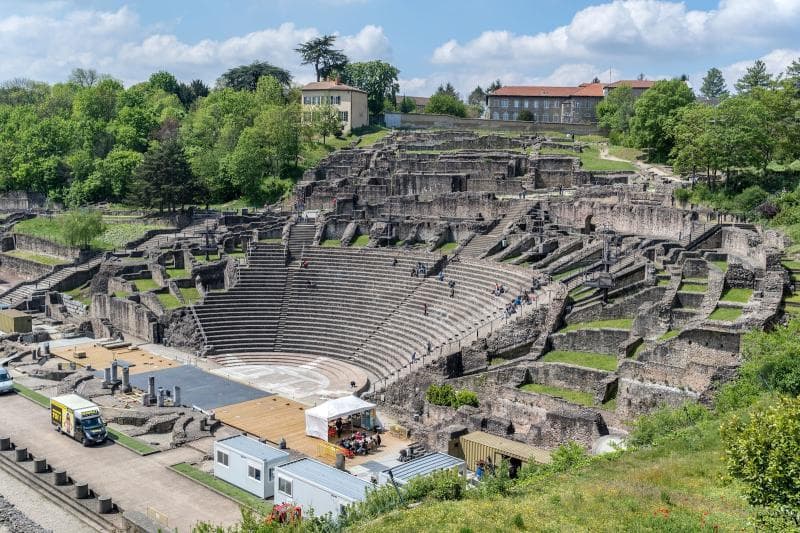
Explore Lugdunum Museum in Lyon, France, a UNESCO World Heritage site showcasing ancient Roman life. Discover remarkable artifacts and unique architecture.
Overview
Nestled gracefully into the Fourvière hill in Lyon, France, the Lugdunum Museum, formerly known as the Gallo-Roman Museum of Lyon-Fourvière, is a captivating journey into the ancient Roman city of Lugdunum. This exceptional institution is seamlessly integrated with the Théâtres Romains De Fourvière, forming part of a UNESCO World Heritage site that transports visitors back to the heart of Roman Gaul. Designed by the visionary architect Bernard Zehrfuss and inaugurated in 1975, the museum's striking architecture intentionally recedes into the landscape, its raw concrete structure and spiraling internal ramps creating an immersive and understated backdrop for its remarkable collections. From the outside, it almost disappears into the hillside, making the archaeological treasures within the true focal point.
The museum houses one of France's richest archaeological collections, spread across 4,000 square meters. It vividly portrays the public and private life of Lugdunum, an imperial capital during Roman rule. Visitors can explore diverse facets of ancient existence, including urban planning, administration, military affairs, currency, religion, and daily life. The museum offers a unique perspective on the origins of modern Lyon, allowing for a profound connection with its ancient past.
History & Cultural Background
The story of Lugdunum begins in 43 BC when Lucius Munatius Plancus founded a Roman colony on the strategic Fourvière hill, at the confluence of the Rhône and Saône rivers. This location was crucial for trade and governance, rapidly establishing Lugdunum as a significant Roman city. Under Emperor Augustus, it flourished, becoming the capital of the vast Roman province of Gallia Lugdunensis, which encompassed much of what is now central France.
The city's importance is underscored by the birth of Emperor Claudius in Lyon in 10 BC. His later advocacy for Gallic participation in the Roman Senate is famously preserved on the Lyon Tablet, a key artifact within the museum. Lugdunum grew to be one of Gaul's largest cities, with a population potentially reaching up to 200,000 inhabitants during its peak between 69 and 192 AD. The impressive Roman theatres, the Grand Theatre and the Odeon, were central to the city's cultural life, capable of accommodating thousands of spectators for various performances.
The idea for a dedicated museum to house Lyon's Gallo-Roman artifacts emerged in the 1930s, gaining momentum in the 1960s. The acclaimed architect Bernard Zehrfuss, a Prix de Rome laureate, was entrusted with the design. He conceived of a structure that would respectfully integrate with the historic site, building it into the hillside to avoid overshadowing the ancient ruins. Inaugurated in 1975, the museum's design was a bold statement in modern architecture, utilizing raw, unfinished concrete to highlight the exhibits themselves rather than the building's facade.
What Makes It Special
The Lugdunum Museum is distinguished by several unique attributes that set it apart. Foremost is its remarkable architecture; visitors traverse a spiraling concrete ramp that descends underground, immersing them in the ancient world while offering strategic views of the Roman theatres through expansive windows. This design choice by Bernard Zehrfuss ensures the museum itself enhances, rather than competes with, the archaeological park.
As part of a UNESCO World Heritage site, the museum's collections are deeply intertwined with the very ground upon which they stand. It boasts one of France's most comprehensive archaeological collections, presenting an unparalleled insight into five centuries of Roman life in Lugdunum. These treasures include everyday objects, intricate mosaics, sculptures, jewelry, and ceramics, all unearthed from the local area.
Among its most celebrated artifacts are the bronze Lyon Tablet, which records Emperor Claudius's influential speech advocating for Gallic entry into the Roman Senate, and the Gaulish Calendar, one of the longest surviving documents written in the Celtic language. The museum also proudly displays the vibrant Circus Games Mosaic, a rare second-century piece depicting a chariot race, and a striking statue of Neptune. These masterpieces, alongside others like the Mosaïque aux Svastikas, offer profound insights into the beliefs, customs, and artistry of ancient Lugdunum.
Stories, Fun Facts & Local Details
The name 'Lugdunum' itself carries a fascinating story, believed to mean 'hill of Lugus,' referring to a Celtic god. This underscores the blend of Gallic and Roman cultures that defined the city. The strategic importance of Lyon's location, at the confluence of two major rivers, was recognized by the Romans, making it a crucial hub for communication and trade within the empire.
Imagine the vibrancy of Roman Lugdunum, where the Grand Theatre could host up to 10,700 spectators for dramatic performances, while the more intimate Odeon provided a setting for refined poetry readings and musical concerts. The architect Bernard Zehrfuss famously expressed his desire for the museum to not 'offend the professionalism of my Roman colleagues,' a testament to his respectful integration of the modern structure with its ancient surroundings. Today, the ancient theatres continue to host events, most notably the annual Nuits de Fourvière festival, bringing contemporary culture to these historic stages.
For younger visitors, the museum offers a dedicated children's area and special booklets, allowing them to immerse themselves in Roman daily life through engaging activities. Interactive displays and virtual reality experiences further bring the ancient city to life, offering a dynamic perspective on Lugdunum in the second century.
Visitor Perspective
A visit to the Lugdunum Museum is an encounter with history, thoughtfully presented to engage modern sensibilities. Its clever design means that as you explore the exhibits, you are continuously aware of the ancient Fourvière site just outside, creating a profound sense of connection between past and present. The museum is a fantastic educational resource for all ages, with clear explanations and well-curated displays that cater to both casual visitors and history enthusiasts.
The museum is generally open from Tuesday to Sunday, with specific hours that are advisable to check before your visit. A pleasant detail for budget-conscious travelers is the free admission on the first Sunday of each month. Access to the museum and the adjacent Roman theatres is convenient, with funicular lines (F1 and F2) and bus routes serving the Fourvière hill. The address is 17 rue Cléberg, 69005 Lyon. Be aware that security measures are in place, so large bags and suitcases are not permitted inside.
Coordinates: 4.8199, 45.7604
View on Google Maps💬 How Travelers Describe This Place
Based on community votes
Must See
839Interesting
445Photogenic
416Beautiful
289Unique
141
Traveler Stories
Discover memorable experiences shared by travelers who have visited this place.
No traveler stories yet.
Be the first traveler to share what made this place memorable.

Tour
By
Spot
Discover amazing places around the world. Your journey starts here.
Explore
© 2026 TourBySpot. All rights reserved.