Museum Galleries
Vientiane, Laos
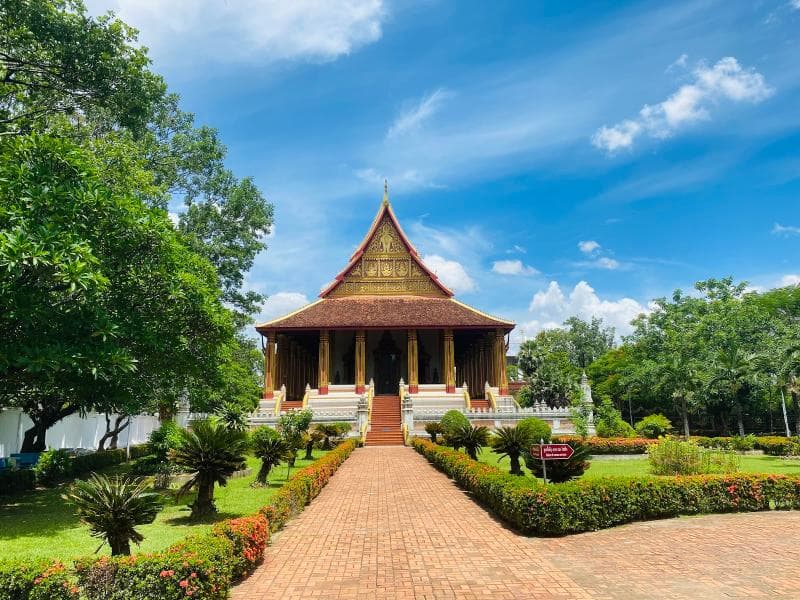
Explore the Museum Galleries at Wat Ho Phra Keo in Vientiane, Laos. Discover ancient Buddhist art, artifacts, and a rich cultural history.
Overview
Nestled in the heart of Vientiane, Laos, the Museum Galleries of Wat Ho Phra Keo offer a captivating journey into the nation's rich spiritual and artistic heritage. Once a revered royal temple, this magnificent structure now functions as a prominent museum, safeguarding an exquisite collection of Lao religious art and artifacts. It stands as a testament to the country's enduring cultural identity, inviting curious travelers to explore its storied past and the intricate craftsmanship of its people.
Known by various spellings, including Haw Phra Kaew and Ho Phra Keo, the site provides a serene and contemplative environment. It's a place where the echoes of ancient ceremonies blend with the quiet appreciation of historical treasures, making it an essential stop for anyone seeking a deeper understanding of Laos.
History & Cultural Background
The origins of Wat Ho Phra Keo trace back to 1565 when King Setthathirath ordered its construction. Its primary purpose was to serve as the royal chapel and to enshrine the sacred Emerald Buddha, which the king had brought from Chiang Mai after relocating the capital of the Lan Xang Kingdom from Luang Prabang to Vientiane. For over two centuries, this precious Buddha image resided here, establishing the temple as one of Southeast Asia's most significant Buddhist sites.
However, the temple's fate took a dramatic turn in 1779 when Siamese invaders seized the Emerald Buddha, taking it to Thailand where it remains today in Wat Phra Kaew. The structure itself suffered further devastation during the Siamese invasion of 1828, leaving it in ruins. A significant reconstruction effort, led by the French colonial administration and completed in 1942, restored the temple to much of its former glory.
During the 1970s, Wat Ho Phra Keo transitioned from an active place of worship into the museum it is today, ensuring the preservation and public display of its invaluable historical and religious artifacts. This transformation marked a new chapter, allowing its treasures to be appreciated by a wider audience without the presence of resident monks.
What Makes It Special
What truly distinguishes the Museum Galleries of Wat Ho Phra Keo is its unparalleled collection of Lao religious art. Visitors encounter an impressive array of bronze Buddha statues, some dating back to the 6th to 9th centuries, showcasing the evolution of Buddhist iconography through various artistic periods.
Beyond the myriad Buddha images, the museum proudly displays ancient stone carvings, intricate Khmer-influenced sculptures, and ceremonial objects that speak volumes about traditional Lao religious practices. Palm-leaf manuscripts, once essential for recording life's events and Buddhist scriptures, offer a glimpse into the region's literary and spiritual traditions. Moreover, the museum houses rare items such as a gilded throne, ancient wooden carvings, and bronze frog drums, each piece telling a story of craftsmanship and devotion.
The building itself is a masterpiece of traditional Lao design, featuring an elegant multi-tiered roof, intricately carved wooden doors—including a notable 16th-century lacquered door with Hindu carvings—and detailed naga (serpent) motifs. These architectural elements are not merely decorative; they embody centuries of cultural symbolism and artistic excellence.
Stories, Fun Facts & Local Details
One of the most compelling narratives associated with Wat Ho Phra Keo is the dramatic story of the Emerald Buddha. Its journey from Chiang Mai, its long residence in Vientiane, and its eventual departure to Thailand underscore the complex historical ties and conflicts that shaped the region. Despite its absence, the legend of the Emerald Buddha remains intrinsically linked to the identity of Ho Phra Keo, with its name translating to 'Altar of the Emerald Buddha,' a poignant reminder of what once was.
A unique historical detail is that, unlike many other temples in Laos, Wat Ho Phra Keo was King Setthathirath's personal place of worship, meaning it never housed resident monks. This historical distinction highlights its special royal status.
Among the curated displays, an intriguing and somewhat unexpected artifact is a jar from the mysterious Plain of Jars, providing a fascinating connection to another of Laos' ancient enigmas. The exquisitely manicured gardens surrounding the museum offer a tranquil retreat, adorned with ancient stone pots and a peaceful setting that invites quiet reflection away from the city's bustle.
Visitor Perspective
For the curious traveler, a visit to the Museum Galleries of Wat Ho Phra Keo is more than just a tour; it's an immersive cultural experience. The serene ambiance, enhanced by the meticulously maintained gardens and the architectural grandeur, encourages unhurried exploration and quiet contemplation.
The modest yet dignified displays allow visitors to truly appreciate the craftsmanship and spiritual significance of each artifact, providing meaningful insight into Laos' artistic and religious heritage. Located conveniently opposite Wat Sisaket, another significant historical site, Ho Phra Keo is often included in cultural tours, making it easy to experience both. It's a place where history comes alive, offering a profound appreciation for the resilience and artistic spirit of the Lao people.
Coordinates: 102.61167, 17.96139
View on Google Maps💬 How Travelers Describe This Place
Based on community votes
Photogenic
722Interesting
698Must See
465Beautiful
276Unique
126
Traveler Stories
Discover memorable experiences shared by travelers who have visited this place.
No traveler stories yet.
Be the first traveler to share what made this place memorable.

Tour
By
Spot
Discover amazing places around the world. Your journey starts here.
Explore
© 2026 TourBySpot. All rights reserved.