Musegg Wall Access
Lucerne, Switzerland
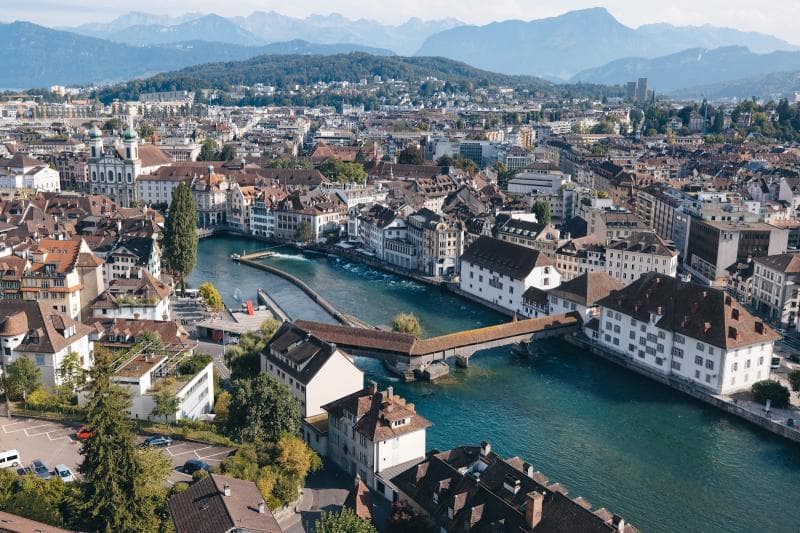
Explore Musegg Wall Access in Lucerne, Switzerland. Walk along medieval ramparts, climb historic towers, and enjoy panoramic views of the city and Alps.
Overview
Perched majestically above Lucerne's charming Old Town, the Musegg Wall Access offers a remarkable journey into Switzerland's medieval past. This historic fortification, known locally as Museggmauer, stands as one of the longest and best-preserved city walls in the country. Stretching for 870 meters, the wall, approximately 9 meters high and 1.5 meters wide, crowns the cityscape with its distinctive presence. Of its original 30 towers, nine still stand proudly today, each with its own character and story, creating an iconic silhouette against the backdrop of Lake Lucerne and the surrounding Alps.
Visitors can explore sections of this ancient rampart and ascend four of its accessible towers: the Männli, Zyt, Wacht, and Schirmer Towers. From these vantage points, breathtaking panoramic views unfold across the historic center of Lucerne, the serene waters of Lake Lucerne, and the majestic peaks of Central Switzerland. A visit to the Musegg Wall is a unique opportunity to immerse oneself in centuries of history while enjoying some of the city's most spectacular vistas. Admission to the Musegg Wall and its accessible towers is free.
History & Cultural Background
The origins of the Musegg Wall date back to the late 14th century, with construction beginning around 1370 and significant additions continuing into the 15th century. It was built following the Battle of Sempach, as Lucerne expanded and sought to fortify its defenses against external threats. The wall was an integral part of a sophisticated fortification system that initially included two rings of ramparts. While an inner ring protected the early town, the Musegg Wall formed the outer defense on a hilly sandstone ridge to the north.
Remarkably, the Musegg Wall has remained largely intact through the centuries, a rare feat considering many medieval fortifications across Europe were dismantled for urban development in the 19th century. Its strategic position on the Bramberg, which did not impede city traffic, contributed to its preservation. From 2007 to 2015, the wall underwent restoration work, ensuring its continued existence as a vital piece of Lucerne's cultural heritage.
What Makes It Special
The Musegg Wall is truly special for several compelling reasons. Firstly, it stands as Switzerland's longest continuous and best-preserved city wall, offering an unparalleled glimpse into medieval defensive architecture. Its collection of nine distinct towers, each varying in style and historical function, creates a dramatic skyline that defines Lucerne's historic character.
Secondly, the wall provides visitors with an extraordinary opportunity to literally walk along history. Traversing its narrow battlement paths and climbing its ancient wooden stairs allows one to experience the city as medieval guards once did, overlooking a panorama that stretches from the red rooftops of the Old Town to the expansive Lake Lucerne and the distant snow-capped Alps.
Perhaps most famously, the Zyt Tower (Time Tower) houses Lucerne's oldest clock, dating back to 1535. This intricate timepiece holds a unique and charming privilege: it strikes the hour one minute before all other clocks in Lucerne, a tradition that has persisted for nearly five centuries.
Stories, Fun Facts & Local Details
Each of the Musegg Wall's nine towers tells its own captivating story. The Luegisland Tower, meaning 'look toward the land,' is the tallest of the nine and among the oldest, having served as a crucial lookout point. The Männli Tower is named after an 'iron Männli' figure that adorns it and once housed a prison, now offering a small museum and magnificent views.
The Pulver Tower once safely stored gunpowder, a testament to its robust construction, particularly after the city's Heu Tower (Watchtower) exploded in 1701 due to a lightning strike. Today, several towers are maintained by local guilds, such as the Saffron Guild in the Nölli Tower and the Wey Guild in the Pulver Tower, showcasing a beautiful tradition of civic engagement and historical preservation. The Zyt Tower's clock mechanism, built by Hans Luterer in 1535, was designed with a dial large enough for fishermen on Lake Lucerne to read the time from afar. Inside, visitors can still observe its intricate workings and explore an exhibition of historical tower clocks.
Adding to the charm, adjacent to the wall lies 'Hof Hinter Musegg,' a farm offering a unique farm-like experience with animals and an organic farm store, providing a delightful contrast to the ancient stone fortifications.
Visitor Perspective
Access to the Musegg Wall and its four publicly accessible towers (Männli, Zyt, Wacht, and Schirmer) is typically open from April to November, between 8:00 AM and 7:00 PM. It is important to note that during the winter months (December to March), the wall and towers are closed due to weather conditions and maintenance.
Visitors should allocate approximately 1.5 to 2 hours for a comfortable stroll along the wall and to explore the accessible towers. While the walk offers unparalleled views, the path can be narrow and involves climbing ancient wooden stairs within the towers, making it less suitable for those with significant mobility concerns. The main access points are conveniently located on Diebold-Schilling-Strasse and Museggstrasse, just a 10-15 minute walk from Lucerne's main railway station, making it easily reachable within the Altstadt Luzern. An early morning visit is often recommended to avoid crowds and enjoy the tranquil beauty of the cityscape.
Coordinates: 8.30561, 47.05469
View on Google Maps💬 How Travelers Describe This Place
Based on community votes
Interesting
910Unique
755Photogenic
374Must See
183Beautiful
28
Traveler Stories
Discover memorable experiences shared by travelers who have visited this place.
No traveler stories yet.
Be the first traveler to share what made this place memorable.

Tour
By
Spot
Discover amazing places around the world. Your journey starts here.
Explore
© 2026 TourBySpot. All rights reserved.